
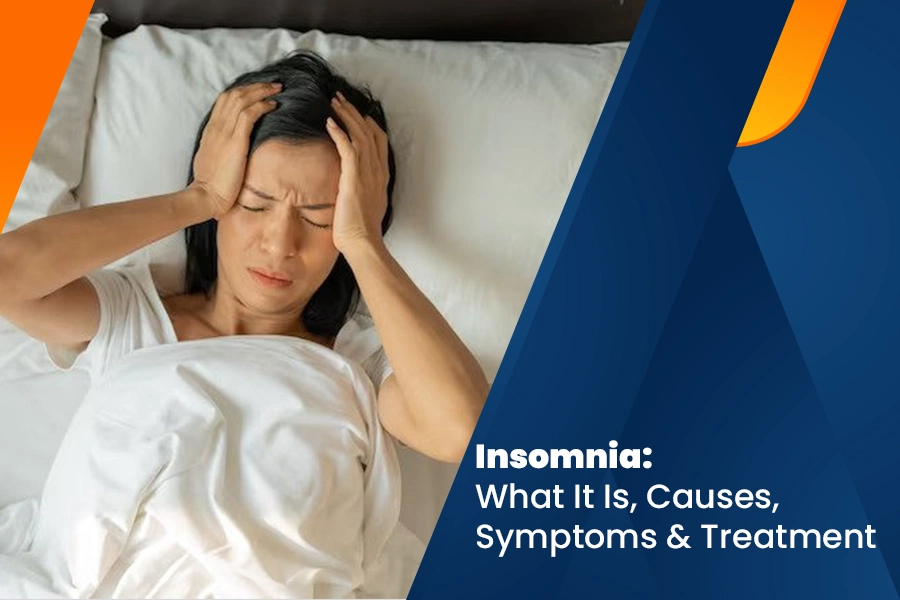
2:47 AM. You’ve counted sheep, tried deep breathing, flipped your pillow to the cold side about fifteen times. Nothing works. Your alarm goes off in four hours and you’re still wide awake, staring at the ceiling, mentally calculating how terrible tomorrow’s going to be.
I’ve been there. That specific brand of exhausted frustration where your body’s screaming for sleep but your brain absolutely refuses to cooperate. It’s like being tired and wired at the same time, which makes zero sense but somehow that’s exactly what insomnia feels like.
Around 30% of adults deal with this garbage at some point. For about 10%, it becomes chronic—meaning it’s not just a bad week, it’s months or years of fighting your own brain for basic sleep. Let’s talk about what’s actually happening and what you can do that might actually help.
So What Even Is Insomnia?
Insomnia isn’t just “I slept poorly last night.” Everyone has rough nights occasionally. That’s life. Insomnia is when it keeps happening—usually three or more nights weekly for at least three months. It’s a legitimate sleep disorder, not just bad luck.
There’s different flavors of it:
Acute insomnia happens short-term. Something stressful hits—job loss, relationship drama, whatever—and suddenly you can’t sleep for a few days or weeks. Usually goes away once you deal with the stress or it passes.
Chronic insomnia sticks around. Three months minimum, often way longer. This is the type that genuinely wrecks your life because you’re constantly exhausted but can’t fix it.
Onset insomnia means you can’t fall asleep initially. You’re lying there for an hour, two hours, just… awake. Watching the minutes tick by.
Maintenance insomnia is when you fall asleep fine but wake up at 3 AM and that’s it, you’re done. Or you wake up every couple hours all night long.
Some people get both types. That’s particularly miserable—can’t fall asleep AND can’t stay asleep.
How It Screws Up Your Sleep-Wake Cycle
Your body runs on an internal 24-hour clock. Scientists call it your circadian rhythm, but basically it’s what makes you sleepy at night and alert during the day. When it’s working right, melatonin increases in the evening, your body temperature drops a bit, and you naturally get drowsy.
Morning comes, cortisol kicks in, temperature rises, and you wake up. Pretty straightforward system.
Insomnia breaks this. Your sleep-wake cycle gets all confused, and then it becomes this vicious cycle that feeds itself:
You can’t sleep, so you spend more time in bed trying to force it. Your brain starts connecting your bed with frustration instead of sleep. Now you’re anxious about sleep itself, which makes falling asleep even harder. Your circadian rhythm gets wonky because you’re sleeping at random times. Maybe you nap during the day to cope, which makes nighttime sleep worse. Round and round it goes.
Breaking this requires figuring out why it started in the first place.
Why This Happens to People
Insomnia doesn’t just materialize out of thin air. There’s usually a reason—often multiple reasons.
Your Brain Won’t Shut Up
Stress and anxiety are probably the biggest culprits. You’re lying there replaying awkward conversations from three years ago, worrying about tomorrow’s meeting, catastrophizing about everything that could go wrong. Your mind’s running at full speed while your body’s exhausted.
If you’ve got an actual anxiety disorder, this gets amplified significantly. Generalized anxiety, panic disorder, social anxiety—they all come with bonus insomnia pretty frequently.
Depression and Other Mental Health Stuff
Depression and insomnia feed off each other in this terrible way. Depression causes sleep problems, sleep problems make depression worse, and you end up in this loop that’s hard to escape.
PTSD, bipolar disorder, OCD—pretty much any mental health condition can mess with your sleep. Sometimes the condition causes it, sometimes the medications for it cause it. Fun times.
Physical Health Problems
Chronic pain makes sleeping incredibly difficult. Doesn’t matter if it’s arthritis, fibromyalgia, back problems, or whatever—being uncomfortable doesn’t exactly promote restful sleep.
Other medical issues that commonly cause insomnia:
- Acid reflux (lying down makes it worse, so nighttime becomes miserable)
- Breathing problems like asthma
- Thyroid issues
- Parkinson’s or other neurological conditions
- Menopause and the hormonal chaos that comes with it
Medications and Stuff You Consume
Tons of regular medications mess with sleep. Some antidepressants ironically cause insomnia. Blood pressure meds, steroids, decongestants—they can all interfere.
Caffeine’s obvious. Drink coffee at 6 PM and yeah, you’re probably not sleeping well. But alcohol’s tricky. It might knock you out initially, but you’ll wake up at 2 AM and be wide awake because it disrupts your sleep quality.
Nicotine’s a stimulant too. Smokers generally have more sleep issues than non-smokers.
Just Bad Habits
Sometimes people develop insomnia purely from crappy sleep habits. Going to bed at wildly different times every night, scrolling Instagram in bed for hours, exercising right before sleep, eating heavy meals late, having a bedroom that’s too bright or noisy.
Individually these seem minor, but they add up fast.
Night Shifts and Travel
Working nights completely destroys your natural sleep-wake cycle. You’re fighting your biology constantly, trying to sleep when your body thinks it should be awake.
Flying across multiple time zones does similar damage. Jet lag is real and your internal clock doesn’t adjust instantly.
What Insomnia Actually Feels Like
Obviously the main thing is “I can’t sleep.” But insomnia affects way more than just nighttime.
At night you might experience:
- Taking forever to fall asleep (like 30+ minutes regularly)
- Waking up multiple times
- Waking up way too early and being unable to go back to sleep
- Not feeling rested even when you did technically sleep
- Just lying there awake for hours
During the day it gets worse:
Daytime fatigue is brutal, but it’s not even the worst part.
- Exhaustion that coffee doesn’t fix
- Brain fog—can’t concentrate, can’t remember things
- Irritability and mood swings (everything annoys you when you’re sleep-deprived)
- Screwing up at work or school because you can’t focus
- Increased accidents (drowsy driving kills people, seriously)
- Headaches from being constantly tired
- Anxiety about sleep, which makes the sleep problems worse
That last one’s particularly cruel. You become anxious about not sleeping, which makes you not sleep, which increases the anxiety. Great system, brain.
Treatments That Might Actually Help
Insomnia’s treatable, but there’s no magic pill that fixes everyone. What works depends on what’s causing your specific problem.
CBT-I (Therapy for Insomnia)
Cognitive Behavioral Therapy for Insomnia is supposedly the best treatment for chronic insomnia. It’s not just “relax more” advice—it’s structured and addresses both thoughts and behaviors keeping you awake.
Usually includes things like sleep restriction (sounds counterintuitive but you limit bed time to match actual sleep time), stimulus control (retraining your brain to associate bed with sleep), dealing with anxious thoughts about sleep and learning actual sleep hygiene.
Research shows it works better than pills long-term. Downside? Takes effort and usually requires working with a therapist who specializes in it.
Sleep Medications
Pills can help short-term but they’re not a permanent solution for most people.
Options include benzos, non-benzo sedatives (Ambien and similar), melatonin receptor drugs, and newer orexin antagonists. Each works differently and has different side effects.
Problems with sleep meds: you build tolerance (they stop working as well), you can become dependent, you might feel groggy the next day, and they don’t fix whatever’s actually causing your insomnia. Useful for getting through a crisis or while working on other treatments, but not ideal forever.
Fix the Underlying Problem
If your insomnia comes from depression, anxiety, pain, or another condition, treating that often improves sleep.
Dealing with your depression might resolve sleep issues. Managing chronic pain reduces nighttime discomfort. Treating sleep apnea with a CPAP machine can eliminate insomnia caused by breathing problems.
Basic Sleep Hygiene Stuff
Sometimes simple changes actually make a difference:
Go to bed and wake up at the same time every day. Yes, even weekends. Your body likes routine.
Create a wind-down routine before bed. Reading, stretching, whatever calms you down that doesn’t involve screens.
Make your bedroom actually comfortable. Cool temperature, dark, quiet. Get blackout curtains if you need them.
Stop looking at screens an hour before bed if possible. Blue light suppresses melatonin. If you must use devices, at least use night mode.
No caffeine after early afternoon if you’re sensitive. Be careful with alcohol—it might help you fall asleep but ruins your sleep quality.
Exercise during the day helps, but not right before bed.
Find ways to manage stress during the day. Therapy, meditation, journaling, whatever works.
Supplements
Melatonin can help some people, especially for circadian rhythm issues. Start with low doses (like 0.5-1mg) an hour or two before bed.
Magnesium, valerian root, L-theanine—people try various supplements. Evidence is mixed and quality varies since they’re not regulated like medications.
When You Should See a Doctor
If you’ve tried basic improvements and you’re still not sleeping after a few weeks, talk to a doctor. Don’t just accept this as your life now.
Definitely get professional help if:
- Insomnia’s affecting your work, relationships, or daily functioning
- You’re dangerously tired during the day
- You think there’s an underlying medical issue
- You’re using alcohol or unprescribed meds to sleep
- Your partner says you snore really loud or stop breathing during sleep (could be sleep apnea)
- It’s been going on for over a month
Sleep specialists can do proper evaluations, maybe even a sleep study, to figure out what’s happening.
Bottom Line
Insomnia is a real sleep disorder that affects your entire life—nighttime sleep, daytime fatigue, work performance, relationships, everything. It’s not just “sleeping poorly sometimes.”
Causes range from stress and mental health issues to medical conditions, medications, and screwed up sleep-wake cycles. Treatment depends on what’s causing yours—therapy like CBT-I, medications, lifestyle changes, or treating other conditions.
Don’t just accept chronic insomnia as something you have to live with. Treatments exist that actually work. Start with basic sleep hygiene, and if that’s not cutting it, get professional help. Sleep is too important to ignore.
Frequently Asked Questions
- How long does this usually last?
Acute insomnia typically resolves in days to weeks once the triggering stress passes. Chronic insomnia sticks around for months or years if you don’t treat it. With treatment, most people improve within weeks to a few months.
- Will it just go away on its own?
Acute insomnia often does. Chronic insomnia usually needs intervention—either fixing underlying causes or learning better sleep habits. Waiting it out rarely works for long-term problems.
- Is taking melatonin every night okay?
Short-term use seems fine for most people. Long-term daily use hasn’t been studied as much. It’s probably safer than prescription sleep meds, but still better as a temporary thing rather than permanent.
- Why am I so tired but can’t fall asleep?
This is insomnia’s cruelest trick. Being overtired can make falling asleep harder because you’re stressed about sleep, your stress hormones are elevated, and your sleep-wake cycle is messed up. Body’s exhausted, brain’s wired.
- Does this get worse as you get older?
Sleep patterns change with age—older people tend to sleep lighter and wake more often. But chronic insomnia isn’t inevitable at any age. If you’re having persistent problems, treatment helps regardless of age.



Leave a Reply