
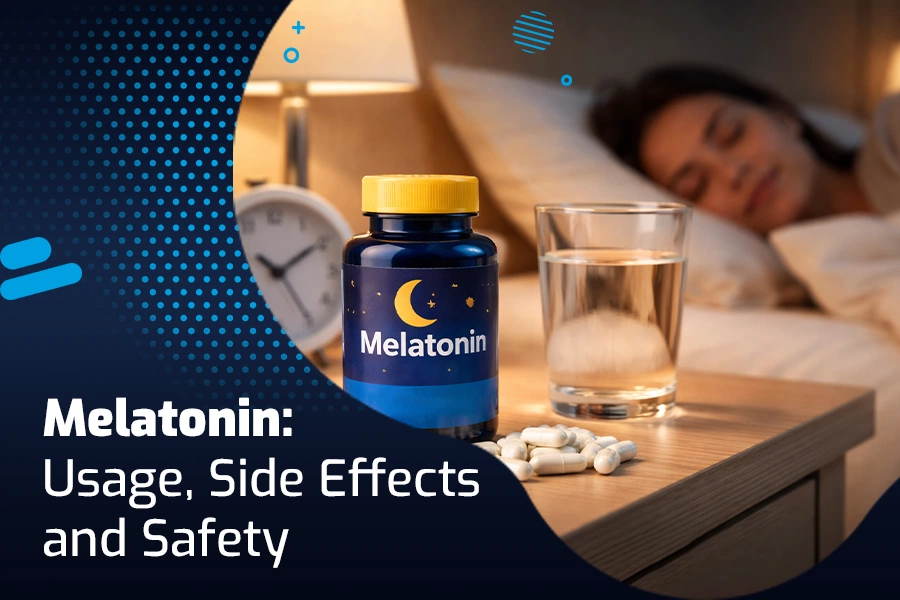
Walk into any pharmacy in America, and melatonin sits there in doses of 5mg, 10mg, even 20mg, stacked on shelves like candy. No prescription needed. No pharmacist consultation required. Most people grab whatever’s available, take it, wonder why they feel groggy the next morning, and either keep going or give up entirely.
Here’s the problem. Most people using melatonin are using it wrong, often at doses five to ten times higher than research suggests is actually effective, at the wrong time of day, for the wrong reasons. The supplement industry essentially turned a precision hormonal signal into something you take like a vitamin and hope for the best.
Melatonin does work. It’s genuinely useful for specific sleep problems. But how it works, when it works, and when it doesn’t is significantly more nuanced than the packaging suggests.
What Melatonin Actually Is
Melatonin is a hormone produced naturally by your pineal gland, a small structure sitting deep in the brain. Your body makes it in response to darkness. As light fades in the evening, production begins rising. Levels peak somewhere in the middle of the night, then drop as morning light approaches.
This pattern is the mechanism behind your circadian rhythm, your body’s internal clock that regulates not just sleep but temperature, hormone release, metabolism, and dozens of other biological processes that run on roughly 24-hour cycles. Melatonin doesn’t cause sleep directly. It doesn’t knock you out the way a sedative does. What it does is signal to your body that darkness has arrived and that biological processes associated with nighttime, including sleep preparation, should begin.
This distinction matters enormously for understanding when supplemental melatonin is useful and when it isn’t. If your problem is a disrupted circadian rhythm, melatonin supplementation at the right time addresses the actual mechanism. If your problem is anxiety keeping you awake or chronic insomnia with normal circadian timing, melatonin is addressing something that isn’t the problem.
When Melatonin Actually Works
The conditions where melatonin shows consistent evidence of effectiveness share a common thread: they all involve disrupted circadian rhythm timing.
Jet lag is probably the strongest use case. Flying across multiple time zones creates a mismatch between your internal clock and external light dark cycle of your destination. Melatonin taken at the local bedtime of your destination, not your origin, helps shift your circadian rhythm faster toward the new schedule. Studies show this genuinely reduces the duration and severity of jet lag symptoms when timed correctly.
Shift work sleep disorder is another legitimate application. Night shift workers face a constant battle against circadian misalignment. Their body’s melatonin production wants to peak when they need to be alert, and dawn light suppresses it when they need to sleep. Properly timed melatonin supplementation helps shift the phase of their circadian rhythm to better align with their work schedule requirements.
Delayed sleep phase disorder, a condition where someone’s circadian rhythm naturally runs several hours later than conventional social schedules demand, responds well to melatonin when used correctly. These are the people who genuinely cannot fall asleep before 2 or 3 AM regardless of how tired they are and struggle profoundly to wake at normal times. Low-dose melatonin taken several hours before their natural sleep onset can shift their rhythm gradually toward earlier timing.
Children with autism spectrum disorder and attention deficit hyperactivity disorder often experience disrupted sleep onset, and melatonin has reasonable evidence for improving sleep in these populations. Several pediatric guidelines now acknowledge melatonin as a reasonable short-term intervention for these cases.
The Dose Problem Nobody Talks About Enough
Most melatonin sold in the United States is wildly overdosed relative to what research shows to be effective. The common 5mg, 10mg, and higher doses on pharmacy shelves bear little relationship to the doses used in the studies demonstrating melatonin’s effectiveness.
Research consistently shows that doses between 0.5mg and 1mg are sufficient to raise blood melatonin to physiologically meaningful levels. In fact, the dose-response relationship with melatonin is unusual. More isn’t better. Blood levels from 0.5mg closely approximate natural nighttime peaks. Blood levels from 10mg are far higher than anything your body naturally produces and don’t produce proportionally better sleep.
What high doses do produce is prolonged elevation of circulating melatonin into morning hours, which is exactly what you don’t want. Morning grogginess, difficulty waking, and reduced daytime alertness from high-dose melatonin aren’t mysterious. They’re pharmacologically predictable consequences of flooding your system with a hormone that signals nighttime when your body is trying to run its daytime biology.
The disconnect between research-supported doses and commercially available doses exists largely because the supplement industry isn’t constrained by the same standards as pharmaceutical manufacturers. Higher doses appear more potent on packaging. Consumers equate higher numbers with better effect. Accuracy to pharmacological evidence isn’t the primary consideration when products are being designed and marketed.
Timing: The Variable That Determines Whether It Works
Getting the dose right matters. Getting the timing right matters more.
Melatonin used for circadian rhythm adjustment needs to be taken at a specific phase of your sleep wake cycle relative to your current biological clock, not just at whatever time you want to fall asleep. This concept, called phase response, means that melatonin taken at different times produces different effects on your rhythm.
Taking melatonin in the late afternoon or early evening, roughly five to seven hours before your natural sleep onset, shifts your clock earlier. This is what helps with jet lag traveling eastward or delayed sleep phase disorder where earlier sleep is the goal. Taking it closer to your desired sleep time, roughly thirty to sixty minutes before, facilitates sleep onset at that time without necessarily shifting the underlying rhythm significantly. Taking it after your natural sleep onset would occur doesn’t help sleep onset and may actually interfere with natural morning melatonin clearance.
For practical purposes: if you’re using melatonin purely to help fall asleep faster rather than to adjust your rhythm, take 0.5 to 1mg roughly thirty to sixty minutes before your target bedtime. If you’re using it for jet lag or rhythm shifting, timing becomes more precise and situation-dependent.
Side Effects: What Consistent Users Actually Report
Melatonin’s side effect profile is generally considered mild, particularly at low doses, which is one reason it became available without prescription in many countries. But side effects do occur and are worth understanding rather than dismissing.
Daytime grogginess is the most common complaint and is almost always dose-dependent. People taking 5mg or 10mg and waking up feeling drugged are experiencing exactly the pharmacological consequence of excessive melatonin still circulating when their body is trying to wake up. Reducing the dose resolves this for most people.
Vivid dreams or nightmares occur in some users. Melatonin influences REM sleep architecture and can intensify dream vividness in sensitive individuals. This isn’t harmful but can be disruptive.
Headache occurs in a subset of users, more commonly at higher doses. Mechanism isn’t fully established but the correlation with dose is reasonably consistent in user reports.
Nausea or stomach discomfort is reported occasionally, particularly when taken on an empty stomach or at high doses.
Mood effects including mild depression or irritability have been reported by some users with regular high-dose use. Melatonin interacts with multiple receptor systems beyond simple sleep regulation, and these interactions at supraphysiological doses can produce downstream effects that aren’t well characterized.
Interactions with medications deserve specific mention. Melatonin can interact with blood thinners, anticoagulants, immunosuppressants, diabetes medications, and blood pressure medications. It also interacts with caffeine, which can reduce melatonin’s effectiveness, and alcohol, which similarly disrupts its action despite the widespread practice of combining both as evening relaxation strategies.
Safety: Short-Term, Long-Term, and Special Populations
Short-term melatonin use at low doses has a strong safety record. Decades of research and widespread use haven’t produced signals of serious adverse effects in healthy adults using it occasionally and appropriately.
Long-term daily use is where the picture becomes less clear. The research on chronic daily melatonin use is thinner than most people assume given how commonly it’s used that way. A legitimate concern with long-term exogenous melatonin is whether supplementation affects the body’s natural melatonin production over time. Some evidence suggests chronic use can suppress endogenous production, though this appears reversible when supplementation stops. The clinical significance of this suppression isn’t fully established.
Children warrant particular caution despite melatonin’s common use in pediatric populations. The developing hormonal system responds differently than adult physiology. Melatonin receptors are present throughout the body, not just in sleep-regulating systems, and the effects of chronic melatonin exposure on pubertal development, reproductive hormone patterns, and endocrine development in children haven’t been adequately studied. Most pediatric sleep specialists recommend using the lowest effective dose for the shortest necessary duration in children.
Pregnant women should avoid melatonin unless specifically recommended by a doctor. Melatonin crosses the placenta, and adequate safety data in pregnancy simply doesn’t exist.
The Honest Summary
Melatonin occupies an unusual space, a real hormone with genuine physiological effects, sold as an unregulated supplement at doses that have more to do with marketing than pharmacology. Used appropriately, at low doses, correctly timed, for conditions involving circadian rhythm disruption, it works meaningfully well. Used as a general sleep aid at the doses most commonly sold, it produces grogginess more reliably than it produces good sleep.
The gap between how melatonin is typically used and how it works best isn’t complicated to close. Smaller dose. Better timing. Realistic expectations about what a circadian signal can and cannot accomplish for sleep problems that originate elsewhere. That combination turns melatonin from a supplement that disappoints most users into one that actually delivers what people were hoping for when they bought it.
Frequently Asked Questions
- Can melatonin help with regular insomnia that isn’t related to shift work or travel?
For insomnia not involving circadian rhythm disruption, evidence is weaker. Melatonin may modestly reduce sleep onset time but doesn’t address the underlying mechanisms of most chronic insomnia. Cognitive behavioral therapy for insomnia has substantially stronger evidence for non-circadian insomnia than melatonin does.
- Is it safe to take melatonin every night?
Short-term nightly use appears safe for most healthy adults. Long-term daily use remains less well-studied, particularly regarding effects on natural melatonin production. Most sleep specialists recommend using melatonin as needed rather than as a permanent nightly supplement, addressing underlying sleep issues through other means.
- Why do I feel groggy the next morning after taking melatonin?
Almost certainly the dose is too high. Dropping to 0.5mg or 1mg and taking it no more than one hour before bed resolves morning grogginess for most people. The standard pharmacy doses of 5mg and 10mg are far higher than physiological levels and produce exactly this effect.
- Can children take melatonin safely?
Short-term use under medical guidance for specific conditions appears reasonably safe. Long-term use in children lacks adequate safety data, particularly regarding effects on hormonal development. Melatonin use in children should involve a pediatrician’s guidance rather than parental self-prescribing.
- Does melatonin lose effectiveness over time?
Tolerance in the traditional pharmacological sense isn’t well-documented with melatonin. Perceived reduced effectiveness over time often reflects the underlying sleep problem worsening, reduced attention to timing and dose precision, or expectations that didn’t match what melatonin can realistically deliver for a particular sleep issue.




Leave a Reply