
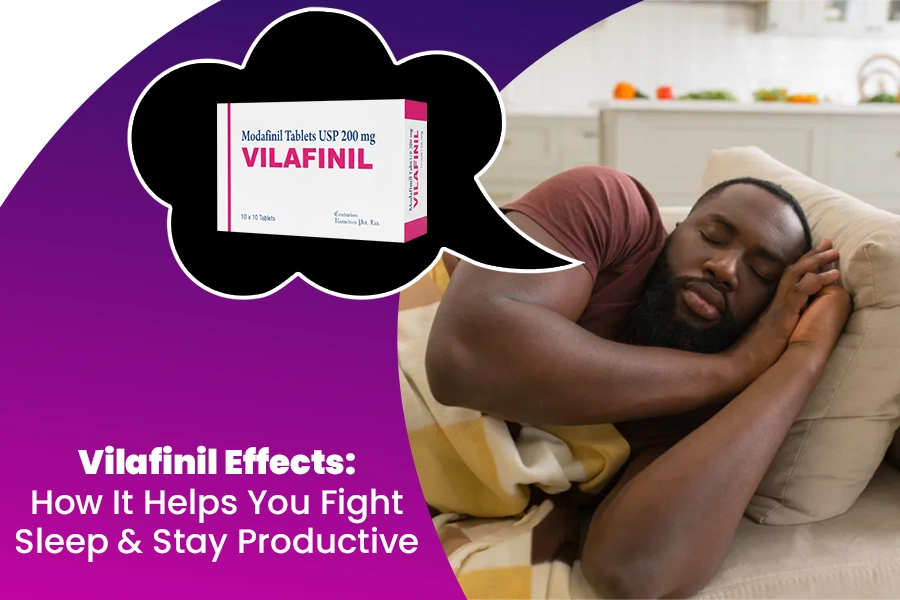
Feeling foggy at your desk, battling midday sleep, or pulling an all-nighter for a project? Vilafinil, often sold as Vilafinil 200 mg or in lower strengths, is one of the wakefulness medicines people turn to when they need clinical support staying awake and functioning. In this comprehensive guide, we’ll look at what Vilafinil is, how it works, the typical effects you can expect, safety considerations, and practical tips for using it as a productivity booster.

What is Vilafinil?
Vilafinil is a brand-name formulation that contains modafinil as the active ingredient, a wakefulness-promoting agent developed to treat sleep disorders such as narcolepsy, obstructive sleep apnea (as an adjunct), and shift-work sleep disorder. In many markets (notably India), Vilafinil appears as a generic / branded form of modafinil and is sold in tablet strengths including 200 mg. Clinically, modafinil is classified as an eugeroic, literally a “promoter of wakefulness”, and is widely used where excessive daytime sleepiness impairs safety or daily function.
How Vilafinil works
Vilafinil (modafinil) doesn’t act like classical amphetamine stimulants. Its mechanism isn’t fully understood, but research shows it influences several neurotransmitter systems, especially dopamine (by blocking reuptake), orexin/hypocretin pathways (important for wakefulness), and some monoaminergic circuits, which together promote alertness and reduce the propensity to sleep without producing the intense euphoria or motor overstimulation typical of amphetamines. That profile explains why many users describe clearer, sustained wakefulness rather than a jittery “wired” feeling.
Vilafinil effects you’re likely to notice
People report a recognizable cluster of effects when Vilafinil takes hold (usually within 1–3 hours after an oral dose):
- Greater ability to stay awake and reduce daytime sleepiness is the primary therapeutic effect for narcolepsy and shift-work disorders.
- Improved sustained attention and reduced lapses are helpful for long tasks, driving, or night shifts.
- A clearer, more “functional” alertness rather than manic stimulation, many users say tasks feel easier to start and persist with.
- Possible mild cognitive benefits, such as faster reaction time or modest improvements in working memory in sleep-deprived people (effects vary).
Common transient effects people also report include headache, dry mouth, nausea, dizziness, and trouble falling asleep if taken too late in the day. Serious but rare effects (skin reactions, severe psychiatric symptoms) are well-documented and require immediate medical attention.
Dose, timing, and typical use-cases
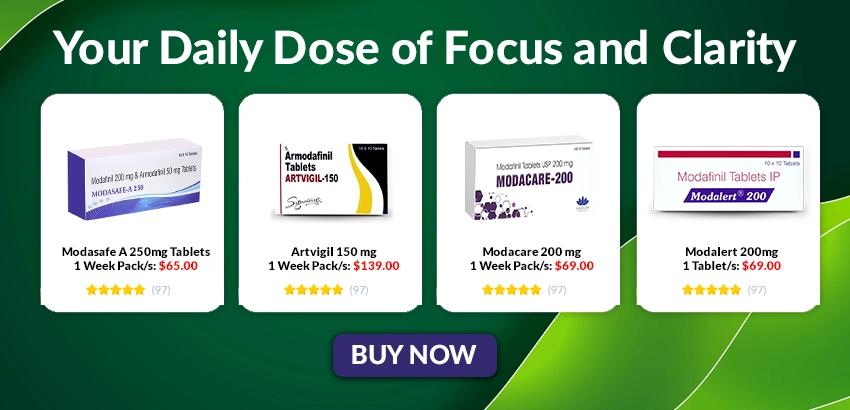
- Standard adult dose for wakefulness: Many prescribers use 200 mg once daily for narcolepsy or to manage excessive daytime sleepiness; some protocols may start at 100 mg and adjust based on response. Available product listings for Vilafinil often reference a 200 mg tablet as a standard packaging option.
- When to take it: For daytime sleepiness (narcolepsy) you usually take it in the morning. For shift-work sleep disorder, a prescribed timing aligning with the work shift is used. Don’t take it in the evening if you want to fall asleep at night.
- Onset & duration: Peak blood levels typically occur a few hours after ingestion, and the wakefulness-promoting window can last most of the workday. Many users report effects lasting 8–12 hours, depending on dose and individual metabolism.
Vilafinil as a “stay awake pill” or productivity booster
Marketing may label pills as “stay awake” or “productivity boosters,” but it helps to set realistic expectations:
- Clinical scenarios: In people with diagnosed sleep disorders, Vilafinil reliably reduces excessive sleepiness and improves functional outcomes (e.g., fewer sleep attacks, better ability to work/drive safely).
- Healthy sleep-deprived users: For individuals who are simply tired due to poor sleep, Vilafinil can temporarily counteract sleepiness and improve vigilance, but it does not replace the need for sleep. Repeated use to override chronic sleep debt risks impaired recovery, health consequences, and reduced performance in some cognitive domains over time.
- Productivity vs. cognition: Many users feel more motivated and focused when not fighting sleep; objective cognitive enhancements are typically modest and most pronounced in individuals who are sleep-deprived. Use as a “productivity hack” should be cautious, and medical guidance is essential.
Safety, side effects, and important precautions
Vilafinil (modafinil) is generally well-tolerated for short-term therapeutic use, but there are important safety points:
- Common side effects: headache, nausea, nervousness, insomnia, dry mouth, dizziness. Most are mild and transient.
- Serious but rare: severe skin reactions (e.g., Stevens–Johnson syndrome), significant psychiatric reactions (hallucinations, suicidal ideation, or severe mood changes), and cardiovascular events in susceptible people have been reported. If you notice rash, breathing issues, chest pain, or severe mood change, stop and seek care.
- Drug interactions & contraceptives: Modafinil can reduce the effectiveness of hormonal contraceptives and interacts with several medications via liver enzymes (CYP450), so review medications with your provider.
- Pregnancy & breastfeeding: Avoid unless specifically advised and monitored by a physician; there are reports of fetal risk and guidance to avoid pregnancy while using modafinil.
- Dependence & abuse potential: Compared to classical stimulants, modafinil has lower risk of euphoria and dependence, but misuse and off-label use exist; medical oversight reduces risks.
Vilafinil vs other options (modafinil family & alternatives)
- Vilafinil = modafinil (brand/generic packaging differences): Vilafinil products in some markets are modafinil-containing tablets marketed under that brand name; the clinical profile mirrors modafinil’s documented effects.
- Armodafinil vs modafinil: Armodafinil is the R-enantiomer of modafinil with slightly different pharmacokinetics (often longer-lasting per mg). Choice between them depends on clinical goals, tolerability and prescriber preference.
- Non-pharmacologic strategies: Sleep scheduling, light therapy, naps (if permitted), caffeine in moderation, and treating underlying sleep disorders are first-line or adjunctive measures. Drugs help, but they’re not a standalone cure for poor sleep habits.
Ethical & workplace considerations
Using prescription medications as performance enhancers raises ethical questions. If your workplace expects long hours, consider discussing workload and hours with supervisors, and weigh health trade-offs before relying on medication to “hack” productivity. If Vilafinil is prescribed for a diagnosed disorder, it’s a reasonable medical intervention to restore function and safety.
Final thoughts
Vilafinil (a modafinil-containing tablet often available in 200 mg formulations) is a clinically established wakefulness medicine with a useful role in treating excessive daytime sleepiness and supporting functioning where sleep disorders interfere with safety or productivity. When used responsibly and under medical guidance, it can be a powerful ally for staying alert and getting work done. But it’s not a substitute for sleep or healthy habits, and mindful attention to dosing, interactions, and rare serious side effects is essential.
FAQs
Q1: Is Vilafinil the same as Modafinil?
A: Yes, Vilafinil is a brand/generic formulation that contains modafinil (active ingredient). The therapeutic effects and risks align with modafinil’s clinical profile.
Q2: Can I use Vilafinil as a one-off “stay awake pill” for exams or travel?
A: While a single dose can reduce sleepiness, using prescription wakefulness medicines without medical oversight isn’t recommended. They do not replace restorative sleep and can mask underlying problems. Talk to a clinician before off-label or occasional use.
Q3: What does Vilafinil 200 mg feel like?
A: Many users describe clearer wakefulness, sustained attention, and less need to nap, but individual responses vary. Some experience headaches, insomnia, or nausea.
Q4: Is Vilafinil addictive?
A: Compared to classic stimulants, modafinil has low addiction liability; however, dependence or misuse can occur. Use under medical supervision minimizes risk.
Q5: Can it affect my contraceptive pill?
A: Modafinil can reduce hormonal contraceptive effectiveness; use backup contraception or consult your prescriber.
References
- Modafinil — drug monograph and mechanism overview (Wikipedia & clinical summaries) — a concise review of modafinil’s pharmacology, uses, and known risks. Wikipedia
- Practical use and risk of modafinil — review of wakefulness-promoting properties and real-world effects on alertness and sleep recovery. PMC


Leave a Reply