
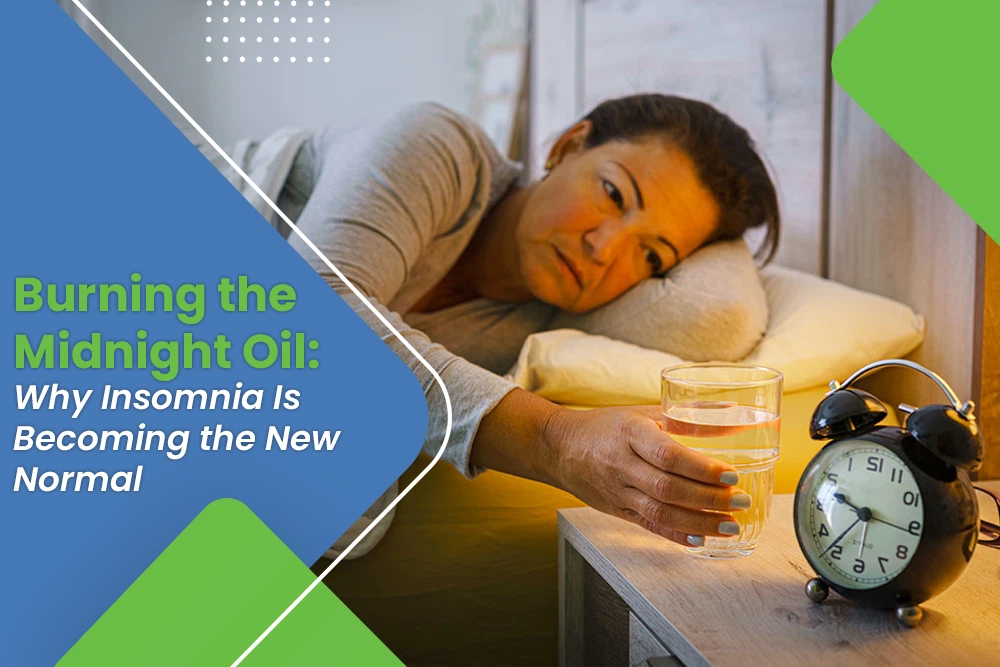
Every night millions of people stay awake in the dark rooms while the whole world is fast asleep. The rooms are quiet, the lights are off yet your mind refuses to shut down. It feels like minutes now turn into hours and the morning arrives sooner than before. What was once an occasional night issue has turned into a disorder-insomnia in modern life. Millions of people are now facing sleepless nights due to late night emails, unending notifications, stress, lifestyle fluctuations and so on. According to reports, in the USA 7 out of 15 leading causes of death are linked to reduced sleep nights. The evidence suggests that reduced sleep is directly linked to negative outcomes whereas excessive sleep is indirectly linked to negative outcomes. Hence, the impact of insufficient sleep appears to be the more salient issue in our society and, because of its broad-ranging effects, represents a major public health concern.

What is Insomnia?
Insomnia is a sleep disorder that makes it difficult to fall asleep or stay asleep throughout the day. It is also known as sleeplessness. Roughly, 1 in 3 adults suffer from insomnia worldwide. When these symptoms remain prevalent for more than 3 months it can lead to chronic insomnia symptoms that affect overall health and daily functioning. Chronic insomnia is the most prevalent sleep disorder. About 10% of adults have chronic insomnia. Insomnia in modern life is not limited to one sleepless night but a consistent issue that is linked to environmental, psychological and sedentary factors. People experiencing insomnia in modern life might see symptoms like:
- Difficulty falling asleep
- Waking up frequently at night
- Trouble staying awake
- Waking up too early
- Daytime fatigue and weakness
- Poor concentration
- Mood disruptions especially irritability
- Stress about insomnia
When sleep deprivation remains persistent for longer duration, it can negatively affect both physical and mental health.

Causes of Insomnia Today
The increasing prevalence of insomnia in modern life has been affected by several factors. The causes of insomnia today are often deeply connected to the way society operates.
- Increased stress and mental pressure
Increased stress and mental pressure is one of the major causes of insomnia. Today’s fast paced life works on high expectations, constant pressure from workspace, tight deadlines, demanding schedules, etc. All these things run in your mind even after the working hours close down. Stress triggers the body’s flight or fight response, releasing hormones such as cortisol and adrenaline. These hormones affect mental alertness and make it difficult for the brain to sleep and rest. When stress becomes persistent it can disrupt the normal sleep schedules and lead to chronic insomnia.
- Hereditary Condition
Insomnia is not always the result of day’s worries, sometimes it is an inherited neurobiological hyperarousal. Your genetic code plays a crucial role not only in how you sleep but also in how much you sleep. There are people who are genetically vulnerable to light and more fragmented sleep. Insomnia in modern life can be a result of genes.
- Technology and Blue light
We are living in a generation where no person can function without technology. As we used to depend on food for our well-being now it is taking a turn towards digital technology. It has been an essential part of our life. Many people speed hours on smartphones, tablets, laptops before going to bed. This increases the exposure to blue light which affects the hormone melatonin essential for the sleep wake cycle. Reduced melatonin levels delay sleep onset and makes it difficult for the person to sleep naturally. This is where they need medications like Modalert 200 mg.
- Irregular work schedules
Shift work and tight deadlines are another aspect that contribute to insomnia in modern life. Professionals that do night shifts or rotating disrupt their circadian rhythm which leads to disorders such as Shift work Sleep disorder or insomnia. Professionals in industries such as aviation, healthcare sector, IT and transportation are more likely to see inconsistent sleep patterns.
- Higher levels of Caffeine
Modern lifestyle often relies on stimulated drinks such as coffee, energy drinks or caffeinated beverages to avoid sleepiness and maintain productivity. What goes unnoticed is that too much caffeine can lead to blocking of the sleep hormone in the brain. As caffeine can keep you awake at that moment but excessive coffee consumption especially at late hours can delay the onset of sleep and contribute to insomnia.
- Sedentary lifestyle
Physical activity promotes better sleep schedules along with lower stress levels. But the modern working environments have involved less movements and long hours of sitting. A sedentary lifestyle reduces fatigue and makes it difficult for the body to sleep naturally at night. Regular exercise helps improve the sleep schedule while keeping you fresh and energetic.
- Hormonal fluctuations
Hormonal fluctuations during menopause or pregnancy can also be a cause of insomnia in modern life. Many of these hormones are associated with circadian rhythm, stress regulation and many more issues. These hormonal fluctuations can cause low energy levels, fatigue and sleep disorders like insomnia.
Chronic Insomnia Symptoms and their Impact
Common symptoms of chronic insomnia are:
- Persistent difficulty falling asleep
- Waking frequently during the night
- Daytime exhaustion
- Poor concentration
- Mood swings and irritability
- Memory problems
- Reduced work efficiency
- Feeling unfresh after sleep
Over time, sleep deprivation can lead to serious health conditions such as decreased cognitive performance, weakened immunity and increased stress levels.
For individuals that experience insomnia in modern life for an extended period of time it is seen that they also feel less motivated and do not perform daily tasks effectively.
Insomnia and Stress: a Vicious cycle
According to the American Psychological Association, stress induced insomnia in modern life is seen in around 43% of individuals. Stress is a complex condition that affects the body mentally, physically and emotionally. Intense stress can lead to short and long term effects on the body, activating the defense mechanism of the central nervous system. Insomnia and stress go hand in hand. Stress-induced insomnia in modern life occurs when anxiety triggers increased cortisol and adrenaline levels, forcing the brain to go into a state of hyperarousal that prevents sleep. The immune system plays a crucial role in the relationship between stress and sleep.
Poor sleep cycle or insomnia can lead to increased levels of stress and stress can be one of the major reasons for insomnia in modern life. So it is a never ending cycle that is going to keep on forming. This cycle affects emotional stability, productivity and overall well-being. The two way street between stress and insomnia in modern life suggests a potentially vicious cycle, highlighting the need for interventions targeting the work environment to reduce sleep difficulties and improve sleep quality.
The Role of wakefulness promoting medications
Wondering how wakefulness promoting medications can help with insomnia in modern life? Let me tell you. Wakefulness promoting medications are the stimulants that work are used to improve wakefulness in adult patients with excessive sleep syndrome. Medications such as Modalert 200 mg may be prescribed to improve alertness and wakefulness in individuals experiencing excessive daytime sleepiness due to insomnia in modern life. Modalert 200 mg consists of Modafinil,known for its cognitive enhancing properties. It works by influencing certain neurotransmitters in the brain. It is commonly used to help individuals remain alert and focused during the day.
Some important tips that you need to consider while taking Modalert 200 mg:
- Modafinil doesn’t cure sleep disorders or replace the need for adequate amount of sleep, it just treats the symptoms
- It generally has less potential for abuse and does not cause tolerance
- It has a half-life of about 10 hours
- Dosage reduction is required for patients with severe liver impairment
However such medications should be used only under proper medical care and do not self-medicate without consulting a physician.
Lifestyle changes that can Improve sleep
Although insomnia in modern life is climbing the steps drastically it can still be managed with correct measures. Few of the lifestyle changes that you can do are:
- Follow a sleep schedule
Following an established sleep schedule will help you to maintain a correct balance between your work life and personal life. Going to bed at the same time and getting up at the same time will help to maintain the body’s circadian rhythm.
- Reduce caffeine intake
Reduce caffeine intake so that your body will sleep at the right time. Avoid caffeine intake later in the day as it will cause sleep deprivation.
- Limit the exposure to blue light
Avoid using your phone before going to bed as the blue lights will activate your brain and make it difficult for you to sleep at night. It will also support natural melatonin production.
- Practice relaxation techniques
If you want to sleep soundly, practice some relaxation techniques before sleep like meditation, deep breathing exercises, reading, etc.
- Stay physically active
Physical activities are a game changer. Regular exercise promotes better sleep quality and reduces stress levels.
Conclusion
Insomnia in modern life is accelerating due to a number of factors such as stress, blue light exposure, irregular working schedules, tight deadlines and lifestyle factors affecting sleep. As there is evolution in modern society, insomnia is going to be a major health issue. Understanding the causes of insomnia in modern life and recognizing chronic insomnia symptoms can help individuals take proactive steps toward improving their sleep health. In situations where sleep disruption significantly affects the overall health of people, medications such as Modalert 200 mg may help improve alertness and cognitive performance when used responsibly under medical guidance.
Ultimately, prioritizing sleep is essential for maintaining physical health, mental clarity, and overall quality of life in today’s demanding world.
Explore Modafinil Products at: Modafinil In UK, Modafinil In Germany, Modafinil In Australia, Modafinil In Europe.
FAQs
- What are the symptoms of stress induced insomnia?
The symptoms of stress induced insomnia are trouble falling asleep, waking up too often in sleep, fatigue, feeling mentally alert when trying to sleep, mood changes, etc.
2. Is insomnia dangerous?
Yes. Untreated or chronic insomnia can be dangerous as it can lead to serious long-term health conditions.
3. What are the causes of insomnia?
Insomnia can be caused by stress, inconsistent bedtime schedules, high intake of caffeine or alcohol, circadian rhythm disruptions, etc.
4. How to cure Insomnia?
Insomnia can be cured by following consistent sleep schedules, using medications such as Modalert 200 mg, lifestyle changes, etc.
5. How is chronic insomnia diagnosed?
Chronic insomnia is diagnosed based on the individual’s medical history with the help of their medical, psychiatric and substance use history.


Leave a Reply