
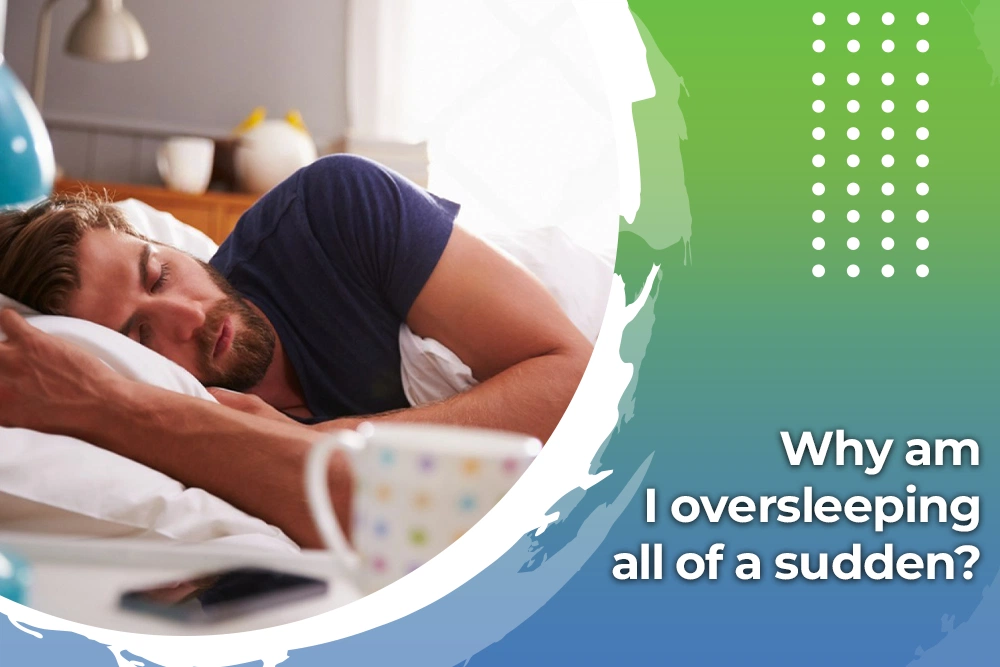
Have you recently found yourself asking, “Why am I oversleeping all of a sudden?” You’re not alone. There is a common belief that sleeping more than required means better health. But what happens when you sleep more than the required hours- 9,10 or 11 hours every night and still getting up feeling weak? This might be a sign of a sleep or a medical condition.
Sudden oversleeping, often known as hypersomnia, is your body’s way of signaling that something is wrong within the body. While it might seem harmless in the beginning, persistent oversleeping can affect your productivity, mood and overall well being. Understanding why this happens is the first step towards regaining your energy control and sleep patterns.

What is Oversleeping?
Oversleeping also known as long-sleeping or hypersomnia is generally when you sleep around 9-10 hours per day. It often signifies underlying conditions like sleep apnea, depression and thyroid dysfunction.
People who sleep for 9-10 hours persistently may be diagnosed with hypersomnia, a condition that makes you feel extremely sleepy during the day. This happens even though you get a healthy amount of sleep. Narcolepsy and other sleep disorders commonly cause hypersomnia.
Why am I oversleeping all of a sudden?
Most causes of oversleeping are temporary and harmless. Sudden oversleeping is rarely random it is a cluster of identifiable symptoms and triggers:
- Sleep debt
Sleep debt is the cumulative difference between the amount of sleep your body requires and the sleep it actually gets. It can negatively impact your health, since getting enough sleep is essential. If you don’t get enough sleep on a regular basis, you might:
- Feel tired throughout the day
- Lose your ability to remain focused
- Weaken your immune system
- Makes it more difficult for your brain to process information
- Mental health and emotional fatigue
People with mental problems like depression and anxiety often struggle with sleep disorders and other health problems. Both oversleeping and less sleeping are effects of depression. Sleeping too much and depression go hand in hand. People with depression may have an imbalance in their brain activity which can lead to fatigue. According to research, a higher rate of depression is seen in oversleepers. In such cases, sleep becomes an escape and not rest.
- Sleep apnea
Sleep apnea is a serious and common disorder where breathing repeatedly starts or stops while sleeping. People with such conditions snore loudly and feel tired even after a full night’s sleep. To make up for poor sleep, you may take a nap during the day and try to sleep during the night which will lead to oversleeping. Sleep apnea symptoms are often resolved with appropriate treatment options like Armodacharge 150.
- Narcolepsy
Narcolepsy is a condition that causes extreme daytime sleepiness. Sometimes it can lead to oversleeping particularly in people with Type 1 Narcolepsy who may sleep for 10 hours or more. While Narcolepsy is a lifelong condition, it can be managed with treatment options like Armodacharge 150 if taken under medical guidance.
- Medications and Supplements
Oversleeping can be related to medication side effects. Certain medications may significantly affect sleep quality. The most common medications include:
- Tranquilizers
- Sleeping pills
- Allergy medications (Antihistamines)
- Certain painkillers
- Tricyclic antidepressants
Supplements like melatonin can be a great substitute for overcoming sleep disorders but if taken at wrong timing can lead to oversleeping. Always review your new medications if sleep issues can be seen.
- Substance use
Substances like cannabis and alcohol can interfere with sleep architecture. While alcohol may help you sleep faster, it might also trigger deep sleep leading to longer but refreshing rest.
Similarly, a poor diet lacking essential nutrients can contribute to fatigue and increased sleep needs.

Hypersomnia Symptoms you shouldn’t ignore
Understanding hypersomnia symptoms will help you determine whether your oversleeping is a temporary phase or a medical concern.
Key symptoms include:
- Anxiety
- Constant or repeated episodes of extreme sleepiness during the day
- Hallucinations
- Headaches
- Loss of appetite
- Restlessness
- Sleep paralysis
- Memory problems
If these symptoms exist for longer than required it might be an indication of an underlying condition.
Excessive sleepiness reasons: A Deeper look
When thinking, “Why am I oversleeping all of a sudden?” The reasons are important to understand because they usually overlap.
Biological Factors
Your body may require extra sleep during illness, hormonal changes and recovery. Sleeping extra hours in such times is completely normal but oversleeping can be a trigger.
Psychological Factors
Stress, anxiety and depression are the factors that affect sleep patterns. Oversleeping can sometimes mask deeper emotional struggles.
Environmental Factors
The normal environmental conditions such as light exposure, sleep conditions, noise and even room temperature can affect the sleep quality. A dark, quiet room will help in maintaining an ideal condition for better sleep.
Behavioural Factors
Habits like irregular sleeping schedules, long naps or excessive work load can gradually increase your sleep duration without giving rest to the body.
The link between Oversleeping and Depression
Oversleeping is a common symptom of depression, not just a result of laziness, it creates a bidirectional link where depression causes fatigue and excessive sleep exacerbates depressive symptoms. The connection between sleeping too much and depression is particularly crucial.
People with depression may use sleep to escape from overwhelming feelings, fatigue or daily responsibilities. However, this creates more anxiety when they wake up.
About 10% to 40% people with depression experience hypersomnia. According to a sleep psychologist Dr. Drerup, oversleeping is a symptom in 15% of people with depression and she also noted that it tends to be more often related to atypical depression.
People may sleep longer because:
- They are too tired
- They lack motivation to start the day
- Sleep feels like a temporary escape
- Their brain chemistry affects the energy regulation
Treating depression often addresses the sleep patterns as well.
Teens & Oversleeping
Teens generally need 8-10 hours of sleep for cognitive development and growth. It’s a dicey situation that has been arising between teen parents as they can’t distinguish between typical inconsistent sleep patterns and oversleeping that has been related to depression. As kids grow and become teenagers, their circadian rhythm gets altered and the tendency to stay up late at night becomes a biologically driven trait.
Many teens get only 7 hours of sleep, giving a 2 hour sleep debt that they usually try to make up during the weekend and disturb their internal clock. While sleeping more hours on the weekends is normal, sleeping consistently for over 10 hours may signal towards underlying health issues.
How to fix Oversleeping and restore balance?
If you’re wondering again, “Why am I oversleeping all of a sudden?”, the solution lies in addressing the underlying causes and habits:
- Establish a consistent sleep schedule
Sleep schedule is crucial when it comes to addressing sleep disorders. Go to bed early and wake up early in the morning. If you follow this schedule even on the weekend it will be a boon.
- Improve sleep quality
Quality matters over quantity. Just sleeping enough hours will not work, sleeping for the desired hours without any disturbance is what matters. Focus on restful sleep rather than longer sleep. Few of the steps for restful sleep are:
- Keep your room dark and cool
- Avoid caffeine intake in the evening
- Get more exercise done in the day so that you are tired enough when you go to sleep
- Get rid of sources of distractions like lights, electronics
- Exposure to sunlight
Get exposure to morning sunlight as it helps to reset your circadian rhythm and alertness.
- Monitor your mental health
If you have a suspicion that you might be suffering with depression or emotional fatigue, seek immediate medical help.
- Nap Early
Naps later in the afternoon can make it difficult for you to fall asleep on time at night.
When should you be concerned?
Occasional oversleeping is not harmful. However you should consider seeking help if you see following:
- You consistently sleep more than 8-9 hours
- You feel tired even after sleeping enough
- Your day to day work is affected
- Your sleep patterns gets disturbed
If you’re concerned about oversleeping, or anything related to sleep disorders like excessive daytime sleepiness, brain fog or fatigue that interferes with your daily functioning you should seek medical help.
You can keep a sleep diary to maintain your nighttime sleep and wake times as well as any naps that you take during the day. Your physician might prescribe Armodacharge 150 for treating sleep disorders.
Final Thoughts
Asking yourself “Why am I oversleeping all of a sudden?” is not sufficient. You need to address the core reason behind oversleeping. Oversleeping is not just spending more time in between, it is something about a sign of imbalance- whether physical, emotional or well-being related.
By identifying the causes of oversleeping, recognizing hypersomnia symptoms, and understanding excessive sleepiness reasons, you can take meaningful steps toward better overall well-being. And if your situation is linked to oversleeping and depression, addressing mental well-being becomes just as important as fixing your sleep schedule.
The human body often communicates through patterns and sleep is the major signal. Pay attention to such details and live a healthy life.
Explore Modafinil products in:
Modafinil In UK, Modafinil In Germany, Modafinil In Europe, Modafinil In Australia
FAQs
- How many hours of sleep is oversleeping?
Sleeping more than 9 hours in a 24 hour daytime is often considered as oversleeping.
2. What deficiencies can cause oversleeping?
Deficiencies such as Iron, Vitamin B12, D and Selenium can cause oversleeping.
3. How does balancing the light help to maintain a consistent sleep pattern?
Getting enough sunlight in the morning and avoiding it before bedtime can help to maintain a consistent sleep pattern.
4. What are the diagnosis tests for hypersomnia?
Few of the diagnosis tests for hypersomnia are sleep study, multiple sleep latency tests and sleep questionnaires like Epworth Sleepiness Scale.

Leave a Reply