
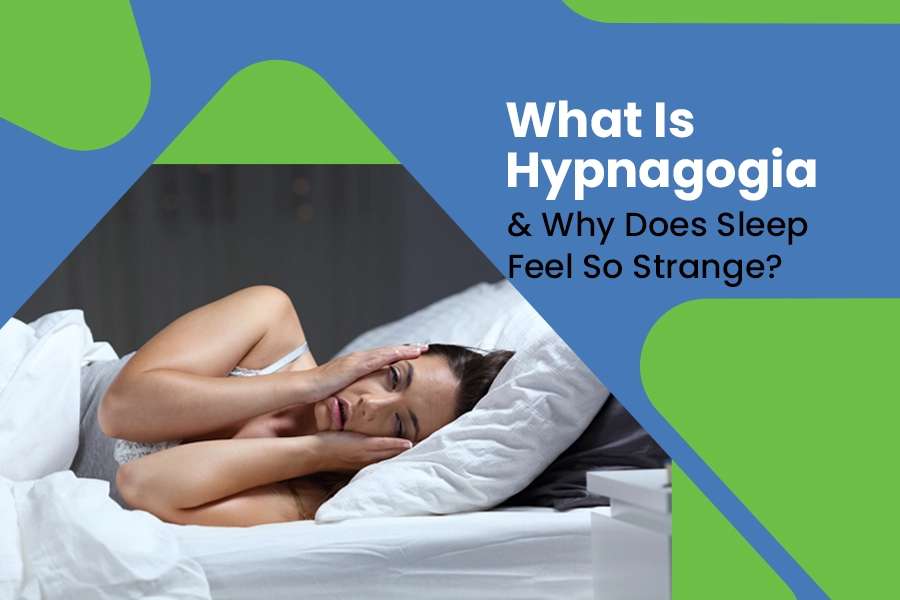
Somewhere between being fully awake and properly asleep, there’s this weird little pocket of time where things just… stop making sense. A shape moves in the dark that isn’t really there. A voice says something, clear as day, and then nothing. The body might jerk awake for no reason at all. Most people have felt some version of this and just shrugged it off as “falling asleep is weird sometimes.” Turns out there’s an actual name for it that is hypnagogia.
The word was coined by a French scholar Alfred Maury in 1848. It comes from Greek words hypnos meaning sleep and agogos meaning leading which literally means the state that leads you into sleep. It is the state of drowsiness which occurs at the onset of sleep. During this transition period between being fully awake and fully asleep, your brain undergoes fascinating changes that create unusual sensations and experiences.
What actually is happening in the brain?
Scientists are still having arguments about the finer details that as a person drifts off, different parts of the brain shut down or shift gears at different speeds. The visual cortex might still be firing off little bursts of activity even though the eyes are closed and there is nothing to see. That’s often where those random floating images come from during the hypnagogic state. Not full dreams, not nothing either. Just fragments.
Some researchers link this to a drop in what’s called sleep inertia readiness (not the same as the inertia felt after waking up). Others focus more on how the brainstem starts loosening its grip on motor control before the mind has fully let go. That mismatch-body powering down before the mind does, or sometimes the other way round is probably why so many people report feeling awake while falling asleep like they’re aware of the room, the blanket, the sound of the fan but also somewhere else entirely.
It’s not paranormal. It just feels like it sometimes.
The falling asleep sensations nobody really warns you about
There’s a whole list of things that fall under hypnagogia symptoms, and most people have experienced at least 2 or 3 without ever putting a label on it:
- Hypnic jerk- a sudden or involuntary muscle contraction that happens just as you begin to fall asleep.
- Hearing your name called or a knock when nobody’s there
- Brief flashes of colors or geometric shapes behind closed eyes
- A sensation of falling, sometimes from a great height for no reason
- Fragments of thought that don’t connect to anything like half a sentence, a random word, an image of a stranger’s face
None of this is dangerous. It can feel unsettling though, especially the first time someone notices it happening and actually pays attention instead of just falling asleep through it. Most of these unusual experiences before sleeping happen constantly, but people rarely remember them because, well, they were falling asleep. The brain wasn’t exactly in recording mode.
Why does it feel so strange?
Feeling strange during this window comes down to conflicting signals. The senses are quieting down but not all at once and evenly. So the brain that loves patterns and hates ambiguity starts filling gaps with things that aren’t there. It’s not hallucinating in the clinical sense, more like… improvising.
This is part of why the sleep-wake cycle can feel dreamlike even before actual dreaming starts. Some scientists think hypnagogia is basically the brain rehearsing for REM sleep, trying out little dream fragments before the “real” dreaming machinery kicks in later in the night. Others push back on that idea, saying hypnagogic imagery is structurally different from REM dreams which is less narrative, more disjointed, like scraps instead of a story. Both camps have decent evidence. Neither has fully won the argument.
Hypnagogia vs Sleep Paralysis
Sleep paralysis happens when the mind wakes up but the body doesn’t-muscle atonia (the paralysis that normally protects a person during REM sleep dreaming) lingers a bit too long into wakefulness. It can be genuinely terrifying when combined with a sense of presence in the room, pressure on the chest, etc.
Hypnagogia, on the other hand, usually happens on the way into sleep, not on the way out. It’s generally milder. No paralysis, no dread necessarily, just… odd little sensory blips. Some researchers consider sleep paralysis to be an extreme cousin of hypnagogia, or at least sharing some of the same neurological plumbing.
The lucid dreaming connection
A decent chunk of lucid dreaming techniques actually use the hypnagogic state on purpose. The idea is to stay just aware enough during that in-between window to notice when a dream starts forming, and then theoretically steer it. Some people practice keeping a thread of awareness going as the hypnic jerks and random images show up, treating hypnagogia almost like a gateway rather than something to just sleep through.
Does it work reliably? Depends who you ask. Some people swear by it. Others try for weeks and just fall asleep like normal, no lucidity, nothing. The sleep wake cycle isn’t exactly cooperative with conscious effort trying too hard to stay aware tends to just keep a person awake instead of easing them into that liminal zone.
Is this connected to sleep onset experiences that feel almost real
Yes and this is maybe the most disorienting part for people who aren’t used to it. Sleep onset experiences during hypnagogia can feel more vivid, more “real,” than an actual dream later in the night. A voice calling out feels like it came from inside the actual bedroom. A falling sensation feels physical, not imagined. That’s because the brain hasn’t fully disengaged from processing the real environment yet, so the imagined stuff gets blended in with real sensory input. Two signals mixing together, basically, and the brain not sorting out which is which fast enough.
It usually only lasts a few seconds. Sometimes it feels longer. Time doesn’t behave normally either.
Does everyone experience hypnagogia?
Pretty much, though not everyone remembers it and some people experience it far more vividly than others. Certain factors seem to increase how noticeable it is like sleep deprivation, irregular sleep schedules, high stress, some medications. People who are sleep deprived especially seem to report more intense hypnagogic imagery, almost like the brain is rushing the transition and doing a sloppier job of it.
Age might play a role too, though the research here is thinner than people would like. Kids report it less, and some older adults report it changing in character over the years. Nothing conclusive though. This is one of those areas of sleep science that still has more questions than tidy answers.
Should anyone be worried about this?
Usually no. Hypnagogia on its own is considered a normal part of falling asleep, not a symptom of anything. It only becomes something worth mentioning to a physician if it’s paired with things like chronic insomnia, frequent sleep paralysis episodes, excessive daytime sleepiness, or if the imagery becomes distressing on a regular basis those could point to something like narcolepsy or another sleep disorder, and it’s worth getting checked rather than guessing.
For most people though, it’s just the brain doing its usual disorganized shuffle on the way into sleep.
Explore Modafinil products in:
Modafinil In UK, Modafinil In Germany, Modafinil In Europe, Modafinil In Australia
FAQs
1. Is hypnagogia the same as dreaming?
Not exactly, it’s more fragmented and happens before sleep, while dreams (especially REM dreams) are more like stories.
2. Why do I hear voices before going to sleep?
That’s a common hypnagogia symptom where the brain generates sound in the absence of real input.
3. Is hypnagogia linked to lucid dreaming?
Yes, some people use the hypnagogic state deliberately as a way into lucid dreams, though results vary a lot.
4. Is hypnagogia healthy?
Hypnagogia is a normal healthy state of transition between wakefulness and sleep. It is mostly harmless for most people.
5. What is the treatment for hypnagogia?
Treatment for hypnagogia includes improving sleep habits, reducing stress and treating underlying health conditions like insomnia, anxiety or Narcolepsy.
Leave a Reply