
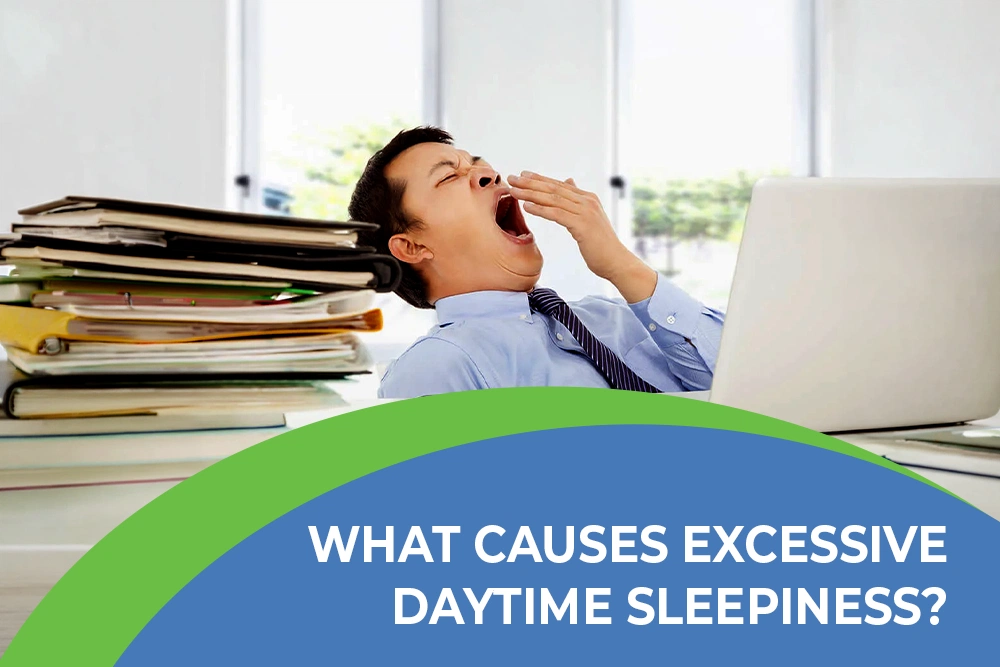
Excessive Daytime Sleepiness sounds like one of those issues that only affects night-shift workers or new parents, but honestly, it shows up in people who sleep a full eight hours too. That’s the confusing part. Someone can technically “sleep enough” and still be dragging themselves through the afternoon like they haven’t slept in days. So what’s actually going on there?
There isn’t one single answer, which is annoying but true. Excessive Daytime sleepiness can come from sleep quality issues, medical conditions, lifestyle habits, or sometimes a mix of all three stacked on top of each other. And figuring out which one applies to a specific person usually takes some trial and error, not just a quick Google search (ironic, given this is a blog post).
Sleep deprivation and daytime sleepiness
Most people assume that sleep deprivation is the cause of excessive daytime sleepiness and sure it is. But the tricky part is that most people underestimate the amount of sleep debt they have built. Losing an hour here, an hour there, doesn’t feel dramatic at the moment. Then two weeks later, they’re wondering why they can barely keep their eyes open during a meeting.
Sleep deprivation and daytime sleepiness go hand-in-hand so much that physicians usually ask about sleep duration first before looking into something else first. It’s the simplest explanation, and simple explanations tend to be right more often than people expect.
Some people sleep seven, eight, even nine hours and are still exhausted. So sleep deprivation alone doesn’t explain everything. There’s clearly something else happening for a chunk of people.
Sleep disorders and daytime sleepiness
Sleep disorders and daytime sleepiness are linked way more than people realize. Sleep apnea is probably the biggest one. Someone with sleep apnea might sleep a full night technically but their breathing keeps interrupting that sleep dozens or even hundreds of times without them ever fully waking up to notice it. So the brain never gets into deep, restorative sleep. The result the next day is a kind of sleepiness that coffee barely touches.
Restless leg syndrome is another one that people do not think about. Insomnia too, obviously, though that one’s more well-known. Narcolepsy is rarer but it exists, and it causes a specific kind of excessive daytime sleepiness where people can fall asleep almost instantly, even mid-conversation sometimes. That’s an extreme example though, most cases aren’t that dramatic.
The tricky part with sleep disorders is that a lot of them go undiagnosed for years. People just assume they’re tired because life is busy, not because there’s an actual medical issue disrupting their sleep architecture every night.
Daytime fatigue vs daytime sleepiness
Daytime fatigue is more about low energy, feeling drained, maybe some brain fog. Whereas, daytime sleepiness is more about actually feeling like you could fall asleep-heavy eyelids, nodding off and much more. People use the terms interchangeably in everyday conversation, and honestly that’s fine most of the time, but physicians sometimes care about the distinction because fatigue can point toward things like anemia or thyroid issues, whereas excessive daytime sleepiness points more toward actual sleep problems.
Not always a clean split though. Plenty of overlap. A person can have both at once and not be able to tell which one is driving the other.
Why am I always sleepy during the day?
Sometimes it’s nothing to do with a sleep disorder at all. Diet plays a role, more than people give it credit for. Big carb-heavy lunches, sugar crashes, not drinking enough water all of that contributes to an afternoon slump that mimics excessive daytime sleepiness without actually being a sleep disorder.
Screen time before bed messes with melatonin production too. Everyone’s heard this a thousand times, but it’s still true and still ignored by basically everyone including people who write articles about it.
Alcohol is another sneaky one. People think a drink helps them fall asleep faster (it does), but it wrecks the second half of the sleep cycle, so they wake up not actually rested. Then daytime drowsiness hits by early afternoon and they can’t figure out why since they “slept fine.”
Caffeine timing too, like drinking coffee too late in the day pushes back the natural sleep drive, even if the person falls asleep at a normal hour. Small stuff like this adds up in ways that aren’t always obvious.
Medical conditions tied to persistent daytime sleepiness
Persistent daytime sleepiness that doesn’t improve with better sleep habits can sometimes point to something medical. Depression and anxiety are common culprits; sleep quality tends to suffer even when duration looks normal on paper. Chronic fatigue syndrome is another one, though it’s still not fully understood even by researchers, which says a lot about how complicated the whole topic actually is.
Diabetes, especially when blood sugar levels are poorly managed, causes a specific kind of sleepiness tied to glucose spikes and crashes. Hypothyroidism slows down metabolism enough that fatigue and sleepiness become near-constant companions. Even certain medications like antihistamines, some blood pressure meds, and certain antidepressants have listed drowsiness as a side effect, and people don’t always connect the dots between a new prescription and suddenly feeling sleepy all day.
Anemia deserves a mention too. Low iron levels mean less oxygen getting carried around the body efficiently, and tiredness follows from that pretty directly.
Feeling sleepy all day but sleeping “enough”: What’s happening there?
Feeling sleepy all day despite getting what looks like adequate sleep usually points toward sleep quality rather than sleep quantity. Someone might be in bed for eight hours but only getting five hours of actual restorative sleep because of fragmented sleep cycles, frequent waking, or something like sleep apnea interrupting things without them realizing it.
Stress is underrated here too. High cortisol levels at night can keep the body in a lighter sleep state even when someone appears to be asleep. So they wake up groggy, and that grogginess just kind of lingers through the whole day instead of fading after breakfast like it normally would. During such times medications such as Modalert 200 mg can be beneficial as it contains Modafinil which is a medication used predominantly for the treatment of excessive sleep disorders.
Excessive sleepiness during the day and its connection to circadian rhythm
The body’s internal clock matters more than people think. Shift workers deal with this constantly as their circadian rhythm gets thrown off because they’re trying to sleep when their body thinks it should be awake, and vice versa. Even without shift work though, irregular sleep schedules (different bedtime every night, sleeping in on weekends) confuse the internal clock enough to cause excessive sleepiness during the day, even in people who technically get enough total sleep hours.
Jet lag is a temporary version of this same problem. Circadian misalignment, basically. The body just isn’t syncing properly with when it’s supposed to be alert versus resting.
What actually helps?
There’s no single fix, unfortunately. It depends entirely on the cause, which is kind of the whole point of this article that Excessive Daytime Sleepiness isn’t one condition, it’s a symptom with a dozen possible roots. Improving sleep hygiene helps a lot of people. Getting a sleep study helps others, especially if sleep apnea or another disorder is suspected. Sometimes it’s as simple as adjusting caffeine intake or cutting back on late-night screen use. Sometimes it requires actual medical treatment.
The most important thing to remember is that persistent daytime sleepiness, especially the kind that doesn’t go away with better habits, is not something you can just push through forever. It means, in general, that something is going on, even if it takes a little digging to figure out what that something is.

Leave a Reply