
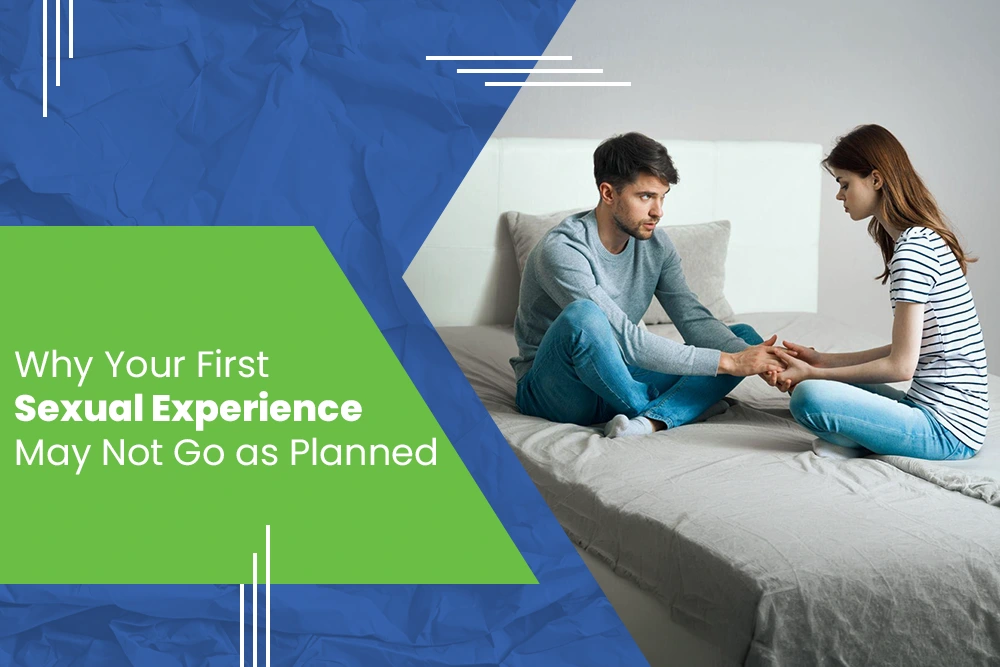
Nobody really warns you about this part.
You get years of movies, jokes from friends, and some half-true stuff from the internet. Then the real thing happens, and it’s… different. Quieter, clumsier, sometimes a bit funny. Your first sexual experience is rarely the smooth scene you pictured, and honestly that’s fine. Probably more than fine.
Quick note: this is for adults. If you’re not there yet, there’s no rush. Really.
As a medical blogger, I’m just trying to say the stuff people usually skip.
What Should You Expect From Your First Sexual Experience?
Less than you think. Or maybe just different things.
Expect it to be a bit awkward. Expect some silence. Expect not to know where to put your hands, which sounds silly until you’re actually in it.
Most people walk in thinking it’ll be intense, perfect, and over in some magical way. It’s usually more like two people figuring it out. Laughing at the wrong moment. Stopping to adjust. Asking “Is this okay?” about nine times.
That last one is good, by the way. Keep doing it.
First-time intercourse also tends to be shorter than people imagine, and less dramatic. Some people feel close to their partner afterwards. Some feel weirdly flat. Some feel both in the same ten minutes. None of that means something went wrong. First-time intimacy is a mix of body stuff and head stuff, and the head stuff is louder than you’d guess.
Why Can First-Time Sex Feel Awkward?
Because you’re new at it. That’s mostly it.
Nobody’s good at anything the first time. But here you’re also undressed, nervous, trying to read another person, and trying not to look like you’re trying. That’s a lot to carry at once.
Bodies don’t always cooperate. Someone’s knee ends up in the wrong place. A condom wrapper won’t open. Somebody giggles. It feels huge in the moment, and later you think, okay, that was kind of funny.
I think people expect to feel confident. Nobody does. The ones who seem confident are usually just hiding it better.
You’ll probably overthink every little noise or pause too. The other person is likely doing the same thing, which is weirdly comforting if you stop and think about it.
Can First-Time Sex Be Painful?
Sometimes, yes. Not always, though.
For people with a vagina, some discomfort is pretty common, especially if they’re tense or things moved ahead faster than their body was ready for. Tension tightens muscles, and tight muscles make everything harder. It’s a loop. Going slowly, taking time with arousal, and using lubricant helps a lot. Water-based if you’re using condoms.
Pain during first sex that’s sharp, or that doesn’t ease up, is a signal to stop. Not push through. Stop, breathe, try something else, or try another day. Pushing on to prove something is a bad plan.
Guys can get uncomfortable too, from dryness, friction, a condom that’s too tight, or whatever. Nobody talks about that one much.
“A bit uncomfortable” and “this hurts” are different things. Trust the second one.
Is Bleeding After First Sex Normal?
Sometimes, a little. It’s not a requirement, though.
There’s this old myth that everybody bleeds the first time and that it proves something. It doesn’t. Plenty of people don’t bleed at all, and that says nothing about anything. Light spotting can happen from friction or tiny tears; that’s all.
If it’s light and stops within a day or so, it’s usually nothing scary. If it’s heavy, like soaking a pad, or comes with severe pain, or keeps going for days, get it checked. Don’t sit there feeling embarrassed about it. Clinics see this all the time.
What If You Feel Nervous Before Your First Time?
Then you’re normal. Honestly.
Racing heart, dry mouth, replaying scenarios in your head, maybe a bit of nausea. Some people almost cancel because they’re so wound up. First-time sex anxiety is incredibly common, and it doesn’t mean you’re not ready. Although sometimes it does mean you should pause. Both can be true. I know, annoying.
Ask yourself if you actually want this. Not “should I” and not “is everyone else doing it.” Want. If it’s a yes with some nerves, okay. If it’s a no, wear a yes costume, wait.
Your first sexual experience doesn’t have to happen on any schedule. Nobody’s keeping score, even if it feels like they are.
Talking helps too. Even a clumsy “I’m kind of nervous” lets some air out of the room. The other person usually says “me too.”
How to Prepare for Your First Sexual Experience
Preparing isn’t romantic-sounding, but it works.
Talk first, not in the moment. Protection, boundaries, and what you’re both okay with. It’s an awkward conversation, yes, but better than an awkward surprise.
Get condoms and check the expiry date. Get lube too. If either of you has had other partners, think about STI testing. If pregnancy matters, sort out contraception beforehand, because condoms work well when used right, but a lot of people add something else on top. A GP, family doctor, or sexual health clinic can help with that. In the UK, that’s the NHS; in the US, it could be Planned Parenthood or a local clinic. They’ve heard it all.
Pick a place where you feel safe and not rushed. Not a car if you can help it. Not somewhere someone might walk in.
Go easy on the drinking. One drink to relax sounds harmless until consent gets blurry, or your body just stops playing along. Alcohol makes performance trouble more likely.
Some first-time sex tips people keep repeating: go slower than you think you need to, laugh when it gets silly, and check in often. That’s pretty much it.
What If Someone Loses Their Erection During Their First Time?
It happens. A lot.
Nerves are basically adrenaline, and adrenaline and erections don’t always get along. You’re thinking too hard, so your body drops the ball. It doesn’t mean you’re not attracted to the person. It doesn’t mean something’s broken.
The worst thing is panic. Panic makes it worse; then you panic about panicking. Just pause. Kiss, talk, laugh, and do something else for a while. Sex isn’t only one thing, and often things come back once the pressure leaves.
The opposite happens too, finishing really fast. Also very common the first time, because everything is new and the excitement is high. It usually gets better with experience, relaxing, and a partner who isn’t judging. If it keeps happening and bothers you, a doctor can talk through options. Some adults are prescribed Poxet 30 mg, which contains dapoxetine, for premature ejaculation in countries where it’s licensed. It isn’t approved in the US or UK, though, so it’s not something you just pick up, and you shouldn’t buy it online without a clinician’s advice. It’s also not a nerve-calming trick for a first time.
Common First-Time Sex Mistakes to Avoid
Rushing, mostly.
Expecting to finish. Expecting your partner to finish. Comparing yourself to porn. Porn is not a reference manual; it’s edited performance, and real bodies don’t work like that.
Not talking is another one. And assuming silence means yes. Silence isn’t consent, so ask.
Skipping protection because it “kills the mood.” A condom takes ten seconds. A scare takes weeks.
Judging the whole night by the first five minutes. Or replaying every moment afterwards. One night isn’t a verdict on your entire sex life.
Pretending, too. Faking confidence, faking enjoyment. Don’t. Say what’s true, kindly.
What If Something Goes Wrong?
Define wrong. Condom breaks? Pain that won’t stop? Someone changes their mind?
Changing your mind is fine, anytime, even halfway through. You don’t owe anyone anything. And if your partner says stop, you stop. No arguing.
If a condom breaks or slips, emergency contraception works best the sooner you take it. In the US, it’s available over the counter at pharmacies. In the UK, pharmacies and sexual health clinics offer it. Think about an STI test a few weeks later too. Don’t spiral; it’s fixable.
If something happened that you didn’t want, like pressure or not being listened to, that’s not your fault. Talk to someone you trust. RAINN in the US and Rape Crisis in the UK are good places to start.
And if it just felt emotionally off, flat, or regretful, that’s allowed too. Even when your first sexual experience goes sideways, it’s recoverable. Give it a couple of days. Talk it out. Not everything needs fixing right away.
When Should You Talk to a Healthcare Professional?
If pain keeps happening. If bleeding is heavy. If you notice burning, unusual discharge, sores, or itching afterwards. If erections stay unreliable. If worrying about it starts taking over your head.
First-time sex concerns are ordinary, but ordinary doesn’t mean you have to handle them alone. A GP, a nurse, or a sexual health clinic will have heard everything before. Really.
If finishing too fast keeps being a problem, they can walk you through options like behavioral techniques, counseling, pelvic floor work, or medication. Some people ask about Poxet 30 mg specifically, and a doctor can tell you whether it’s suitable or what the local alternatives are.
Anyway. However, your first sexual experience turns out, to be one night, not a grade.
FAQ’s
- Is it normal to feel nervous before your first time?
Yes, very. Almost everybody does. - Does the first time always hurt?
No. Some discomfort is common, but sharp pain means stop. - Do you have to bleed the first time?
No. Plenty of people don’t, and it means nothing either way. - Should I use lube?
Yes, it helps. Go with water-based lube with condoms. - When should I see a doctor?
If pain, heavy bleeding or other symptoms keep happening or if worry won’t go away.


Leave a Reply