
Tucked away in those medicine cabinets and the junk drawers people keep forgetting about are empty or expired inhalers, the ones nobody really knows what to do with. Most folks assume the deal is straightforward; just toss it in the trash like any other empty container. But safe inhaler disposal is actually way more intricate than that. Between pressurized canisters, leftover medication residue that hangs around longer than you’d think, and materials that don’t break down the way you expect, figuring out what to do with unused inhalers becomes this quiet part of both home health and environmental responsibility, even if it rarely gets the attention it kind of deserves.
Why Proper Inhaler Disposal Matters
Inhalers aren’t the same as a regular empty bottle or a simple cardboard box you can chuck without a second thought. What makes safe inhaler disposal matter comes down to two big things: safety and environmental impact. A lot of inhalers, especially metered-dose inhalers, include pressurized propellants meant to push the medication out as a fine mist. That pressurization doesn’t just magically vanish once the dose is gone. Also, inhalers may still hold small amounts of active medication even when they look empty, so careless disposal can create both chemical residue and physical hazards in waste systems that are not really built to handle them. Taking a few extra minutes of the safe inhaler disposal helps protect waste management staff, lowers the chance of environmental contamination, and avoids safety incidents that a little awareness could prevent.
What Happens If Inhalers Are Disposed of Incorrectly?
One common question is “can you throw away inhalers with regular household trash?” and the answer is basically “not a good idea,” because what happens when it’s done wrong is pretty clear. People should be aware of the safe inhaler disposal process. Pressurized metered-dose inhalers can act like small aerosol canisters, and when they land in trash compactors or incineration setups, remaining pressure can lead to rupturing or, in rare cases, a more dramatic failure when heat is involved during normal processing. That’s a major reason why inhalers should not be thrown in regular trash without considering these risks first. Beyond the physical safety issue, any leftover medication residue ending up in landfills can potentially seep into soil and groundwater over time, leading to wider contamination that’s hard to undo later.
Types of Inhalers and Their Disposal Requirements
Not every inhaler works the same, so the disposal requirements shift depending on what you actually have. Metered-dose inhalers, which are pretty common, use pressurized canisters and need extra care because of their aerosol-style behavior. Dry powder inhalers don’t rely on pressurized propellants in the same way. They deliver medication through a breath-activated mechanism instead, which tends to make the pressurization risk a bit lower. Still, they often include plastic components and medication residue, so they shouldn’t be discarded thoughtlessly either. Then you have nebulizer solutions and their associated containers, which usually involve liquid medication rather than a pressurized release system. That changes the disposal conversation again. You have to know which type of inhaler you’re dealing with is the first step, because the safe inhaler disposal method depends on the device itself and how it works under the hood.
How to Dispose of Empty, Expired, or Unused Inhalers Safely
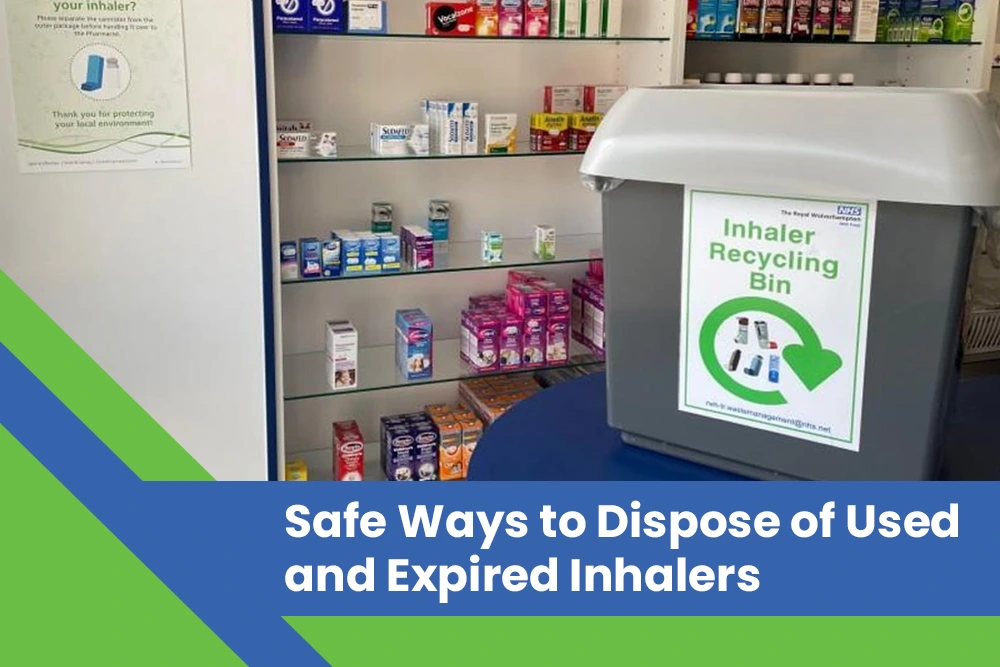
For figuring out where to dispose of inhalers, the best first move is to check with your local pharmacy. Many pharmacies take part in medication take-back programs that are designed to handle inhalers and other pharmaceutical waste safely. Some places also run periodic household hazardous waste collection events, which can be a good fit for pressurized inhalers that shouldn’t go through standard recycling or the regular trash stream. If none of those options are around, look up the manufacturer’s safe inhaler disposal directions, which may be printed on the packaging or posted on the company website. Some manufacturers even run their own take-back or mail-in disposal programs. And if you truly end up putting an inhaler in household trash as a last resort, it helps to follow any included safety instructions (like removing the metal canister from the plastic actuator when that’s applicable) before disposal.
Can Inhalers Be Recycled?
This is one of the most asked, and also the most misunderstood, questions related to inhaler disposal. Can inhalers be recycled through typical curbside recycling? Usually, no, at least not without special preparation. Most curbside programs aren’t set up to manage pressurized canisters or medical devices that still contain residual medication. That said, some inhaler manufacturers and specialty recycling efforts have started dedicated take-back initiatives. These programs focus on separating plastic pieces, metal canisters, and any remaining medication in a way that regular facilities usually can’t handle. It’s worth checking whether your specific inhaler brand is part of one of those specialized options (safe inhaler disposal), because it means parts can be recovered responsibly instead of just ending up in a landfill by default.
Common Mistakes to Avoid When Disposing of Inhalers
People can make a bunch of little mistakes, even if they mean well. Like puncturing or trying to crush a pressurized canister to “empty it out faster,” that’s a real safety issue, and it should never be done at home, not even “just a tiny bit.” This is part of safe inhaler disposal method. And then there’s tossing an inhaler straight into a typical recycling bin without checking first if they even accept it, because that can mess up an entire set of recycling and create problems that are bigger than just putting it into general waste in the first place. Another one people forget is flushing liquid medication from nebulizer solutions down the toilet or sink, since that can push pharmaceutical compounds directly into water systems. It’s kind of the same idea as why unused medications generally shouldn’t be flushed either. If you dodge these slip-ups, you’re way more likely to hit the safety and environmental goals you’re aiming for regarding safe inhaler disposal.
Best Practices for Environmentally Responsible: Safe Inhaler Disposal
The eco-friendly inhaler disposal, or safe inhaler disposal, usually starts with take-back programs and pharmacy drop-off options, if those exist in your area. That’s because those channels tend to use facilities that can handle both the pressurized parts and any leftover medication safely. At home, it helps to keep a little designated container for expired or empty devices instead of tossing them in as you go. That way you can batch them up for one organized trip, instead of letting them pile up forever or getting thrown out “because it’s easier.” Also, try to learn how inhalers affect the environment, especially the propellants in many metered-dose inhalers. Some of those have a noticeable environmental impact of inhalers, so it can be worth asking a healthcare provider about lower-impact inhaler options when it fits medically. Small actions add up to a bigger reduction in overall impact and are done consistently.
Summing up
Safe inhaler disposal might not be the first thing you think about when a healthcare provider’s instruction paper runs out, but it really matters for both personal safety and the environment. If you understand why these devices shouldn’t just go into regular trash, look for take-back or recycling programs where you live, and avoid the common disposal errors, you can make sure your old inhalers get handled responsibly, not left behind as an unnoticed source of risk.





Leave a Reply