
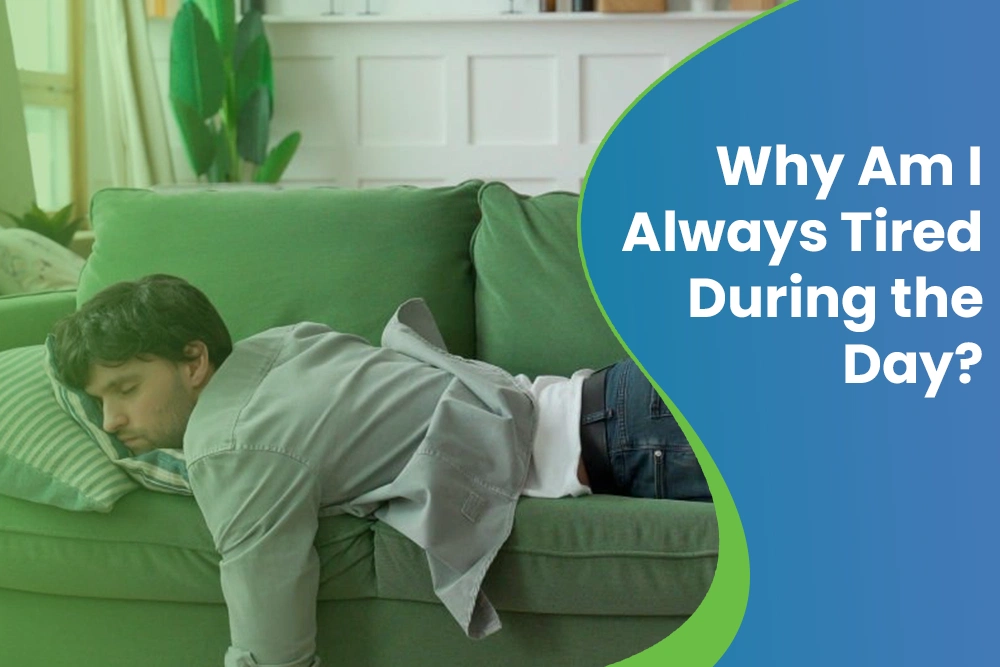
Every person has asked this question to themselves at least once in their lifetime. Probably more than once. Sitting at a desk around 3 pm, staring at a screen, wondering why the body suddenly feels like it’s running on empty even though nothing that hard actually happened that day. No physical labor, no crazy workout, just… existing, and somehow still exhausted by it.
Being Tired during the day isn’t really one thing, and that’s probably worth saying up front, because most articles treat it like there’s a single answer, a single fix, and then everyone reads it, tries it, and goes “well that didn’t work for me” and closes the tab. There isn’t one cause. There’s a pile of possible causes and most people have two or three stacked on top of each other without realizing it.
Sleep Quality is not the same as sleep quantity
People obsess over numbers. 8 hours, 7 hours whatever we read online becomes the ideal figure for a good sleep. But hours in bed and actual restorative sleep are different things, and this gap is where a huge chunk of daytime fatigue comes from. Someone can lie in bed for 8 hours and only get 5 hours of usable, deep sleep because they woke up eleven times without remembering any of it. This is sometimes called micro-arousals. The brain barely registers them but the body pays for it the next day.
This is part of why people ask, why do I feel tired after sleeping because on paper the sleep happened, the hours were logged, and yet the fatigue shows up anyway almost like the sleep didn’t count.
Sleep apnea gets brought up in this a lot and for good reason, it’s more common than people assume, and not just in overweight middle-aged men, which is the stereotype. Thinner people get it too, women get it too, it’s just underdiagnosed in them because physicians don’t always think to check. Snoring, waking up gasping, morning headaches; these are the little flags nobody connects to daytime fatigue until someone finally does a sleep study.
Blood sugar swings
Eating a big-carb, heavy lunch something like pasta, sandwich or anything else and then an hour later you hit a wall so hard that’s basically Narcolepsy. That’s a blood sugar crash. Insulin spikes, glucose drops, and the brain which runs almost entirely on glucose just goes quiet. Not sleepy exactly, more like foggy and heavy, like wading through something.
This happens even in people who aren’t diabetic or prediabetic, by the way. It’s not always a medical condition, sometimes it’s just… how carbs and insulin work, especially without enough protein or fiber to slow the absorption down. Though if it’s happening constantly, like every single day without fail, that’s worth getting checked, because early insulin resistance can look exactly like “I’m just tired during the day for no reason.”
Also caffeine plays into this in a way people don’t expect-coffee at 7 am wears off, blood sugar dips around lunch, and now there’s a double crash instead of one. Two systems tanking around the same window. No wonder the 2-4 pm slump feels like getting hit by a truck.
Is It Actually a Sleep Problem or Is It Something Else Entirely?
Not all daytime fatigue is a sleep problem. Thyroid issues, especially hypothyroidism, cause a very specific kind of tiredness which brings in heavy, sluggish, cold-intolerant, brain foggy. Iron deficiency (even without full-blown anemia) does something similar, and it’s more common in women than people realize, especially with heavier periods. Vitamin D deficiency too, though that one gets overhyped sometimes, so it’s not the answer for everyone even though half the internet acts like it is.
Depression is another one that doesn’t get said enough in these lists. Fatigue is one of the core symptoms, not a side effect, an actual core symptom, and it can exist without someone feeling overtly “sad.” Dehydration too is a small thing, sounds almost too simple to matter, but mild dehydration measurably drops energy and concentration. Not dramatic, not dangerous, just this quiet drain that people don’t notice because they’re not thirsty, they’re just tired during the day.
The Screen and Light Thing Nobody Talks About Enough
Circadian rhythm gets messed with constantly now because of how much time people spend indoors under artificial light, staring at screens until late, and then not getting real sunlight in the morning to reset the clock. The body needs that morning light signal like actual outdoor light, not through a window, glass filters out a lot of the wavelength that matters to know when to be alert and when to wind down later.
Without it, the whole rhythm drifts. People feel groggy in the morning, wired at night, and then tired during the day in this constant low hum that never really resolves. It’s less obvious than “I only slept 4 hours” but it adds up the same way, maybe worse because it’s invisible and ongoing.
Stress Fatigue Is a Real Category, Not Just an Excuse
Chronic stress keeps cortisol elevated in a way that isn’t sustainable, and eventually that system just… doesn’t respond the same way anymore. People describe it as “wired but tired,” which sounds contradictory and kind of is anxious energy paired with bone-deep exhaustion, at the same time, somehow. This isn’t laziness or a character flaw, it’s a nervous system that’s been running in a slightly elevated state for so long it forgot how to properly rest even during actual rest.
This kind of tiredness doesn’t fix with one good night of sleep either, which frustrates people, because they’ll finally sleep nine hours on a weekend and still feel wrecked Monday. That mismatch; sleeping fine but still exhausted is usually less about the sleep itself and more about this background stress load draining things constantly, in the background, quietly, all day.
What Actually Helps?
There’s no single fix, which is annoying but true. Some things that tend to help across most causes: getting actual sunlight within the first hour of waking, not relying on caffeine to mask a crash instead of preventing it, eating protein with carbs instead of carbs alone, and this one’s boring but true which is going to bed and waking up at roughly the same time even on weekends, because the body genuinely hates inconsistency more than it hates slightly less sleep. Medications like Modalert 100 mg can be an alternative therapy for such conditions which consist of Modafinil, a treatment for excessive sleep disorder.
Also if this has been going on for months, like actual months of feeling tired during the day no matter what’s tried, that’s a “go get bloodwork done” situation. Thyroid panel, Iron levels, Vitamin D, maybe a sleep study if snoring or apnea symptoms are present. Constant tiredness during the day that doesn’t respond to obvious fixes is the body’s way of flagging something, and guessing indefinitely isn’t really a strategy.
Frequently Asked Questions
1. Why do I feel tired during the day even after 8 hours of sleep?
Sleep quality matters more than hours. Frequent waking, apnea, or poor deep sleep can make 8 hours feel like 4.
2. Can dehydration really cause daytime fatigue?
Yes, even mild dehydration lowers energy and focus, often without obvious thirst.
3. Is feeling sleepy and tired during the day always a sleep issue?
No things like thyroid problems, low iron, blood sugar crashes, and stress can all cause it too.
4. Does caffeine make afternoon tiredness worse?
Sometimes. It can mask morning fatigue then contribute to a harder crash later.
5. When should daytime fatigue be checked by a physician?
If it’s been weeks or months with no clear cause or improvement, bloodwork is worth doing.

Leave a Reply