
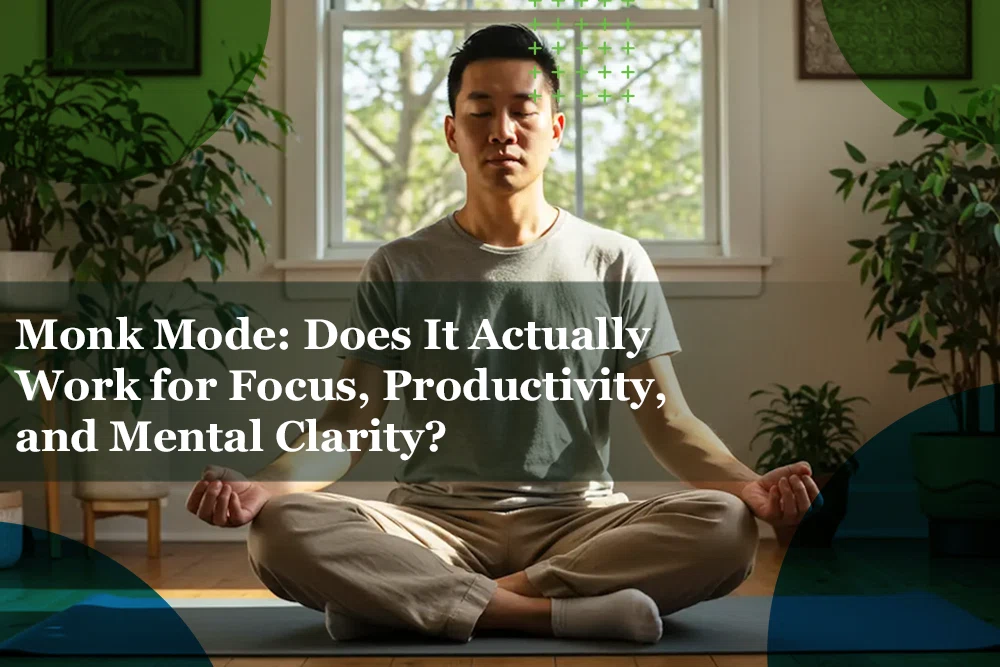
What Is Monk Mode?
Monk mode productivity is one of those ideas that sounds almost embarrassingly dramatic when you first encounter it. Like, okay, are we all becoming monks now? But the actual concept is simpler than the name makes it seem. It’s a deliberate, time-limited period where someone cuts out distractions – social media, unnecessary socialising, passive entertainment – to concentrate entirely on a single goal or set of goals. Some people do it for two weeks. Some go 90 days. Some people, apparently, just kind of live this way permanently, which is either admirable or slightly concerning depending on how you look at it.
The idea borrows heavily from deep work – the argument that real, meaningful cognitive output only happens when the brain is fully absorbed without interruption. But monk mode takes that further than just a two-hour phone-free work block. It’s more of a lifestyle recalibration. Quieter days. Fewer inputs. A lot more time alone with your work and your thoughts. Which sounds extreme. And honestly, it kind of is.
Why Do People Actually Try This?
Most people who go into monk mode aren’t doing it because they read some productivity thread and thought it sounded fun. They’re doing it because something’s broken. The pattern tends to look like this: months of feeling constantly busy but somehow never finishing anything. Always replying to something, always half-watching something, always in the middle of something – but the actual work, the thing that actually matters, keeps getting pushed. Concentration habits quietly collapse without anyone noticing until one day they try to sit and focus for two hours and genuinely can’t.
That’s the tipping point for most people who try monk mode. Not inspiration. Frustration.
There’s also an element of personal development philosophy in there – the idea that you become what you repeatedly do, and if you repeatedly scatter your attention across twenty things, you become someone who can’t hold focus. Monk mode is essentially an attempt to reverse that. A reset.
What It Actually Looks Like Day to Day
Here’s where the gap between the concept and the reality tends to show up. The early mornings – which almost everyone who does monk mode adopts – aren’t romanticised the way they are in certain YouTube thumbnails. They’re just quiet. The point is that the first few hours before the world starts demanding things are genuinely the best window for uninterrupted thought. People who practice monk mode productivity tend to protect that window aggressively.
Work happens in blocks. Ninety minutes, sometimes two hours. Phone somewhere else. Laptop in airplane mode where possible. The goal is a single task per block, which sounds obvious but is surprisingly hard to actually honour. Meals tend to get simplified. This isn’t about restriction – it’s about decision fatigue. Every small choice drains something, and people doing monk mode tend to want that energy going toward work, not toward figuring out what to eat for the third time that day.
The first week is, by most accounts, pretty rough. The brain keeps reaching for its usual inputs and finding nothing. There’s a restlessness that people describe as almost physical – like something’s been removed. That’s normal. It’s withdrawal from stimulation, basically.
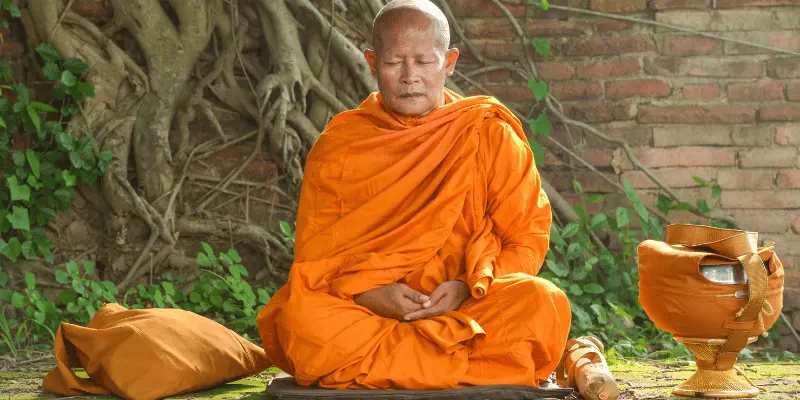
Around Day Ten, Something Usually Shifts
This is the part people talk about most when they describe their monk mode experiences. Somewhere in the second week, the noise – the internal kind – starts to quiet down. The constant low-level anxiety about what might be happening online, what notifications are accumulating, what’s being missed – it fades. Not because anything changed externally, but because the brain adjusts. And then the work gets better.
Not in a vague, motivational-poster way. In a concrete, measurable way. People report finishing things they’d been circling for months. They describe flow states that used to be rare becoming more frequent. They look up and two hours have passed and there’s actual output on the page. This is the core promise of monk mode productivity and why the concept keeps spreading. It’s not a hack. It’s not a trick. It’s just what happens when the brain gets sustained time without competition for its attention. Focus improvement at its most basic level is about removing what breaks focus – and monk mode removes a lot of it.
The sleep improvement is a side effect that catches a lot of people off guard. When there’s no doom-scrolling at midnight, sleep quality goes up. Which then improves the next day’s concentration. It compounds.
The Mental Clarity Question
Mental clarity is probably the thing people describe most enthusiastically when they come out of a monk mode period, and it’s also the thing that’s hardest to explain to someone who hasn’t experienced it. The best description is this: most people’s brains are running a huge number of background processes at all times – what needs to be replied to, what’s happening on social media, what that person meant by that message, what show to watch, what to eat, whether to go to that thing on Saturday. Distraction free work isn’t just about the task in front of you. It’s about reducing all of those background processes until your actual thinking has room to move.
When that happens, connections form more easily. Problems that felt stuck start to open up. There’s a quality of thought available during monk mode that’s just genuinely different from the scattered baseline most people operate at.
Some people have also explored whether any supplemental support could extend that clarity through longer sessions. Modasmart 400 mg has come up in productivity circles as something some practitioners use to maintain wakefulness and sharp thinking through extended deep work periods – the kind of 8-10 hour days that monk mode sometimes encourages. It’s worth knowing what it is before considering it, and a conversation with a doctor is the sensible starting point. But it does appear in these conversations with some regularity.
The Self Discipline Reality Check
Here’s a thing that the more enthusiastic monk mode content tends to gloss over: self discipline is not the same as motivation, and motivation will absolutely leave you at some point during this process. There will be days – probably more than a few – where the whole thing feels arbitrary and pointless. Where the structure feels like a cage instead of a framework. Where the work isn’t going well and the phone isn’t allowed and the only option is to sit with discomfort. Those days are part of it.
What actually sustains monk mode for people who complete it isn’t willpower in the dramatic sense. It’s structure. The time block exists, so the work happens in it. Not because anyone feels inspired that morning. Because that’s what the time block is for. That kind of self discipline – quiet, repetitive, unglamorous – is the real productivity technique underneath all the other stuff.
What Monk Mode Doesn’t Fix?
Worth being clear about this, because the concept attracts a certain amount of uncritical enthusiasm. Monk mode doesn’t fix misaligned priorities. If someone goes full monk mode on a project they don’t actually care about, or a goal they’ve already outgrown, the clarity just reveals that more sharply. Which is information, but uncomfortable information.
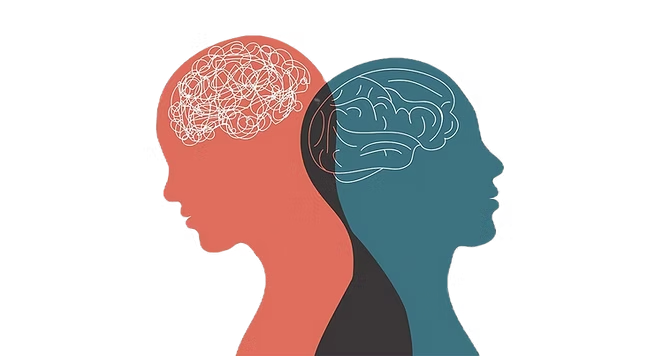
It can also create a kind of tunnel vision that’s socially costly in ways that aren’t always worth it. People occasionally come out of monk mode periods having missed things – conversations, moments, relationships – that can’t be recovered. There’s a version of personal development that tips into something more like avoidance, and monk mode can slide that direction if someone isn’t paying attention.
Productivity methods that require total isolation aren’t sustainable as permanent lifestyles for most people. Monk mode works as a period, a sprint, a reset. As a permanent state it tends to get lonely.
Specific Habits That Seem to Make a Difference
Within a monk mode structure, certain things consistently show up in people’s accounts of what actually worked. Time blocking is probably the most fundamental. Not the aesthetic, colour-coded calendar version – the actual, non-negotiable, this-block-is-for-this-one-thing version. Honouring the block even on days when the work isn’t going well is what builds the concentration habits over time.
Managing the re-entry point matters more than people expect. Coming out of a deep work block and immediately flooding the brain with messages and notifications undoes a lot of the benefit. A short buffer – ten minutes, a walk, some water – before picking up the phone makes a meaningful difference. Accepting unproductive days without abandoning the structure is the third one. Some days within monk mode are still low-output. That’s fine. The system works across the whole period, not day by day.
Final Thoughts
The honest answer, based on what people consistently report: yes, with caveats. Output tends to increase. Unfinished projects tend to get finished. The quality of thinking improves in ways that are hard to measure but easy to notice. Monk mode productivity earns its reputation because for most people who actually complete a period of it, something meaningfully shifts. Some people who’ve tried it describe it as life-changing, which is probably overselling it. Others come out of it saying they’d never do it again, which is probably underselling it. The more accurate version is that it’s a genuinely useful tool for a specific problem – fragmented attention and stalled output – that doesn’t need to become a permanent identity.
People trying it for the first time tend to hit a wall somewhere around day seven or eight. That’s the moment where most people either push through or abandon it. The ones who push through consistently report that it was worth it. The brain on the other side of that adjustment is noticeably different – quieter, more capable of sustained thought, less dependent on constant input. Some practitioners have noted that support like Modasmart 400 mg helped them stay sharp through the deeper, longer stretches without the edge that comes from excessive caffeine. Again – something to research properly and discuss with a doctor before trying. But it comes up in the honest conversations about what monk mode actually looks like at its more intensive end. What tends to stick, long after the formal monk mode period ends, is a changed relationship with distraction. The concentration habits built during those weeks don’t fully disappear. And that’s probably the most valuable thing the whole practice offers.
FAQs
1. How long should a person do monk mode for?
Two weeks is a reasonable starting point – long enough to notice a real shift without it feeling like an ordeal.
2. Is it possible to socialise at all during monk mode?
Yes, just less. The goal is reducing inputs, not complete isolation from other humans.
3. Does monk mode actually help with anxiety?
Often, yes – fewer inputs tends to mean a quieter nervous system. But it’s not a replacement for proper support if anxiety is serious.
4. What happens if someone falls off the structure mid-way through?
Just restart the next morning. Monk mode works on consistency over time, not perfection.
Leave a Reply