
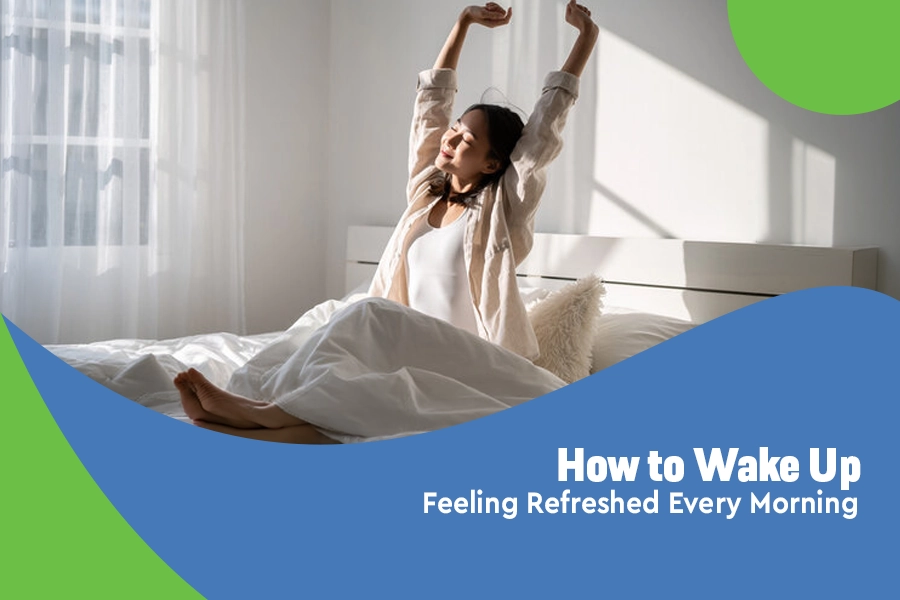
You know the feeling. The alarm goes off, you open one eye, and somehow it feels like the night never really happened.
People often assume the answer is simply “sleep longer.” Sometimes it is. But not always. You can spend eight hours in bed and still wake up feeling refreshed only in theory, not in real life.
A rough morning can come from late-night scrolling, stress, caffeine at the wrong time, an irregular schedule, snoring, medication effects, or simply waking during a deeper stage of sleep. It can also be a phase. A busy week. A bad run of habits that slowly became normal.
The good news is that small changes do add up, even when they sound almost too obvious.
Start with the night before
If you are wondering how to wake up feeling refreshed, it helps to stop treating bedtime as the final thing you do each day. It is more like the beginning of tomorrow morning.
Going to bed at wildly different times can make waking up harder, even if you technically get enough hours. Your body likes patterns more than most of us do. A consistent sleep and wake time tells your internal clock what is coming next.
Try not to chase perfection here. You do not need to be asleep at exactly 10:00 p.m. every night. But keeping your schedule within roughly an hour can make a noticeable difference.
Light matters too. Bright screens, overhead lighting, and late-night work keep the brain switched on. That does not mean you need to sit in the dark reading a paperback every evening. Just give yourself a little quieter time before bed.
That is one of those better sleep habits people dismiss because it sounds boring. Still, boring habits often work.
Your room may be doing more than you think
A bedroom that is too warm, too bright, or too noisy can interrupt sleep without fully waking you. You might not remember those small disruptions, but your body does.
A cool, dark room usually helps. Blackout curtains can be useful if early daylight wakes you before you are ready. Earplugs or white noise may help if you live near traffic, have noisy neighbors, or share a home with someone on a very different schedule.
The aim is not to build a perfect sleep cave. It is just to reduce the things that make sleep lighter than it needs to be.
When you improve sleep quality, mornings tend to change before you even notice why. You may just realise one day that getting out of bed feels less like a negotiation.
Caffeine is helpful, until it isn’t
Coffee is not the enemy. For many people, it is one of the best parts of the morning.
But caffeine stays in the system longer than it feels like it does. An afternoon coffee may seem harmless, but then suddenly you are wide awake at midnight, thinking about something awkward you said three years ago.
If sleep is a struggle, experiment with cutting caffeine earlier in the day. For some people, stopping after lunch is enough. Others need more time.
Alcohol can be confusing too. It may make you sleepy at first, but it can fragment sleep later in the night. So you might fall asleep quickly and still wake up feeling refreshed less often than you expect.
Don’t make the snooze button your whole plan
The snooze button feels kind in the moment. It is usually not.
Those extra fragments of sleep often leave you more groggy because your brain starts another sleep cycle and then gets pulled out of it again. Five more minutes turns into twenty, and somehow you feel worse.
If you want to wake up naturally, make the first few minutes easier rather than relying on willpower. Put the alarm across the room. Open the curtains. Turn on a lamp. Drink water. Even standing by a window for a minute can tell your brain that the day has started.
It sounds almost silly, but morning light is powerful. It helps reset your body clock and can support more alertness during the day.
This is one of the simplest morning energy tips, and it does not cost anything.
A gentler morning routine can help
A healthy morning routine does not need cold showers, journaling, green juice, and a sunrise run. Honestly, that version is not realistic for everyone.
It can be much simpler: get out of bed, get some light, drink water, wash your face, and move a little. Stretching while the kettle boils still counts. Walking outside for ten minutes counts too.
Food can matter, especially if you tend to skip breakfast and then hit a wall mid-morning. A breakfast with protein and fiber may help you feel steadier than a sugary pastry or nothing at all. But again, there is no need to make this complicated.
The goal is to give your body a few clear signals: it is morning, we are awake, and we are going to do something besides crawl back under the duvet.
When tired mornings keep happening
If you regularly ask yourself, Why do I wake up feeling tired?, it may be worth looking beyond ordinary sleep habits.
Persistent fatigue can be linked to sleep disorders such as sleep apnea, restless legs syndrome, insomnia, anxiety, depression, thyroid conditions, anemia, chronic pain, and some medications. Loud snoring, gasping during sleep, morning headaches, or falling asleep unintentionally during the day are worth taking seriously.
A sleep tracker can sometimes reveal patterns, but it cannot diagnose a health problem. If the tiredness has been hanging around for weeks, or it affects work, driving, mood, or daily life, speak with a GP or healthcare professional.
Trying to Wake Up Feeling Refreshed should not mean ignoring a symptom that needs proper attention.
About wakefulness medicines
Some people have diagnosed conditions that cause excessive daytime sleepiness, such as narcolepsy or sleepiness associated with obstructive sleep apnea. In certain cases, a clinician may prescribe wakefulness-promoting treatment.
Modafil Md 200 mg is a prescription product containing modafinil, which may be used for specific sleep-wake disorders under medical supervision. It is not a substitute for sleep, and it is not a casual fix for staying up late or pushing through ongoing exhaustion.
Do not buy or use prescription stimulants based on online advice, social media claims, or someone else’s prescription. These medicines can interact with other treatments and may not be suitable for everyone, including people with certain heart, mental health, liver, or pregnancy-related considerations.
If daytime sleepiness is severe, a healthcare professional can help identify the real cause instead of simply masking it.
Small things, repeated, tend to work
There is no single trick that guarantees you will wake up feeling refreshed tomorrow. That would be nice, obviously.
Usually, it is a stack of fairly ordinary things: a more regular bedtime, less late caffeine, a darker room, morning daylight, and a little movement. None of them feel dramatic. Together, though, they can change how the day begins.
Give one or two changes a week or so before judging them. Sleep is frustrating because it rarely responds instantly. But it does respond.
And if you still wake up exhausted despite making sensible changes, do not just keep blaming yourself. There may be a reason worth checking.
Explore Modafinil products in:
Modafinil In UK, Modafinil In Germany, Modafinil In Europe, Modafinil In Australia
FAQs
- How many hours of sleep do adults need?
Most adults need around 7 to 9 hours a night though individual needs vary.
- Can Exercise Help Me Wake Up Feeling Refreshed?
Yes. Regular daytime activity can support deeper sleep, and better daytime energy.
- Why do I feel tired after eight hours of sleep?
Sleep quality, disrupted breathing, stress, medication or an inconsistent schedule may be involved.
- Is Modafil Md 200 mg suitable for ordinary tiredness?
No. Modafil Md 200 mg should only be used when prescribed for an appropriate medical condition.
- What is the quickest way to feel more awake in the morning?
Get daylight exposure, drink water and move your body for a few minutes.




Leave a Reply