
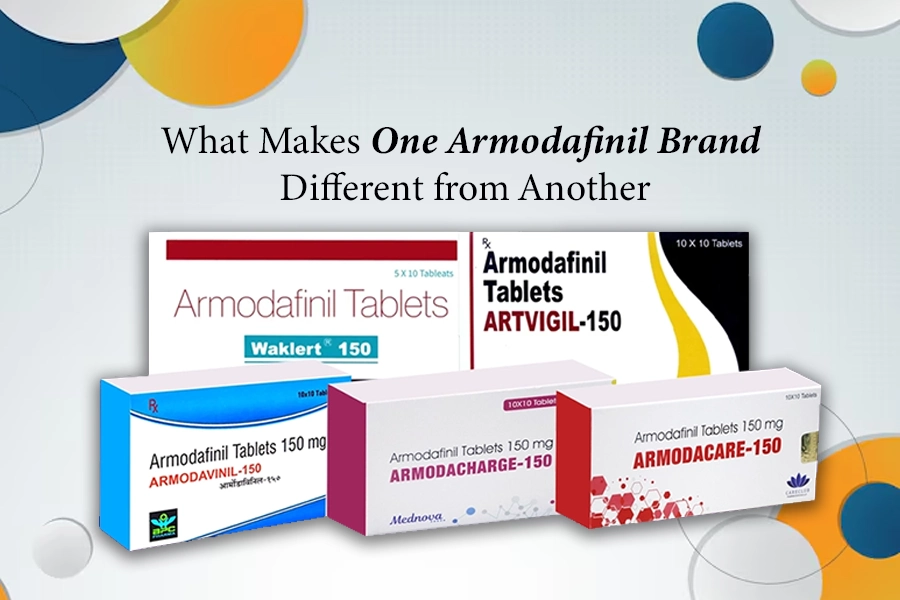
Armodafinil, the wakefulness-promoting prescription drug first approved as Nuvigil in 2007, is now sold under many brand names and generics around the world. If you’ve ever tried to compare “Waklert vs Artvigil vs Nuvigil” (or glanced at a long list of knock-offs and generics), you probably felt the confusion: the active ingredient is the same, so why do prices, effects, side-effect reports, and reputations differ so much? This post breaks down the real, evidence-based reasons brands feel different and how to choose safely and smartly.
What is armodafinil?
Armodafinil is the R-enantiomer of modafinil, a slightly different arrangement of the same chemical building blocks. It’s a prescription wakefulness agent indicated for excessive daytime sleepiness due to narcolepsy, obstructive sleep apnea (as adjunct therapy), and shift-work sleep disorder. Clinically, it tends to have a longer plasma half-life and sometimes a longer duration of effect than some modafinil formulations, but head-to-head efficacy is broadly similar in many trials.

So why do brands feel different?
At a high level, differences between armodafinil brands fall into a few categories:
- Regulatory approval, quality control, and manufacturing standards
- Excipients, pill formulatio,n and release characteristics
- Does accuracy and batch consistency
- Perception: price, marketing, patient reports, and country of origin
- Regulatory/legal labeling and recommended dosing
I’ll unpack each with practical tips so you can tell the substance from noise.
1) Regulatory approvals and manufacturing quality
Not all brands are created under the same regulatory oversight. In the U.S., Nuvigil is the original branded armodafinil with FDA approval and a full product label, clinical trial history, and an established REMS/monitoring track record. Generics and international brands (e.g., Waklert, Artvigil, Armodafinil, and many others) are manufactured under different national regulations; some follow stringent GMP (Good Manufacturing Practice) rules and third-party audits, others less so.
Why it matters: rigorous regulatory oversight usually means tighter control over purity, contamination risk, stability, and accurate dosing. When a brand is made in a facility inspected by a stringent regulator, it reduces the chance of unexpected impurities and ensures labeled potency.
2) Excipients, tablet formulation, and release profile
Even though brands contain the same active molecule (armodafinil), the non-active ingredients, binders, fillers, coatings, disintegrants, and colorants vary. Those excipients influence:
- How quickly a tablet dissolves and the drug becomes available (onset time).
- Tolerability for people with sensitivities (e.g., lactose, dyes).
- Stability (how the tablet tolerates heat and humidity is important in many climates.
Some manufacturers aim for fast disintegration; others produce harder tablets intended to be stable during transport. That can produce subtle differences in onset or how “smooth” the experience feels to users. These differences are rarely dramatic, but they can matter to individuals who are sensitive to absorption speed or excipient allergies.
3) Dose accuracy and batch consistency
Generic manufacturers are legally required to deliver a bioequivalent product to the reference (branded) drug in many markets, but enforcement and testing frequency differ. A reputable generic will consistently meet potency specs; a low-quality product might show greater batch-to-batch variability (meaning one box might “feel” a bit stronger or weaker than another).
Clinical studies comparing armodafinil formulations often show similar efficacy overall, but small differences in pharmacokinetics can occur. For people who are dose-sensitive (e.g., experience jitteriness or insomnia at higher effective serum levels), those small variations can be noticeable.
4) Perception, price, and user reports
Human psychology matters. A brand priced higher or sold through regulated pharmacies (with labeled manufacturing origins) often builds trust. Conversely, cheaper or less-known brands sometimes attract suspicion, and online forums amplify both praise and complaints, which shape reputation more than actual pharmacology.
Be cautious with anecdotal claims about one brand being “much stronger.” Biases, different expectations, concurrent sleep quality, caffeine intake, or placebo/nocebo effects explain a lot of perceived differences. That said, widespread, consistent reports about a specific manufacturer’s inconsistent strength or contamination should be taken seriously and investigated.
5) Legal status, labeling, and recommended dosing
Some brands carry explicit label instructions and contraindication warnings (e.g., Nuvigil packaging includes detailed dosing, contraindications, and adverse event reports). Other brands sold internationally may include less comprehensive patient information. Differences in recommended dose ranges (e.g., available in 50 mg, 150 mg, 200 mg, 250 mg strengths in some markets) can lead to confusion and off-label dose tinkering. Always follow a prescriber’s recommendation and the product’s official label if available.
Commonly encountered armodafinil brands
Here are frequently encountered names and what to know:
- Nuvigil — The original branded armodafinil (Cephalon/Teva), FDA approved with official prescribing information and established clinical trial data. Usually the costliest.
- Waklert — Widely distributed in India and other countries (Sun Pharma in many markets); popular as a lower-cost alternative to Nuvigil. Sold in different strengths (50, 150, 250 mg) depending on the manufacturer and market.
- Artvigil — Another widely sold Indian generic (HAB Pharmaceuticals). Often chosen where cost is the primary factor.
- Other regional brands — Armoda, Armod, Armowake, R-Modawake and many more appear in various countries; quality varies. Wikipedia provides a useful brand list (useful starting point, not a quality endorsement).
Real differences you can test for
If you’re trying to decide between brands or want to judge a new batch, consider these practical checks. They’re not substitutes for lab testing, but they help:
- Source and packaging: Is there clear manufacturer information, batch number, and expiry? Does the package look tamper-proof? (If not, avoid.)
- Expiry and storage instructions: Proper labeling of storage indicates regulatory compliance.
- Physical inspection: Are tablets uniform in shape/size/color? Excessive crumbling, odd smell or discoloration are red flags.
- Early adverse signals: New or unusually severe rashes, allergic reactions, or unexpected side effects should prompt immediate discontinuation and medical advice.
- Reproducibility: If the same brand always produces a similar effect for you over multiple boxes, that’s a sign of batch consistency. If potency seems to drift, report it and stop using that supplier.
If you want laboratory certainty, look for brands with third-party testing/certificates or choose products distributed in tightly regulated markets.
Safety, interactions, and what not to do
- Take only under a prescription. Armodafinil is a prescription medicine with potential interactions (notably with hormonal contraceptives, some antidepressants, and liver-metabolized drugs). Don’t self-prescribe.
- Watch for serious skin reactions. Like modafinil, armodafinil can rarely cause severe rashes (including Stevens-Johnson syndrome). Stop and seek urgent care if you get blistering or peeling.
- Don’t mix with alcohol and avoid combinations with other stimulants unless advised by your doctor.
Price, availability, and why generics exist
Generic versions exist because patents expire and manufacturers produce lower-cost equivalents. Price differences often reflect:
- Patent status in a country.
- Manufacturing location and labor/raw material costs.
- Volume and distribution channel (direct export vs regulated pharmacy networks).
Lower cost does not automatically equal lower quality, but extremely low prices from unknown sellers or marketplaces are a warning sign. If you’re paying very little and the product comes from questionable sources, consider paying a bit more for a reputable supplier.
How to choose the “best armodafinil” for you
There’s no one-size-fits-all “best” brand, only the best choice for you, given the safety, legal and clinical context. Here’s a decision flow:
- Prescriber first: Use the brand/formulation your clinician recommends. They may prefer an FDA-approved product when safety monitoring is key.
- Check regulatory status: Prefer brands sold in regulated pharmacies or with clear manufacturer credentials.
- Start low, monitor: Start at the prescribed dose; note sleep patterns, mood, headaches, appetite, and any skin changes. If side effects are troubling, talk to your clinician.
- Stick to a reliable supplier: Pharmacy chains and regulated online pharmacies with pharmacist support are preferable to marketplaces with anonymous sellers.
Mythbusting
- “All armodafinil brands are identical.” Not strictly true. Active molecules are the same, but excipients, batch control, and regulatory oversight vary, and that matters.
- “Generic brands are always weaker.” No good generics are bioequivalent. The problem is inconsistent or poorly regulated manufacturers.
- “If a brand is cheaper, it’s fake.” Not necessarily, but extremely low price + poor provenance = red flag.
Bottom line
If you strip away marketing and forum noise, the main differences are regulatory quality, manufacturing practice, excipient choices, and batch consistency. These practical factors influence dose accuracy, tolerability, and the predictability of the drug’s effect. For most people under medical supervision, well-manufactured generics perform similarly to the brand; for those buying from unregulated sources, there’s real risk. Choose a reputable supplier, follow your prescriber’s advice, and report any unusual side effects promptly.
Explore Modafinil products in:
Modafinil In UK, Modafinil In Germany, Modafinil In Europe, Modafinil In Australia
FAQs
Q: Is armodafinil the same as modafinil?
A: They’re closely related. Armodafinil is the R-enantiomer of modafinil and can have a slightly longer duration in the bloodstream; clinically, both are used for wakefulness, but dosing and effects can vary by person.
Q: Which brand is the ‘best armodafinil’?
A: “Best” depends on regulation, manufacturing quality, and your prescriber’s judgment. Nuvigil has the most transparent regulatory history in the U.S.; Waklert and Artvigil are commonly used generics with wide distribution. Choose a brand with clear manufacturer info and pharmacy backing.
Q: Can I take different brands interchangeably?
A: Often yes, but if you notice different effects after switching, consult your doctor. If switching between countries or sources, verify batch and supplier reliability.
Q: How should I store armodafinil?
A: Follow the product label, but generally store at room temperature, protected from moisture and extreme heat. Packaging should list storage instructions and expiry.
Q: Any dangerous interactions?
A: Yes, especially with hormonal contraceptives (reduced effectiveness reported), certain antidepressants, and drugs metabolized by the liver. Always tell your prescriber about all medications you take.
References
- NUVIGIL® (armodafinil) tablets — FDA Prescribing Information (label). FDA Access Data
- Tembe DV et al., comparative study: Armodafinil vs Modafinil (clinical trial literature). PubMed Central






Leave a Reply