
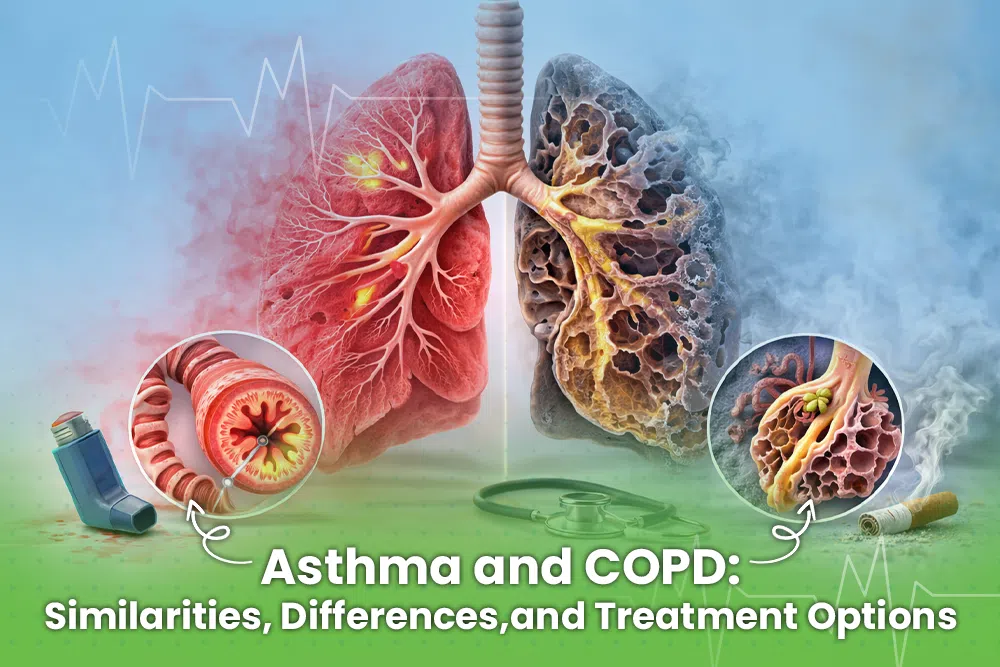
Most of the time, we don’t think about breathing until it becomes difficult. When every breath feels like work, it can change how you live, sleep, and even how confident you feel stepping outside. Two conditions that often come up in these conversations are asthma and COPD. People confuse them all the time, and honestly, that confusion is understandable.
You’re not the only one who has ever pondered the Difference between asthma and COPD. A lot of patients, caregivers, and even people who have just been diagnosed have trouble telling them apart. Let’s talk about this in a straightforward, human way. No medical jargon, no lectures, just a clear, honest conversation.
Why Asthma and COPD Are Often Mixed Up
Both conditions affect the lungs. Both can cause breathing trouble. Both can worsen over time if not managed properly. That’s where the confusion starts.
The Difference between asthma and COPD is in how and why these breathing issues emerge. One is often reversible and caused by certain things, whereas the other is more likely to get worse over time.
It’s important to recognize this distinction because living with and treating them can differ greatly.
What Is Asthma?
Asthma often begins early in life, sometimes during childhood or teenage years. It’s a condition where the airways become overly sensitive. When triggered, the airways tighten, swell, and produce extra mucus, making breathing difficult.
People with asthma usually have “good days” and “bad days.” On good days, breathing feels normal. On bad days, even climbing stairs can feel exhausting.
Triggers may include dust, pollen, exercise, cold air, infections, or strong smells. What’s important to understand is that asthma symptoms can often be controlled very effectively with the right treatment plan.
What Is COPD?
COPD is a lung disease that usually gets worse over time. It usually doesn’t show up until later in life, not when you’re a child. It doesn’t just show up out of nowhere. In many cases, the lungs have been under stress for years before symptoms start becoming noticeable. Because of that, people sometimes ignore the early signs until breathing problems begin affecting daily life.
Unlike asthma, where symptoms may come and go, COPD tends to stick around. Even on days when you feel relatively okay, breathing might not feel completely normal. This ongoing breathing difficulty is one of the important things to understand when discussing the Difference between asthma and COPD.
COPD is commonly linked to long-term exposure to harmful particles, most notably smoking and COPD, which remains closely connected in medical research and patient stories alike.
Symptoms: Where They Overlap and Where They Don’t
This is when things become hard.
Asthma and COPD both can cause shortness of breath, make your chest feel tight, and make you wheeze. Because of this overlap, people often think they are the same thing.
But if we look more closely at COPD vs asthma symptoms, we can see certain patterns. The symptoms of asthma sometimes come and go, while COPD symptoms are usually constant and get worse over time.
How the lungs react to medicine is another symptom that can show the Difference between asthma and COPD. Treatment usually makes the airways of people with asthma much more open. On the other hand, COPD airways only partially get better.
The Role of Inflammation in Both Situations
Both conditions share airway inflammation, despite the fact that the type and cause of this inflammation differ.
Asthma-related airway swelling is often caused by allergies or an overreaction of the immune system. Every day, dust, pollen, or even a cold breeze can make it worse. It’s not quite the same as COPD. Inflammation usually happens slowly after years of damage or irritation to the lungs, which is usually caused by smoke or dirty air. There are many things that can cause inflammation, so doctors usually plan treatment and long-term care in different ways.
Understanding this distinction helps explain the Difference between asthma and COPD beyond just symptoms. It’s about what’s happening inside the lungs.
Similarities Between Asthma and COPD
Even though they are different conditions, there are still a few things they share. These asthma and COPD similarities are the reason they’re often discussed together.
Both conditions affect:
- Airflow in the lungs
- Can worsen during infections
- Need long-term management
- The effect on quality of life if not treated
Both are also types of chronic lung disease, which means that they don’t just go away with a short course of medicine.
Knowing these similarities doesn’t erase the Difference between asthma and COPD, but it helps explain why diagnosis sometimes takes time.
The Progression of Each Condition
Asthma doesn’t necessarily get worse as time goes on. A lot of people with well-controlled asthma enjoy full, active lives. Symptoms may stay the same or even improve.
But COPD usually gets worse over time. Damage to the lungs is usually irreversible, so it’s important to catch it early and treat it properly. This pattern of progression is another thing that create Difference between asthma and COPD.
Chronic Cough: A Subtle but Important Clue
A chronic cough is common in both conditions, although the cough is different in each case. People with asthma often cough at night or after being around things that make them cough. People with COPD may cough every day and produce mucus, and the cough may linger for months or even years.
This distinction may appear small, but it is very important for doctors to be able to tell the Difference between asthma and COPD during clinical assessments.
How Doctors Diagnose Asthma vs COPD
Doctors use medical history, lung function testing, and patterns of symptoms. Age of onset, exposure history, and response to medication all matter.
Someone diagnosed at 12 years old with intermittent symptoms is more likely to have asthma. Someone diagnosed at 55 with years of breathing difficulty is more likely to be dealing with COPD.
These diagnostic clues help define the Difference between asthma and COPD clearly and accurately.
Treatment Options for Asthma
Controlling inflammation and stopping attacks are the main goals of asthma treatment.Inhalers are the major treatment, and many patients only use them when their symptoms get worse.
With the right care, asthma may often be kept very well under control. Patients need to know that with this level of reversibility is a big Difference between asthma and COPD.
Treatment Options for COPD
The only way to treat COPD is to limit the disease’s course, lessen symptoms, and make life better. All of these things may help: drugs, pulmonary rehabilitation, adjustments to your lifestyle, and oxygen therapy.
COPD can’t be completely cured, but regular medication can help you breathe better and cut down on trips to the hospital.
This long-term management approach shows another difference between controlling asthma and COPD and compensating for it.
Can Someone Have Both?
Yes. Some people have signs of both conditions. It can be harder to figure out what’s wrong and how to treat it when asthma and COPD are the same thing, but it doesn’t mean they aren’t different medical conditions.
In these situations, therapy regimens are carefully tailored to address both issues.
Lifestyle Adjustments That Matter
No matter what the diagnosis is, lung health benefits from:
- Staying away from air pollution
- Staying active within limits
- Getting vaccinated
- Taking care of infections early
These steps won’t change the Difference between asthma and COPD, but they can make your daily life a lot better.
Why Knowing the Difference Matters
It’s not just about the names when it comes to knowing the Difference between asthma and COPD. It’s important to know what to expect, how to deal with symptoms and how to keep your lungs healthy in the long run.
Not recognizing the disease can cause treatment to be delayed, extra stress, or inadequate symptom control.
Final Thoughts
It can be scary, irritating, isolating, and cause trouble breathing. But being clear about information brings control. When you clearly understand the Difference between asthma and COPD, you’re better equipped to ask the right questions, follow the right treatment, and live more confidently.
Whether you’re newly diagnosed or supporting someone who is, knowledge truly makes breathing a little easier.
FAQs
- Is asthma worse than COPD?
Both conditions can be very serious if left untreated. While COPD often worsens over time, asthma is usually easier to control.
- Can asthma turn into COPD?
Asthma does not turn into COPD, but long-term uncontrolled asthma may cause lasting airway changes.
- Can lifestyle changes improve lung conditions?
Yes. If you avoiding triggers, staying active, and following treatment plans can greatly improve quality of life.
- Can children develop COPD?
COPD usually develops later in life. Childhood breathing issues are more commonly related to asthma.
- Does COPD only result from smoking?
Actually speaking, it is not the reason, but smoking is the prevalent cause. If you are exposed to things like air pollution, chemical fumes, and dust for a long-term it can increase the risk of COPD.




Leave a Reply