
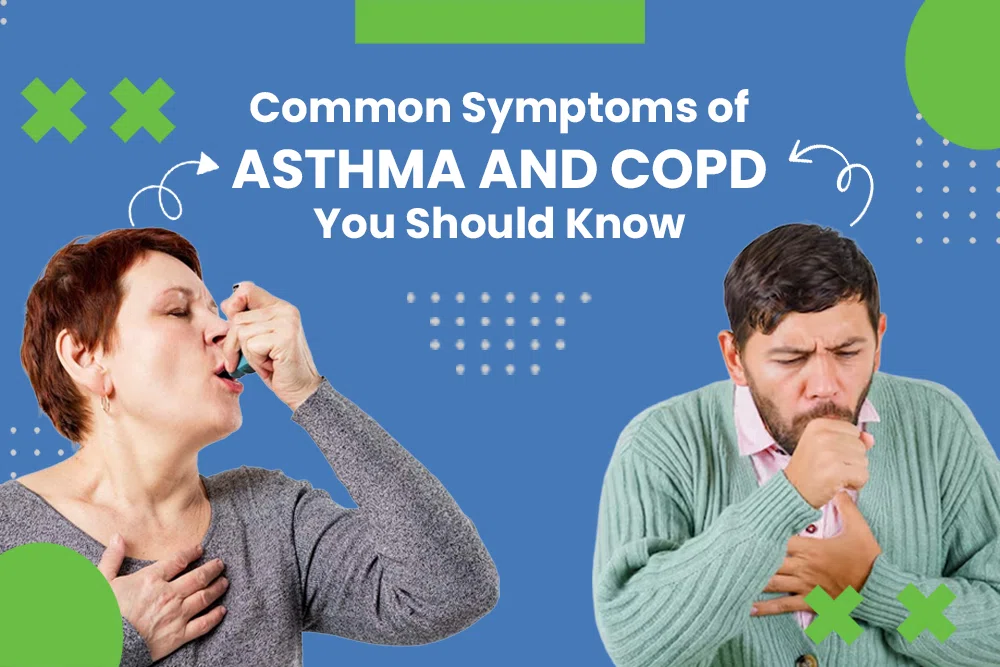
Breathing is something most of us never think about until it becomes difficult.
- A slight tightness in the chest.
- A cough that won’t go away.
- That feeling of not getting enough air.
At first, it’s easy to brush off. It’s just allergies. Maybe I’m out of shape. Probably just a cold.
But sometimes, these small signs are your body gently asking for attention.
It will make a huge difference if you understand the symptoms of asthma and COPD early. The earlier you recognize what’s happening, the sooner you can get the right support and protect your lungs for the long term.
Let’s talk about what you want to look at simply.
First…..What is the difference between asthma and COPD?
Before we talk about symptoms, it’s important to know the basics.
Asthma is when the airway becomes inflamed and narrowed, which can be caused by allergens, exercise, cold air, or stress. It can come and go.
COPD (Chronic Obstructive Pulmonary Disease) is a lung disease that gets worse over time. It is often caused by smoking for a long time or being around irritants. It usually gets worse over time.
Even though asthma and COPD are different diseases, many of their symptoms are the same. That’s why it’s so important to be aware of them.
1. Shortness of Breath That Feels Unusual
One of the most obvious signs of asthma and COPD is shortness of breath.
This is not the kind you feel after running up stairs. It can happen during normal activities like walking, talking, or even resting.
People with asthma may have trouble breathing in episodes, especially after being around things that set them off.
When you have COPD, it usually starts slowly and gets worse over time.
It’s important to pay attention to this if you avoid activities because you are afraid of getting out of breath.
2. Wheezing That Whistling Sound
Wheezing is a high-pitched whistling sound when you breathe, especially during exhaling.
It’s one of the most recognizable common asthma symptoms, but it can also appear in COPD.
Wheezing happens when narrowed airways restrict airflow. It may be mild at first, noticeable only at night or during exercise, but it shouldn’t be ignored.
Occasional wheezing during a cold might not mean much. Frequent wheezing, however, is one of the classic asthma and COPD symptoms that deserves medical evaluation.
3. A Persistent Cough That Won’t Go Away
We all cough sometimes. However, a cough that persists for weeks or months is considered different. Chronic coughing is one of the most overlooked asthma and COPD symptoms.
For people with asthma, coughing may worsen at night or early morning. And for people with COPD, especially chronic bronchitis, the cough often produces mucus and may be present most days.
If your cough has become normal, it may be time to ask why.
4. Excess Mucus Production
Do you often feel the urge to clear your throat?
Excess mucus is one of the most important COPD warning signs, especially when it is thick, continuous, and lasts for months. While asthma can also involve mucus buildup, COPD-related mucus production tends to be more consistent and long-term.
When mucus blocks airflow, it can increase breathing trouble and the risk of infections. If you recognize this as part of asthma and COPD symptoms, it can help you seek early treatment and reduce complications.
5. Tightness in the Chest or Pressure
A lot of people say it is:
- A band tightening around the chest
- A lot of weight is pushing down
- A feeling of being squeezed
Chest tightness is a common sign of asthma and COPD symptoms, especially during sudden flare-ups.
In case of COPD, it might feel like it’s happening slowly and all the time, but in case of people having asthma, this can happen suddenly and get better with medicine.
If you feel any recurring chest tightness, you should see a doctor, especially if it affects daily activities.
6. Fatigue That Feels Different
Work of breathing is the energy expended to inhale and exhale a breathing gas. When your lungs aren’t working efficiently, your body works harder to get oxygen.
That can make you feel very tired. Fatigue is one of the less obvious asthma and COPD symptoms, but it’s very real.
If you feel drained after simple tasks, it may not just be getting older or being busy. It could be your lungs asking for help.
7. Frequent Respiratory Infections
Do you seem to catch colds that go straight to your chest?
People experiencing early symptoms of asthma and COPD may notice they develop bronchitis or respiratory infections more often than others. When airways are inflamed or damaged, they’re more vulnerable.
If you’re getting sick more frequently, especially with a lingering cough or breathing trouble, that pattern shouldn’t be ignored.
8. Reduced Exercise Tolerance
Maybe you used to walk comfortably around the blocks. Now you stop halfway.
A gradual decrease in stamina can be one of the subtle asthma and COPD symptoms people dismiss.
You might think: “I’m just out of shape.” “I need to exercise more.”
But if breathlessness consistently limits you, it’s important to consider a lung evaluation.
9. Symptoms That Get Worse at Night or In The Early Morning
Asthma often flares up during the nighttime.
One of the classic symptoms of asthma is coughing, wheezing, or gasping when you wake up. Because of changes in airways and lying flat, COPD symptoms can also get worse at night.
If your sleep is disrupted by breathing problems, it’s more than just inconvenient information your body is giving you.
10. Blue Lips or Fingertips (In Severe Cases)
In advanced stages, severe oxygen limitation can cause lips or fingernails to appear bluish. This is not an early sign, but it is a serious one. Among advanced asthma and COPD symptoms, this requires immediate medical attention.
Why Early Recognition Matters
Symptoms often start small :
- Periodic dyspnea
- A little wheeze during cold weather
- A mild cough.
Because symptoms develop gradually, many people normalize them. But catching asthma and COPD symptoms early allows:
- Proper diagnosis
- Medication that reduces inflammation
- Lifestyle changes
- Prevention of disease progression
- Ignoring them doesn’t make them disappear. It often makes them worse.
When Should You See a Doctor?
You should consider medical advice if:
- Breathlessness interferes with daily life
- A cough lasts more than 8 weeks
- You frequently wheeze
- Mucus production is ongoing
- You experience repeated chest infections.
These are the signs and symptoms of chronic respiratory diseases that require evaluation. Early treatment can dramatically improve the quality of life.
The Emotional Side of Symptoms
Let’s talk about something important.
- Breathing problems can feel scary.
- You may feel embarrassed by using inhalers in public.
- You may feel angry about physical limitations.
- You may even feel anxious about your future health.
These feelings are very normal.
Recognizing asthma and COPD symptoms is not about labeling yourself. It is about protecting yourself.
You deserve to breathe comfortably and support yourself.
The Bottom Line
Breathing is life’s quiet rhythm, and when it changes, it deserves attention.
From shortness of breath and wheezing to chronic cough and fatigue, asthma and COPD symptoms can show up in ways that seem small at first. But small signs matter. The earlier you recognize them, the more options you have. Treatment works best when started early. And with proper management, many people live full, active lives. If something feels different about your breathing, please consult a doctor.
Your lungs are talking, and it’s okay to listen.
FAQs
- Is a person who has minor indications a sign of something serious?
Yes, even if it’s minor, breathing issues can signal underlying lung conditions.
- Can a person who does not smoke develop COPD?
Indeed, smoking is a significant risk factor, but prolonged exposure to pollutants or irritants at work can be a factor.
- Is wheezing always asthma?
Not always. Wheezing can occur in COPD and other respiratory conditions, so evaluation is important.
- Are asthma and COPD the same condition?
Absolutely no, Asthma is usually reversible with treatment, while COPD is progressive. However, they have many common symptoms.
- Are these conditions manageable?
Indeed, many people are able to effectively manage their symptoms with early diagnosis, medication, and lifestyle modifications.



Leave a Reply