
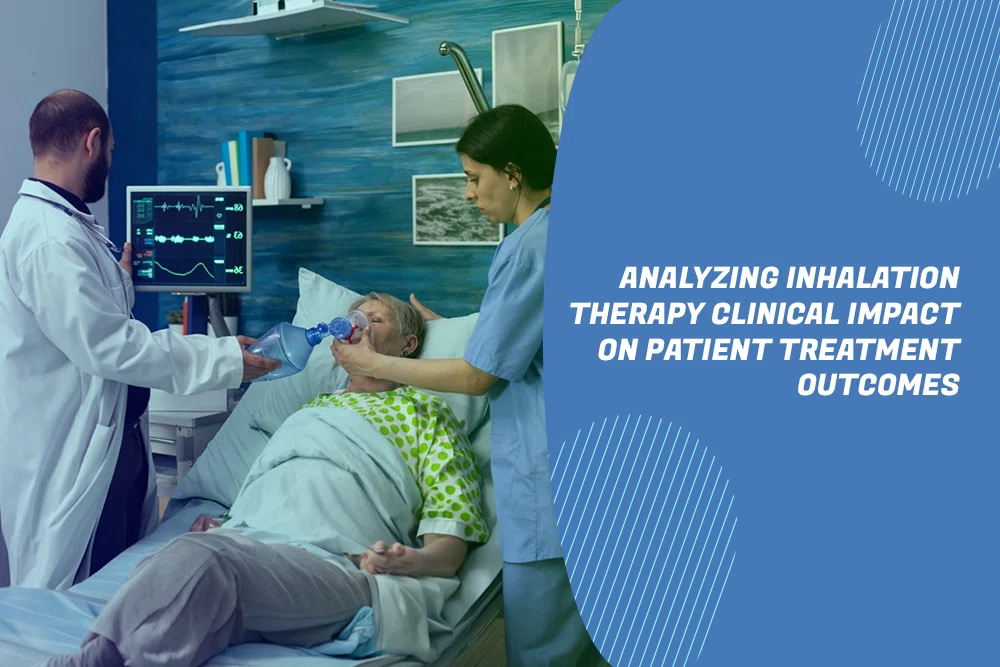
When someone inhales a dose from their inhaler, it may look like a small action, but behind that simple breath lies something powerful. The potential to improve lung function better, reduce hospital visits, prevent flare-ups, and even restore confidence in daily life.
That’s what we mean when we talk about Inhalation Therapy Clinical Impact. It’s not just about medication delivery.
It’s about what happens next and how treatment changes real outcomes for the people.
Let’s look at what that effect really looks like, not just in terms of prescriptions and protocols.
Why Inhalation Therapy Matters in Respiratory Care
Asthma and COPD are long-term lung diseases. They don’t affect the lungs, but also sleep, energy, mobility, and mental health.
Inhalation therapy is often the most important part of treatment. Inhaled drugs go straight to where the problem actually is, your lungs, and calm inflammation, airway narrowing, and bronchospasm at the source, unlike oral medications.
The measurable effect of Inhalation Therapy Clinical Impact is:
- Quick relief from symptoms
- Fewer side effects throughout the body
- Better lung function
- Less frequent flare-ups
- Less time spent in the hospital
But the real effect goes even deeper into how patients feel and act every day.
Measuring More Than Just Lung Function
Traditionally, doctors measure treatment success through numbers:
- FEV1 (Forced Expiratory Volume)
- Peak flow readings
- Oxygen saturation
- These are important. But they don’t tell the whole story.
The broader Inhalation Therapy Clinical Impact includes how often someone misses work, how confidently they climb stairs, or whether they sleep through the night without coughing.
That’s why modern respiratory care looks beyond lung capacity alone.
Understanding Patient Response
Not every patient responds the same way to the same inhaler. Genetics, airway structure, inflammation type, and inhaler technique all play a role in patient response to inhalation therapy.
Some individuals experience rapid improvement within days. Others need weeks of consistent use before noticing a significant change. Evaluating Inhalation Therapy Clinical Impact requires observing patterns over time, not just immediate relief.
A single dose may ease symptoms. Long-term use may reshape disease progression.
Reducing Exacerbations and Emergency Visits
One of the clearest indicators of positive Inhalation Therapy Clinical Impact is reduced exacerbations.
Exacerbations or flare-ups often result in:
- Emergency department visits
- Hospital admissions
- Oral steroid bursts
- Increased healthcare costs
- Effective inhalation therapy lowers airway inflammation and stabilizes bronchial tone, reducing the frequency and severity of these episodes.
And fewer emergencies mean more stability in a patient’s life, and stability matters.
The Role of Adherence
Even the best medication cannot work if it’s not used correctly or consistently. There’s a direct relationship between therapy adherence and patient outcomes in respiratory conditions.
Missed doses, incorrect inhaler technique, or stopping medication prematurely can reduce the overall Inhalation Therapy Clinical Impact significantly.
Adherence isn’t just about discipline. It’s about understanding why daily maintenance matters, even when symptoms improve. Patients who stay consistent often experience better long-term lung preservation and fewer disease complications.
Long-Term Disease Control
Asthma and COPD are progressive when uncontrolled. Over time, unmanaged inflammation can cause structural airway changes. One major goal of inhalation therapy is to prevent that progression.
The sustained Inhalation Therapy Clinical Impact includes:
- Slower decline in lung function
- Reduced airway remodeling
- Lower need for systemic steroids
- Improved long-term prognosis
- It’s not just symptom control. It’s structural protection.
Treatment Effectiveness in Real-World Settings
Clinical trials are great and show promising results for inhaled medications, but what happens in everyday life?
Real-world data on treatment effectiveness in respiratory care considers:
- Environmental exposures
- Smoking status
- Access to healthcare
- Patient education levels
The actual Inhalation Therapy Clinical Impact depends heavily on these surrounding factors.
A medication may work perfectly in controlled trials. But education, affordability, and support determine how well it works in practice.
Beyond Numbers: Quality of Life
This is where the conversation becomes human. Imagine someone who avoided social gatherings because of unpredictable coughing. Or someone who stopped exercising due to fear of breathlessness. Effective therapy can change that.
The improvement in quality of life after inhalation therapy often includes:
- Better sleep
- Increased physical activity
- Reduced anxiety about breathing
- Greater independence
These improvements may not always show up in lab tests, but they show up in daily living.
And that’s where the real Inhalation Therapy Clinical Impact shines.
Clinical Outcome Measurement Methods
Healthcare providers use structured approaches to evaluate success.
Clinical outcome measurement methods may include:
- Spirometry trends
- Symptom scoring systems
- Frequency of rescue inhaler use
- Hospitalization tracking
- Patient-reported outcome questionnaires
Combining objective data with patient feedback provides a complete view of Inhalation Therapy Clinical Impact. Because numbers alone don’t capture lived experience.
Psychological Impact of Better Breathing
When breathing easier, anxiety often starts to settle. On the other hand, Breathlessness can quickly lead to panic, and panic only makes breathing feel harder.
Inhalation therapy that works well can help break this cycle. This therapy has benefits both emotional and physical. Many patients say that they feel more in charge, less afraid, and more hopeful about how to deal with their condition. That feeling of mental stability makes it easier to stick to treatment, which leads to better results over time. A negative loop slowly turns into a positive one.
Economic and Healthcare System Benefits
There’s also a broader perspective. Reduced hospital admissions and emergency visits decrease healthcare costs. Better disease control improves workplace productivity and reduces absenteeism. The systemic Inhalation Therapy Clinical Impact promotes the well-being of individuals and society as a whole from the perspective of public health.
Why Technique Training Matters
Deposition and absorption are directly impacted by proper inhaler technique. Incorrect use can reduce lung delivery by up to 50%. When technique improves, clinical results improve.
Sometimes, enhancing education alone dramatically strengthens Inhalation Therapy Clinical Impact, without changing medication at all. Education is powerful.
The Bigger Picture
Inhalation therapy is more than a delivery system. It’s a targeted strategy designed to improve outcomes at multiple levels:
- Biological
- Functional
- Emotional
- Economic
When we analyze Inhalation Therapy Clinical Impact, we see not just symptom relief but transformation in disease trajectory. Better breathing supports better living. And that’s the ultimate goal.
FAQs
- What does Inhalation Therapy Clinical Impact actually measure?
It refers to how inhaled treatments affect patient outcomes, including symptom control, lung function, exacerbation rates, quality of life, and healthcare utilization.
- What if I’m still having trouble even though I’m using my inhalers every day?
That doesn’t mean the treatment has failed. It could be technique, dosage, trigger exposure, or even another underlying issue. A quick review with your healthcare provider can often fix what feels like a big problem.
- Can inhalation therapy halt a disease’s progression?
Although it may not be able to cure chronic respiratory diseases, regular treatment can improve overall disease control, reduce complications, and slow the disease’s progression.
- Is it normal to be worried about having to use inhalers for a long time?
Completely normal. Many people worry about dependence or side effects. But inhalation therapy is designed to protect your lungs, not weaken them. Instead of seeing it as something to depend on, think of it as support, much like wearing glasses to improve vision.
- Does inhaler technique really affect treatment outcomes?
Yes. Incorrect technique reduces medication delivery to the lungs, which can significantly lower treatment effectiveness and overall clinical impact.



Leave a Reply