
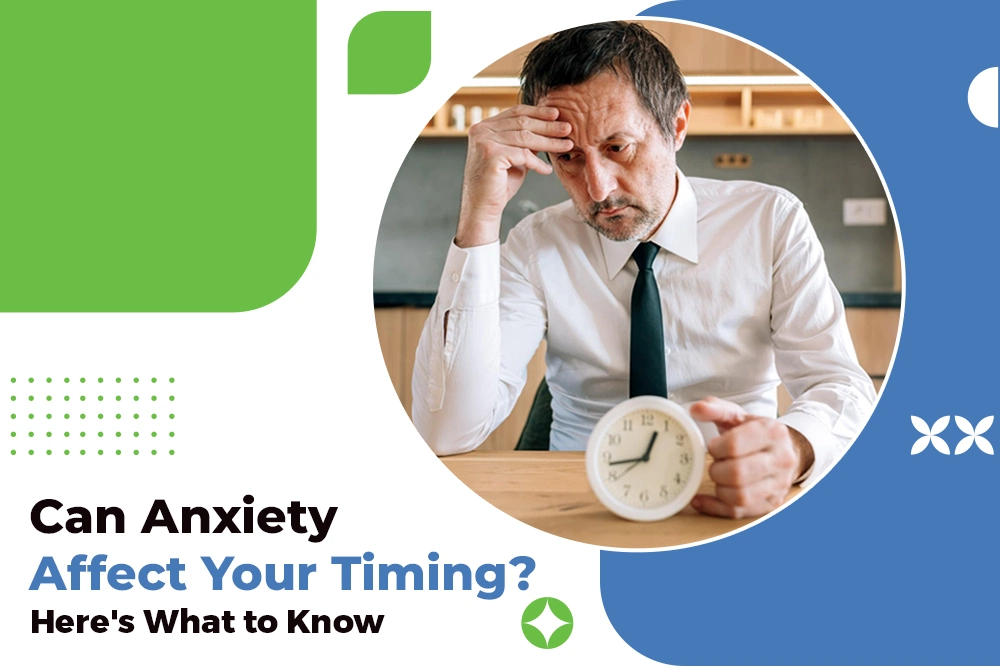
Anxiety isn’t restricted to the mind. It’s also present in your body. Your heart races. Your palms sweat. The muscles in your body get tense. For many men, anxiety also impacts their thought process relating to sex. More prevalent than it’s generally believed, and open discussion is usually limited.
Ever wonder if anxiety affects your timing? The answer is yes! There is strong evidence from research and clinical practice that there is a direct connection between mental stress and body response. Let’s explore how this occurs, what the numbers share, and what can be done about it.
Anxiety Affects Your Timing
Anxiety triggers your body’s fight-or-flight response. This is a mechanism your nervous system has that works to keep you alive. Stress hormones such as cortisol and adrenaline are released by the brain when you’re feeling stressed. These hormones get your body ready to respond swiftly to danger.
The issue is that it’s the same system that gets activated during times when there’s no actual threat present. Sometimes, your body doesn’t know the difference between real threat and perceived pressure. But when the control and anxiety start to mix, your body can react in ways you don’t expect, such as rushing through the moment instead of relaxing in it. Thus, anxiety affects your timing.
Research indicates that psychological issues such as anxiety and performance anxiety play a role in a large percentage of cases of premature ejaculation in young men, and biological issues are more prevalent among older men. This demonstrates the close relationship between mind and body.
How Stress Affecting Physical Performance
There is scientific evidence to support the stress that causes physical performance. Constant stress can maintain your body in a perpetual state of alertness. This can build up over time to the following:
- Increase muscle tension
- Speed up heart rate and breathing
- Disrupt hormone balance
- Decrease regulation of blood flow
- Reduce capacity to concentrate and be in the moment
These all contribute to your body’s reactions when intimate. Your nervous system is saying that it is in a “hurry up” mode when you are feeling anxious. This is one of the ways that anxiety affects your timing.
Anxiety Impact on Daily Confidence
Not all about the bedroom! The anxiety effect on self-assurance reaches numerous areas of life. Any situation where you have to speak in front of others can be challenging when anxiety takes over, such as a job interview, during a first date, or even just in a casual conversation. Thus, anxiety affects your timing.
The results of mental health surveys are always consistent: a significant proportion of adults report that they experience anxiety at least once a week, and many report that their anxiety impacts their confidence in personal and social situations. If confidence in one part of life is attacked, it will spill over to other parts of life, such as intimacy or performance.
That’s why it’s important to manage anxiety for improved confidence, not only for your mental health. It’s beneficial for all aspects of life, including relationships.
How Anxiety and Performance Control Are Connected
Now the question is how anxiety affects timing. Performance control is based on remaining calm, focused, and present. Anxiety affects your timing in these aspects: When you’re anxious:
- You are anticipating the possible outcomes, rather than focusing on the present moment.
- Your body tightens up and decreases your natural control.
- Your thoughts are now more on “failing,” which leads to a pressure and response cycle.
This cycle is very well understood in psychology. The more you worry about timing, the more anxious you get, and the more anxious you get, the worse you get at timing. Rather than just focusing on the physical symptoms, often the real key to improvement lies in breaking the loop.
Lifestyle Habits for Better Control
We all know that anxiety affects your timing. Fortunately, this is something you can have more control of than you would think. Some lifestyle recommendations for improved control may be helpful in the long term.
- Slow, deep breathing helps to soothe your nervous system and reduce your fight-or-flight reaction.
- Get regular exercise, which helps to reduce stress and increases your body’s overall ability to cope. In several studies, anxiety symptoms have been found to be reduced by just 30 minutes of moderate exercise a few times per week.
- Avoid excessive caffeine and alcohol intake, as they can worsen anxiety symptoms and interfere with the body’s response to stress.
- Not getting the proper amount of sleep is significantly linked to increased anxiety. Those adults that get less than six hours of sleep per night report significantly higher stress and anxiety symptoms than adults who get 7 to 9 hours of sleep per night.
- Practicing mindfulness or meditation regularly can over time help to reduce symptoms of anxiety.
- Trust and open dialogue are a way of alleviating performance stress and therefore anxiety in intimate situations.
- Therapy should be considered, particularly cognitive behavioral therapy (CBT), which is one of the best-evidenced options for performance anxiety. It assists in changing negative thinking and developing more positive response behaviors.
Managing Anxiety For Better Confidence: Consult With Doctor
We all know anxiety affects your timing. If your timing is getting off track at all due to anxiety, and it’s causing problems, discuss it with a healthcare provider. In some cases, lifestyle modifications and therapy will suffice. At other times, a doctor might also talk about other ways to help, such as taking a medicine called dapoxetine, which is a type of medicine sometimes prescribed for people to help them control when they have an erection.
Medications containing dapoxetine (e.g., Dapoxetine and Priligy) are prescription drugs. They should only be used under medical supervision, as your doctor will have to take your health history, other medications you are using for premature ejaculation, and the correct dosage into account. Self-treating or taking prescription drugs without a medical person’s advice is not safe. A healthcare professional can assist you to determine if medication is indicated or if it is a good idea to use these strategies to manage anxiety rather than medication.
Final Thoughts
Anxiety affects your timing. It’s not a matter of opinion; it’s a matter of scientific fact. The link between anxiety and performance control is intimately linked to your body’s stress response system. The hormones that make you feel ready for the fight and flight response can also affect your timing in intimate moments.
The good news is that anxiety can be controlled. All of these lifestyle changes can have a significant impact on your control, treatment, and ongoing dialogue with your partner. If you require additional assistance, you can get a doctor to help you determine safe and appropriate treatment options.
You’re not the only one experiencing this, and you do not need to simply accept it. Little by little changes do make a difference.
FAQ’s
1. Does anxiety have an impact on timing while intimate?
Yes. Anxiety can trigger your body’s reactions to stress, which can increase the physical reactions and reduce self-control. This is a well-known relationship between mental stress and body response.
2. Do most people experience any problems during their performance?
Yes, it is quite common, especially in younger adults. Performance-related issues are often related to psychological factors such as anxiety.
3. How will you bring changes in your lifestyle to reduce anxiety and to improve time management?
You can do exercise for 30 min daily. Besides this, you need quality sleep and stop drinking caffeine before sleeping. You should avoid alcohol and take breaks while working.
4. Should you consult with a doctor to manage their anxiety-related issues?
Yes, if you are facing time-related issues because of anxiety, then you should visit a clinic for suggestions.
5.Is there a medication that helps with anxiety timings?
Doctors may sometimes prescribe medicines. Dapoxetine, for example, helps control timing concerns. They are prescription drugs and should be taken always under the supervision of a doctor and not as a cure.
Leave a Reply