
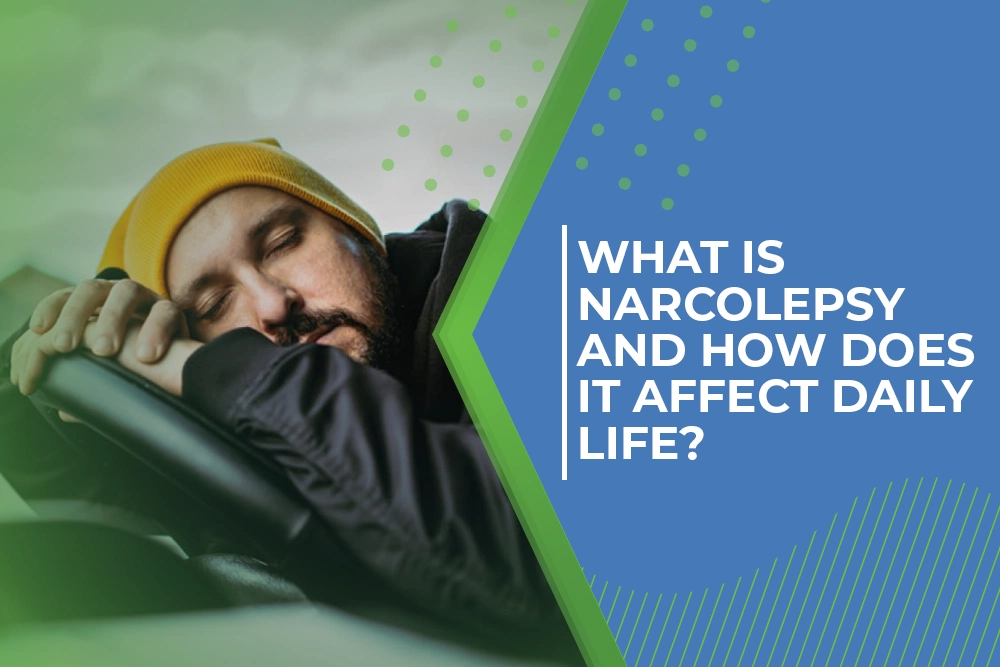
So a few months back, my cousin fell asleep. Standing up. In the middle of telling me about her weekend. Not an “oh, I’m tired” kind of drift, more like gone. Thirty seconds later, back, like nothing happened. That was the first time I actually looked up what narcolepsy is, because I’d heard the word before but never really thought about what it meant for an actual person.
Turns out it’s not just “being really sleepy.” That’s what I assumed too, honestly.
Okay, so what is narcolepsy actually
What is narcolepsy, in the plainest way I can put it? It’s a neurological condition where your brain can’t properly manage the switch between being awake and being asleep. Most people’s brains hold that line pretty firmly. With narcolepsy, the line gets blurry, and sometimes it just… collapses. Mid-conversation, mid-meal, once apparently mid-shower (my cousin swears this happened to a guy in her support group, not her, thankfully).
It’s chronic. Doesn’t go away. You manage it; you don’t cure it. That part took me a second to really sit with.
The daytime sleepiness thing is more than tired
Everyone’s tired sometimes. I’m tired right now typing this at 11 pm. That’s not what we’re talking about.
“Excessive daytime sleepiness” is a real diagnostic term, not just a phrase; it means an overwhelming pull toward sleep that shows up regardless of how much rest you got the night before. Eight hours, ten hours, doesn’t matter. The urge still comes crashing in around midday, or whenever, no real pattern sometimes.
Narcolepsy and daytime sleepiness get talked about together so often that people start assuming they’re the same thing. They’re related, but the sleepiness is really just one piece of a bigger puzzle.
Doctors sometimes use daytime sleepiness and narcolepsy almost interchangeably in casual conversation, which honestly muddies things for people trying to understand their own situation. It’s not wrong exactly, just incomplete on its own.
The sleep attacks part, which honestly sounds scarier than it may be
Sudden sleep attacks. That’s the phrase that got me googling in the first place. Sounds dramatic, and I guess it kind of is? But it’s less “collapsing dramatically” and more like a light switch flipping without warning.
Could be for a few seconds. Could stretch into a few minutes. Happens while eating, while driving (this is the part that actually worries me for my cousin, not gonna lie), while sitting in a meeting nodding along to something that suddenly isn’t there anymore.
Turns out there’s more going on than just the sleep part
I figured it was just the sleep thing. Nope. There’s a whole cluster of stuff that comes bundled in, and most of it never made it into the version of this I had in my head before my cousin’s diagnosis.
Narcolepsy symptoms can include cataplexy, sudden muscle weakness triggered by strong emotion, like laughing too hard and your knees just giving out. Sleep paralysis too, where you’re awake in your head, but your body hasn’t caught up yet. Vivid, sometimes unsettling dreams right as you’re falling asleep or waking up.
Not everyone gets all of these. My cousin doesn’t have the cataplexy thing, or hasn’t yet anyway. Some people get one or two symptoms; some get the whole list.
Work and school stuff, because that’s a whole separate headache
Nobody really talks about the logistics side. My cousin works from home now, mostly by choice, honestly, because open offices and unpredictable meeting schedules were a nightmare for managing symptoms. Not everyone gets that option, though.
Some workplaces are decent about accommodations once they understand what’s going on: flexible hours, permission for short breaks, that sort of thing. Some really aren’t, and people end up hiding the condition entirely, which sounds exhausting on top of an already exhausting condition. School’s similar, apparently. From what I’ve read, kids get labeled as lazy or unmotivated way before anyone considers narcolepsy as the actual reason.
Why does this even happen
Narcolepsy causes aren’t fully nailed down, which surprised me a bit. There’s a strong connection to low levels of a brain chemical called hypocretin (also called orexin), which normally helps keep you awake and regulates REM sleep. In a lot of cases, this seems to be tied to the immune system mistakenly attacking the cells that produce it.
Genetics play some role. Infections, head injuries, and big shifts in sleep patterns get mentioned too, though nothing’s really a guaranteed cause-and-effect thing. It’s messier than a textbook diagram would have you believe.
What is narcolepsy doing to actual daily life, though
This is the part nobody really explains well. What is narcolepsy like day-to-day, not medically, just practically?
Narcolepsy and daily life kind of get reshaped around it. Driving becomes something you plan carefully, or avoid on bad days. Meetings get scheduled around the times you know you’re sharper. Naps aren’t optional indulgences anymore; they’re scheduled maintenance, almost.
My cousin now carries what she calls her “nap kit”: an eye mask, a hoodie she can pull over her face, and noise-canceling earbuds because a 15-minute nap in her car between errands is sometimes the difference between functioning and not.
Relationships shift too. Friends stop taking it personally when she cancels plans. Mostly. Some don’t get it, honestly, and that part’s harder than the sleep attacks themselves, I think.
It isn’t just about naps, this part
Living with narcolepsy involves a lot of quiet adjustments most people never see. Timing meals differently because heavy carbs make the sleepiness worse, apparently, and something about blood sugar crashes making things worse. Structuring the day around energy windows instead of the clock. Explaining, over and over, that no, more coffee doesn’t fix it; she’s tried, believe me, she’s tried.
There’s an emotional layer too that gets skipped a lot in the medical explanations. Frustration. Embarrassment sometimes, especially early on before diagnosis, when people just assumed laziness. My cousin said the diagnosis itself was almost a relief, finally a reason, not just a character flaw someone kept implying she had.
So yeah, what is narcolepsy in practice, day-to-day? Mostly a series of small workarounds nobody notices unless they’re looking for them. Packed snacks for the crash windows. Alarms set slightly earlier than needed, just in case. A friend group that’s learned not to take the cancellations personally, mostly.
Treatment, sort of, without getting too clinical about it
Doctors usually build a plan around a few things: scheduled naps, lifestyle tweaks, and medication that helps manage the wakefulness side of things. One option that comes up in these conversations is Modacare 400 mg, which falls into the wakefulness-promoting category doctors sometimes prescribe to help manage the daytime sleep pressure. Not a cure, just a management tool, and obviously something to only take under a doctor’s guidance, not something you self-start because a blog told you to.
Some people also get medication for cataplexy specifically, separate from the wakefulness stuff. Everyone’s combination looks a little different depending on which symptoms hit hardest.
It isn’t rare exactly, just rarely talked about
People assume this is super rare. It’s nothing; narcolepsy sleep disorder, affects a decent number of people, though a lot go undiagnosed for years because the symptoms get mistaken for depression, laziness, or just bad sleep habits. Diagnosis can genuinely take years. My cousins took almost four, which honestly made me kind of angry hearing about it once I actually understood the timeline.
Part of the problem, from what I’ve read since, is that doctors sometimes chase other explanations first thyroid stuff, depression, plain old sleep deprivation before narcolepsy even gets floated as a possibility. Which I get, sort of, since it’s not the first thing anyone thinks of. Still frustrating, though, knowing someone spent four years being told to just sleep more.
So what is narcolepsy really, at the end of all this
I don’t think I have a neat closing thought here, which feels appropriate given how messy this whole topic actually is once you look past the Wikipedia summary version.
What is narcolepsy? It’s a brain thing, not a willpower thing. It reshapes routines, relationships, plans, driving decisions, and everything down to how someone paces their afternoon. It’s manageable, with the right combination of habits and, sometimes, medication like Modacare 400 mg alongside other lifestyle pieces. But it doesn’t just vanish, and pretending it’s “just being tired” does a disservice to people actually dealing with it every day.
Anyway. Next time someone tells you they have narcolepsy, maybe don’t joke about them falling asleep on command. My cousin’s heard that one a hundred times, and it’s never once been funny to her.



Leave a Reply