
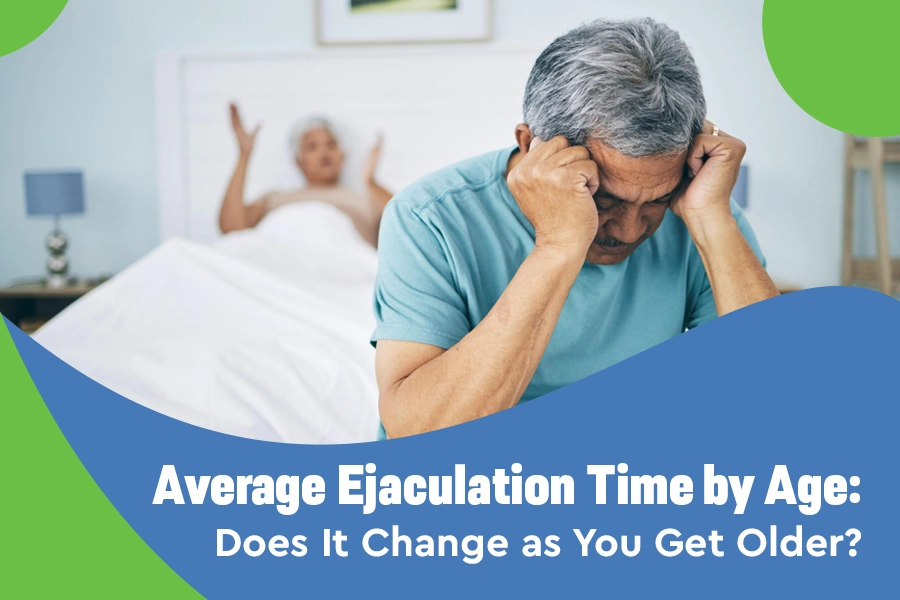
Okay, so this question comes up in my DMs more than almost anything else, so I figured I’d just write the whole thing out and see where it goes. People usually want two things. First, what’s normal. Second, whether it gets better, worse, or just different as you get older. I’ll try to answer both without sounding like a textbook. Not sure I’ll get it perfect, but that’s kind of how real life goes anyway.
People also search how long the average man lasts pretty constantly, which is basically the same question in a different outfit. The big one is what average ejaculation time by age really looks like, so let’s get into it.
What Is the Average Ejaculation Time?
The short answer is somewhere around five to seven minutes for most studies. One study that gets quoted a lot, from Dutch researchers, landed close to five and a half minutes. But honestly, “average” is a weird word here. Some guys go under two minutes, and some go past twenty, and plenty of them are completely fine.
That’s the thing about normal ejaculation time. It’s a range, not a single number, and the range is wider than most people expect. Lots of guys assume there’s one correct clock, and they’re failing it. There usually isn’t.
If you’ve ever compared yourself to a chart, you know how confusing those can get. The numbers look precise, but they’re averages of people who were all timing themselves differently.
How Ejaculation Time Is Measured
Researchers call it intravaginal ejaculatory latency time, which sounds fancy but just means the gap between penetration and ejaculation. In studies, they usually time it with a stopwatch, or they ask people to track it at home.
The home version is where things get fuzzy. People round up, round down, forget to start the timer, or count a pause as part of it. So when you see a random number online, take it with a grain of salt. Studies on average ejaculation time by age tend to use small groups too, which makes the numbers even less solid. Some of the research also leans on self-reporting, and me mory isn’t great at this stuff. I’d trust a range over a single figure every time.
Average Ejaculation Time by Age Group
This is the part everyone scrolls straight to. Studies that break things down by age are kind of rare, and the ones that exist don’t always agree with each other. From what I’ve seen, latency tends to run a little longer in older men on average. But the spread is huge. A guy in his twenties can be quick, and a guy in his fifties can be slower, or the other way around.
So don’t treat average ejaculation time by age like a rulebook. It’s more of a loose pattern with lots of exceptions. Average sex duration by age is a separate thing again, since it includes foreplay, breaks, and everything else, so it’ll look longer than the number people are actually asking about. Mixing those two up causes more confusion than anything else I see.
Why Does Ejaculation Time Change With Age?
Honestly, a few things seem to play a role. Blood flow shifts a bit over the years. Hormones change, and that can affect sensation and arousal. Some men need more stimulation to get and keep an erection, and that can change the rhythm of things. Stress, sleep, and being worn out matter way more than people give them credit for. So I’m not going to pretend I know which one is the main driver. Probably a mix, and it’s different for everyone.
When people search average ejaculation time by age, they’re usually trying to figure out if something is going wrong. Sometimes it’s just normal drift. Sometimes it’s a sign something else changed, like a new medication, a health issue, or just a rough year with work and sleep. I’ve seen guys blame their body when the real problem was that they hadn’t slept properly in three months.
Some guys notice they’re lasting longer as they get older and feel pretty relieved about it. Others start worrying about premature ejaculation in older men, which gets talked about less than it should, especially when health conditions or new prescriptions come into the picture. Both reactions make sense. Neither one means you’ve done something wrong.
What Counts as Premature Ejaculation?
The clinical version, from the International Society for Sexual Medicine, usually means ejaculating within about a minute of penetration, most of the time, with little control over it, and it bothers you or your partner. So it’s not only about the clock. If you come in four minutes and you’re happy with that, it’s not a problem. If you come in ninety seconds and it stresses you out every single time, that’s a different conversation.
Dapoxetine gets brought up here a lot. It’s a short-acting medication built for this exact issue, and it’s taken a few hours before sex, not right before. In the UK, it’s been available on prescription for a while. But in the US, most American readers can’t get it through a regular pharmacy. That’s frustrating, I know, and it’s one of those things where the rules are a lot different depending on where you live.
How Long Do Partners Actually Want Sex to Last?
Surveys tend to show that a lot of partners care more about connection and effort than the stopwatch. Some people do want things to go longer, and some honestly don’t care much. Plenty say they’d take more kissing and foreplay over a longer clock any day. That’s the general pattern, but people vary, and a survey can’t tell you what your specific partner is thinking.
People ask me how long should sex last, and the honest answer is as long as it feels good to both of you. That’s an annoying answer, I know. But it’s more useful than a number.
Porn vs real sex duration is wildly different. Those scenes get edited, paused, and reshot, so if you’re comparing yourself to them, you’re comparing yourself to fiction. Nobody’s body does that on a regular Tuesday.
So is lasting 10 minutes good? For a lot of people, yes. Ten minutes of penetration is above most of the numbers quoted, but whether it’s “good” depends on what you both enjoy. Some couples are thrilled with five minutes and bored at fifteen. Others need more time to feel anything. There’s no universal winner here.
How to Improve Ejaculatory Control at Any Age
Start simple. Slowing down, paying attention to your breathing, and trying the stop-start or squeeze technique can help some guys. Pelvic floor exercises are worth a shot too, even though nobody really talks about them. Cutting back on alcohol might help or might not, depending on the person. Talking to your partner usually helps more than people expect, mostly because the pressure drops once it’s out in the open.
Plenty of guys trying to hit a better average ejaculation time by age get stuck on the same thing. They keep trying to control it harder, and that tension makes it worse. Usually easing up works better, even though it sounds backwards.
If lifestyle changes aren’t cutting it, a doctor might bring up dapoxetine, which some people find takes the edge off the timing. It’s not a magic fix for everyone, and it works best when it’s part of a bigger conversation about what’s actually going on.
Other Causes of Changes in Ejaculation Time
Thyroid problems, diabetes, prostate treatment, and anxiety can all shift timing. Some antidepressants delay it, some don’t, and some medications for blood pressure or prostate issues can change things too. Any of these can shift your average ejaculation time by age in ways that look random from the outside. If something new showed up at the same time as the change, mention it. That detail matters more than people think.
When to See a Doctor
If the change is sudden, or comes with pain, blood in semen, erection trouble, or low mood, get it checked. Even if it’s just bugging you, a GP or urologist can help. You don’t need a crisis to ask. Honestly, a lot of guys wait way too long because it feels embarrassing, and it’s usually a five-minute conversation. If you’re wondering whether your average ejaculation time by age is changing for a reason, that’s a fair thing to bring up.
Frequently Asked Questions
1. What is the average ejaculation time?
Most studies put it around five to seven minutes from penetration.
2. Does average ejaculation time by age change?
It often drifts a little longer with age, but it varies a lot between men.
3. Is lasting 10 minutes good?
For most people, yes. What matters more is whether you both feel good about it.
4. What counts as premature ejaculation?
Usually coming within about a minute most of the time, with little control and real distress.
5. Can you improve control without medication?
Often yes, through techniques, pelvic floor work, and talking openly with a partner.


Leave a Reply