
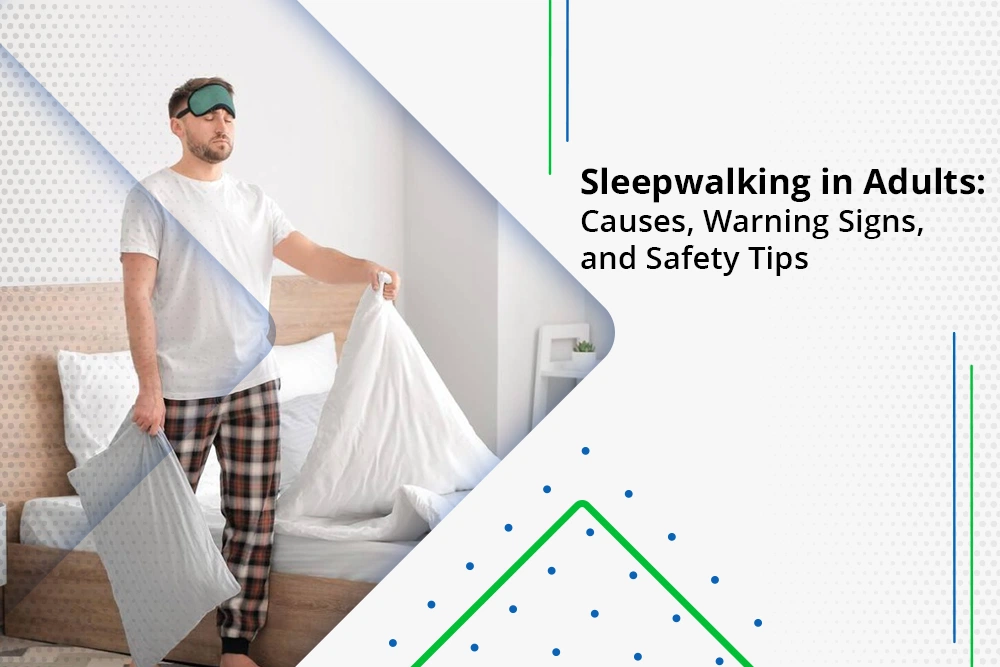
My brother-in-law once got halfway through making toast at 3 am. He didn’t remember any of it. He only found out because the toaster was still warm and a slice of bread was on the floor.
We laughed. Then my sister mentioned he’d also unlocked the front door one night, and nobody was laughing after that.
I’d always assumed walking in your sleep was a kid thing. It isn’t, so I went reading. This is the scruffy version of what I found. I’m not a doctor, so treat it as a chat and not medical advice.
Wait, adults do this too?
Yes. Not as many as children, but plenty. A figure of 1 to 4 percent of adults in a given year gets quoted a lot, though estimates vary by study. Many more people did it as kids and grew out of it.
Sometimes it starts in adulthood, which surprises people. Sometimes it just never stopped.
Either way, it’s a recognized sleep problem. It falls under parasomnia, which is the medical word for odd things your body does around sleep. Not a very comforting word, but there it is.
It usually happens in deep sleep, often in the first couple of hours after you go to bed. So if someone’s wandering at 5 am, that’s probably something else. Probably.
Related: Parasomnias An Overview
What it actually looks like
The sleepwalking symptoms people describe are weirder than you’d think. Eyes open but glassy, like nobody’s home. Sitting up in bed, walking around, opening cupboards, moving furniture, mumbling answers that make no sense.
They’re hard to wake. If you do wake them, they’re confused and a bit grumpy. In the morning they remember nothing, or maybe a vague scrap.
An episode can last a couple of minutes or up to half an hour. Some people only do it once in a blue moon. Others do it a few nights a week, and that’s a different conversation.
So why does it happen?
Honestly, nobody has the full answer. The rough idea is that part of your brain wakes up while another part stays stuck in deep sleep. The body moves, but the thinking bit is off. Sleepwalking causes seem to come from that muddled state, plus whatever pushes you into it.
It runs is families. If a parent did it, you’re more likely to.
Then there are triggers. Not enough sleep is the big one, and sleep deprivation seems to make episodes more likely and more intense. Stress too. Alcohol. A fever. Irregular schedules, like shift work or jet lag. Noise or being touched during the night.
Some medicines can set it off. Sedative sleeping pills like zolpidem (Ambien) have a well-known link, and a few antidepressants and other drugs have been connected too. Please don’t stop a prescription on your own because of a blog. Ring your doctor or pharmacist.
Other sleep problems matter as well. Sleep apnea, restless legs, anything that keeps breaking up your deep sleep. Treat the apnea, and the wandering sometimes stops.
Rarely, night-time seizures or other conditions can look similar. That’s one reason a new case in adulthood should be checked.
Related: Why Do Some People Walk Talk Or Act In Their Sleep
Not the same as other weird night stuff
People mix these up all the time, and I did too.
Sleep terrors are the screaming, heart-pounding, can’t-be-comforted episodes. The person can look terrified and sit bolt upright. Some people call them night terrors, and the names get used interchangeably. They come from the same deep sleep stage as walking around, and the two can overlap.
REM sleep behavior disorder is different again. Here, people act out vivid dreams, punching, kicking, and shouting, because the usual muscle paralysis during dreaming isn’t working properly. They often remember the dream, and it tends to show up in older adults, more often men. It can sometimes be linked to other brain conditions later on, so it’s worth seeing a doctor, not something to shrug off.
All of these count as abnormal sleep behaviors, which sounds more dramatic than it usually is. But they’re not all the same thing, and the treatment differs.
Is it dangerous?
Mostly the danger is to the person doing it. Sleepwalking dangers are things like falling down stairs, walking into glass, tripping over the dog, or going out of a window or door. People have wandered outside in winter wearing nothing much. Some have cooked, and a few have even driven.
Hurting someone else is rare. It can happen if a person is startled or grabbed mid-episode and reacts in confusion. That’s more of a reason to stay calm than to panic.
Usually it’s a bruised shin and a weird story. But “usually” isn’t “always,” so safety is worth bothering with.
Should you wake them up?
Folk wisdom says never wake a sleepwalker. It’s not actually harmful to wake them, but they’ll probably be disoriented and frightened.
The easier route is to guide them back to bed. Speak quietly, steer them gently by the shoulder or arm, and don’t shout or grab. If they resist, back off, make sure they’re safe, and try again in a bit.
Keep your own safety in mind too. A confused person who’s startled can lash out.
Making the house less of an obstacle course
These sleepwalking safety tips are dull and quite effective. Lock the doors and windows, and put the keys somewhere out of reach. High bolts or door alarms work well, even a bell on the handle. A stair gate if you have stairs.
Sleep on the ground floor if you can. Clear the floor of clutter, cables, and anything sharp. Put breakable things away from the bedroom. Don’t sleep in a top bunk. Move anything dangerous, like knives or car keys, somewhere locked.
If you share a bed, tell your partner what’s going on. Having someone who understands what they’re seeing helps a lot. My sister now sleeps with her phone on loud, which I think says something.
Can you actually stop it?
Often you can reduce it, sometimes stop it. Sleepwalking treatment starts with working out why it’s happening.
That might mean fixing your sleep. Boring sleep hygiene helps more than people expect. Same bedtime and wake time, a dark and cool room, less alcohol in the evening, no heavy caffeine late in the day, and screens away before bed.
Related: Balancing Work, Sleep, and Wellness in a 24/7 Lifestyle
It might mean a medicine review, treating sleep apnea, or dealing with stress and anxiety. Therapy such as CBT can help with that. Some people try scheduled awakenings, where you wake up just before the usual episode time. Hypnosis has been used too, though the evidence is limited.
Medication, such as clonazepam, is sometimes used when episodes are frequent or risky, but it’s usually a last resort and needs medical supervision.
Sleepwalking prevention is mostly about getting enough sleep and not stacking triggers. Late night plus a few drinks plus stress is a bad combination. I know that, I ignore it, and I’m not the one wandering.
When it’s time to see someone
If it started in adulthood, it’s worth getting checked. Same if it happens often, or if you’ve hurt yourself, left the house, or acted aggressively. Or if you’re exhausted in the day, or snore loudly and gasp at night. Or if you seem to be acting out dreams. Or if it began after a new medicine.
In the UK, start with your GP. In the US, see a primary care doctor or a sleep specialist. They may suggest a sleep study, where you stay overnight and are monitored.
If someone’s been injured, or has wandered off and can’t be found, call 911 or 999.
Back to the toaster
My brother-in-law now has a bolt high up on the front door and a little bell. He also cut back on the late-night whisky, grudgingly.
The toast thing hasn’t happened again. He’s still annoyed he never got to eat it.



Leave a Reply