
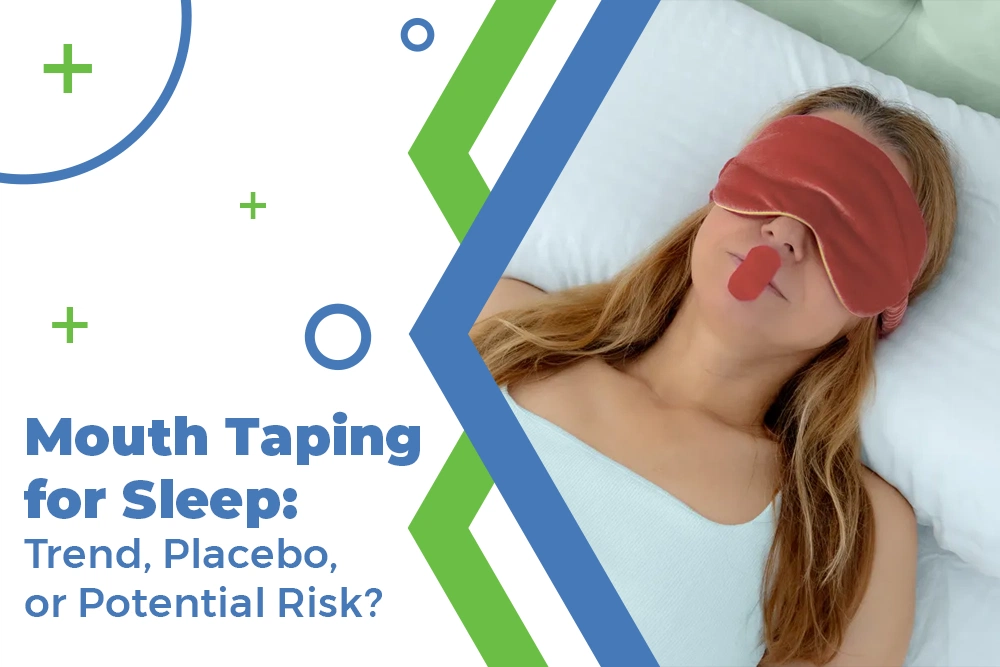
There’s a small strip of tape sitting on a lot of nightstands right now. Not medical tape exactly, though some brands try hard to look clinical. Just tape, meant to go over the lips before bed. Mouth taping for sleep has turned into one of those wellness habits that shows up everywhere at once like on a colleague’s desk, in a wellness newsletter, in a comment section where someone swears it fixed their energy levels in a week. Whether it does anything meaningful is a separate question, and honestly a messier one than most articles make it sound.
History of Mouth taping for sleep
The basic idea behind mouth taping for sleep isn’t new. Nasal breathing sleep advocates have been around for decades, some tied loosely to old yoga breathing practices, some tied to more modern biohacking circles. The pitch is simple enough on paper: close the mouth, force air through the nose, and supposedly the body does better with that. Better oxygen exchange, calmer nervous system, less snoring, deeper sleep. It sounds tidy. Bodies are rarely tidy.
Nasal breathing does have real, documented benefits: humidifying air, filtering it, producing nitric oxide that helps with blood vessel function. None of that is controversial. What’s less settled is whether taping the mouth shut is the right way to get there, or whether it’s a workaround that skips the actual problem.
What People Say Happens When They Try It
Ask around and you’ll get wildly different reactions about using mouth taping for sleep. Some people say they wake up less groggy. Some say it did nothing noticeable at all. A few say it made things worse like making them anxious, claustrophobic, one guy mentioned waking up gasping because his nose was already partly blocked to begin with. That last part matters more than people give it credit for.
Mouth breathing effects during sleep are usually a symptom, not really the root cause. People breathe through their mouths at night because the nose isn’t cooperating because of a few reasons like allergies, a deviated septum, congestion, sometimes just anatomy. Taping the mouth doesn’t fix any of that. It just removes the backup option. If the nose can’t do the job alone, forcing the issue with tape could be uncomfortable at best.
The Placebo Angle Nobody Really Wants to Talk About
There’s a decent chance a chunk of the reported benefits come down to expectation. Someone commits to a sleep breathing technique, feels invested in it working, sleeps in a slightly different position because of the tape, maybe drinks less water before bed out of habit change, and reports feeling better. That’s not nothing, but it’s also not proof the tape itself is doing the heavy lifting.
Sleep quality improvement is notoriously hard to self-report accurately anyway. People misjudge how many times they woke up, misjudge how rested they actually feel versus how rested they expect to feel after trying something new. Novel habit, placebo boost, maybe a little regression to the mean if they were sleeping unusually poorly before starting. All of that muddies the picture.
Where It Might Genuinely Help
Occasional mouth breathers with no underlying nasal obstruction, no sleep apnea, nothing structural going on. For them, gently encouraging nose breathing during sleep might reduce dry mouth, might reduce morning throat irritation, and might cut down on very mild snoring. Some small studies and clinical observations point in that direction, though the research base is still thin compared to how popular the trend has gotten.
Breathing during sleep is something most people never think about until it becomes a problem like dry mouth, bad breath, waking up with a sore throat. If tape nudges someone toward a habit their body was already capable of doing anyway, sure, that tracks. It’s less a fix and more a reminder.
A Quick Side Thought on Athletes and Influencers
A lot of the current hype traces back to athletes and fitness influencers who tape at night and post about it. Worth remembering these people often already have decent respiratory health, no major nasal blockages, generally younger and fitter than the average person scrolling past their video at midnight. What works fine for them isn’t automatically transferable.
The Risk Side
Sleep safety concerns around mouth taping for sleep aren’t hypothetical. If someone has undiagnosed sleep apnea, taping the mouth shut could be genuinely dangerous. Apnea already involves periods where breathing stops or gets shallow; removing the mouth as a backup airway during one of those episodes isn’t a small thing.
Physicians who work in sleep medicine have flagged this repeatedly not as scaremongering, just as a basic safety point. If you don’t already know your airway is clear, taping it shut is not the place to start experimenting. People with nasal congestion from a cold, allergies, or structural issues are in a similar boat. Even something as ordinary as a stuffy nose from allergy season could turn a night of taping into a night of restricted airflow.
There’s also the more mundane stuff like skin irritation from adhesive, especially with sensitive skin, and honestly just the discomfort of not being able to open your mouth if you need to cough, or if you feel nauseous, or if a partner startles you awake. Small stuff, but real.
Is It Actually Doing Something or Not
Depends who’s asking and what body they’re in, basically. For someone with clear nasal passages who happens to be a light mouth breather out of pure habit, nighttime breathing habits could shift in a helpful direction with tape as a training tool of sorts. For someone with any kind of airway restriction, it’s a gamble that isn’t worth taking without a Physician weighing in first.
Nasal breathing benefits are real like it shows better filtration, that nitric oxide production thing, less mouth dryness. But the benefits of nasal breathing in general don’t automatically mean the tape method is the safest or most effective way to get there. There’s a difference between the goal and the tool being used to reach it. People online tend to blur those two things together a lot.
What Sleep Specialists Tend to Say
Most sleep physicians interviewed on this topic land somewhere cautious. Not outright dismissive, but not enthusiastic either. The general line tends to be: if you snore, if you wake up tired despite a full night, if a partner mentions gasping or pauses in your breathing, see someone before trying tape. Sleep health trends move fast on social media, faster than research can really keep pace with, and mouth taping for sleep is a good example of that gap. A viral video isn’t a clinical trial.
Some clinics do use nasal strips or other non-restrictive methods as a gentler first step, since those don’t fully block the mouth and carry less risk if breathing gets difficult. Worth mentioning because it’s an option people rarely bring up next to taping.
A Few Practical Things Before Trying It, If Someone Still Wants To
Not a full checklist, just scattered thoughts that seem to matter based on what specialists keep repeating. Get checked for sleep apnea first, especially if there’s snoring or daytime fatigue involved. Make sure the nose is actually clear especially during allergy season, colds, deviated septum, all of that needs to be ruled out or managed first. Start with partial taping methods, the kind that allow the mouth to open under pressure, rather than a full seal. And maybe don’t do it every single night right away, ease into it and see how the body reacts over a week or two rather than committing cold turkey.
Wrapping This Up
Mouth taping for sleep isn’t a scam exactly, and it isn’t a miracle either. It sits in this weird middle zone where it might help a small group of people with mild habits, does basically nothing for another chunk, and carries real risk for anyone with an underlying breathing issue they don’t know about yet. The trend outran the evidence a while back, which happens a lot in wellness spaces. Doesn’t make it evil, just makes it something to approach carefully rather than jumping in because a video made it look effortless.
FAQs
1. Is mouth taping safe for everyone?
No. It can be risky for people with sleep apnea or nasal blockages.
2. Can taping your mouth really help you sleep better?
For some mild mouth breathers, maybe slightly. Evidence is still limited.
3. Can mouth taping for sleep help with snoring?
It might reduce very mild snoring, but it won’t fix snoring caused by apnea.
4. What tape is safe to use for this?
Gentle, skin-safe surgical tape is generally recommended, not random household tape.
5. Who should avoid mouth taping?
You should mouth taping if you have nasal construction, sleep apnea, chronic congestion or any other health condition that makes breathing difficult.

Leave a Reply