
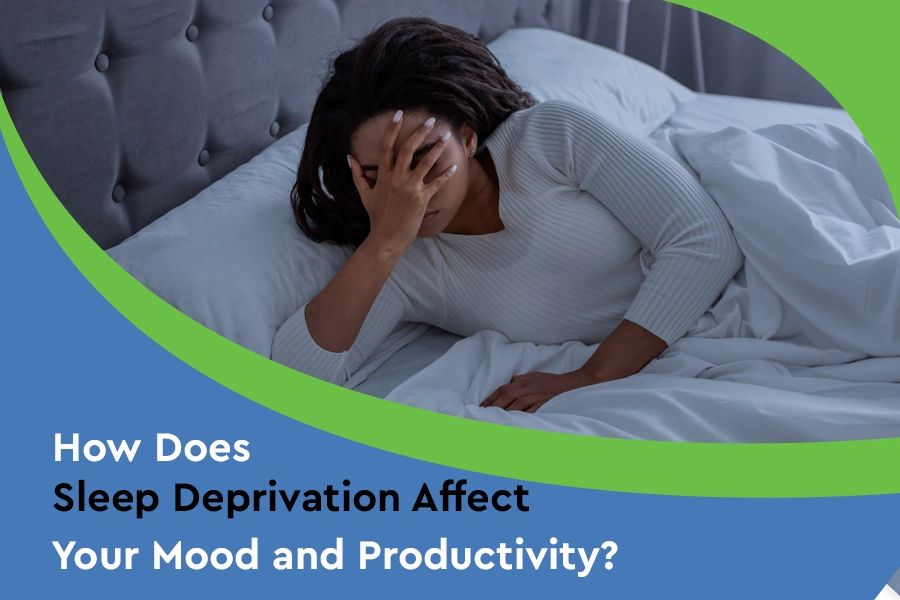
There is the particular type of irritability that seems to creep in right after a bad night’s sleep, like a short fuse, a foggy brain, and suddenly your to-do list feels impossible. Most people just shrug it off as a rough morning, but the science says it is more serious than that. Sleep deprivation does not only make you feel groggy; it changes the way your brain deals with emotion, handles information, and keeps up when things get stressful. If you can see what’s going on under that tired feeling, you understand why protecting your sleep is one of the most powerful things you can do, for both your mind and your work.
The Emotional Toll of a Bad Night
Before sleep loss even touches your to-do list, it gets into your mood first. The brain’s emotional control spot, the amygdala, gets noticeably more reactive after just one night of poor sleep. At the same time, the prefrontal cortex, which is usually good at keeping emotional stuff in line, becomes less able to do its job. So you end up with a brain that treats small annoyances like they are major threats. That is why sleep deprivation is more likely to snap, feel more anxious, and struggle to bounce back after stress, even when the situation is not really that big.
This connection also helps explain why poor sleep makes you feel mentally tired. It is not only that your body wants rest. Your emotional regulation system is basically running on too little fuel, so you get more sensitive, less patient, and more likely to read neutral moments as if they are negative. Over time, when poor sleep becomes a chronic thing, it is tied to a higher risk of anxiety and depression, which pretty clearly shows how closely mood and rest are linked, not separate.
Where the Real Productivity Losses Happen
The effects of insufficient sleep on concentration have been studied a lot, and it is more dramatic than people assume. Attention becomes jumpy, reaction times slow down, and your brain can slip into brief, involuntary lapses in focus called microsleeps in sleep deprivation. These are moments where attention basically shuts off for a second or two, and you might not even notice it. That is part of how poor sleep affects productivity in real, concrete ways: tasks drag out longer, mistakes sneak in, and decision making gets less crisp.
The effects of poor sleep on mental performance are the brain regions sleep loss hits hardest in sleep deprivation. There is also this tendency for sleep deprived people to overestimate how well they are performing. This is risky, as it gets in jobs involving driving, operating machinery, or making high stakes decisions.
Why the Afternoon Slump Hits So Hard
If you have ever felt that wave of exhaustion around 2 or 3 pm, you already know how sleep patterns influence daytime energy in real time. Alertness is not a flat line that just quietly fades as the day goes on. It tends to follow a rhythm, shaped by ultradian rhythms, these shorter biological cycles that move in roughly 90 to 120 minute waves across the day. Modalert 100 mg is used to treat excessive daytime sleepiness caused by Narcolepsy, Shift Worker Sleep Disorder, and Obstructive Sleep Apnea.
Sleep deprivation is a big reason why lack of sleep causes daytime fatigue that shows up in waves, not as one constant low-grade tiredness. A short walk, switching to a different task, or even a few minutes outdoors in daylight during one of those dips can help a lot more than most people expect, mainly because the dip is often temporary and cyclical, not some permanent sign that you need to force through with pure willpower.
Leaning on Caffeine to Bridge the Gap
People prefer coffee just to survive the day. Now you have to understand how caffeine affects sleep alertness to explain why it seems to help and also why it can backfire. Caffeine blocks adenosine. This is a chemical that builds up in your brain over the day and basically creates the pressure to sleep. When you block it, the tiredness signal gets muted. So, the feeling of exhaustion gets masked instead of the underlying sleep debt getting fixed. So, once the caffeine wears off, the debt is still there. Timing matters more than most people think too. Caffeine has a half-life of about 5 to 6 hours. It means a cup you drink mid-afternoon; it can still affect you well into the evening.
The Brain’s Nightly Repair Shift
It helps to rewind and see what the brain is supposed to do during a proper night to get why missing sleep feels like it tangles your mood and performance so fast. Now find out how REM sleep affects the brain; it is the part most tied to really vivid dreams. But also, it is not only about dreaming stuff. REM is important for processing emotional experiences and for locking in memories that got made during the day. Modalert 200 mg is a wakefulness-promoting medication that effectively assists people with sleep difficulties and maintains wakefulness throughout the day. While you are in REM, the brain sort of works through the emotional “change” from everything that happened. This is one reason a full night can make a stressful thing feel calmer, or at least more manageable by morning in sleep deprivation.
Sleep Loss and a Fading Memory
The effects of poor sleep on memory aren’t just one thing; they spread across multiple ways you remember stuff. While you sleep, the brain does this consolidation work, moving newly learned info from quick temporary storage into sturdier long-term memory. That depends a lot on deep, slow-wave sleep and on REM sleep too. Modacare 400 mg is a modafinil-based wakefulness-promoting medicine that is used under medical supervision for conditions linked to excessive daytime sleepiness. So if either one gets trimmed, newly learned material can end up loosely attached, like it never really sticks right. That’s also why cramming late into the night, even if it feels productive, often turns out weaker than just getting adequate rest.
Then, there is a working memory. The mental workspace that you use is to hold and juggle information in real time. Sleep loss makes it worse, so it’s harder to follow multi step instructions, remember a phone number for a moment, or keep several tasks in your head at once. Over time, chronic sleep deprivation has even been connected with a higher chance of longer-term cognitive decline. So sleep isn’t “just a pause”, it’s an active brain process that you genuinely need to function well.
In a Nutshell
Sleep deprivation isn’t some minor annoyance you can push through with willpower and coffee. It shifts emotional regulation, messes with concentration and decision-making, throws off the natural rhythms that run your daytime energy, and interferes with how your brain processes emotions and stores memories. When you recognize what these effects actually are, instead of calling them ordinary tiredness, it’s the first step toward protecting both your mood and your productivity. And yeah, it all starts where it should: a good night’s sleep.
Explore Modafinil products in:
Modafinil In UK, Modafinil In Germany, Modafinil In Europe, Modafinil In Australia
FAQs
1. Why does lack of sleep make you more irritable in sleep deprivation?
Sleep loss ramps up activity in the brain’s emotional center while also lowering the prefrontal cortex’s ability to regulate the reaction. That imbalance makes small annoyances feel bigger, and they’re harder to control.
2. Can caffeine fully make up for lost sleep?
Nope. Caffeine only blocks the brain’s sleep-pressure signal for a while, so it hides tiredness; it doesn’t fix the underlying sleep debt in sleep deprivation. It can also mess with future sleep if you take it too late, and then you get stuck in the cycle again.
3. How does sleep deprivation affect memory specifically?
It weakens both consolidation of new information into long-term memory and working memory used for real-time tasks. Since those processes rely heavily on deep sleep and REM sleep, cutting sleep cuts your results.
4. Why do you feel a slump in the afternoon even after enough sleep?
Because your body has natural ultradian rhythms that create alertness dips every 90 to 120 minutes or so. Most of the time they’re mild and temporary, but when you’re sleep-deprived they get far more obvious and disruptive.
5. What is the connection between REM and the sleep cycle?
Now if sleep gets cut short, REM doesn’t just get slightly reduced; it gets hit more than the other stages. This is because REM shows up heavier in the later cycles of the night, and ironically it’s the later part that’s most likely to be sacrificed first when you’re running out of hours.


Leave a Reply