
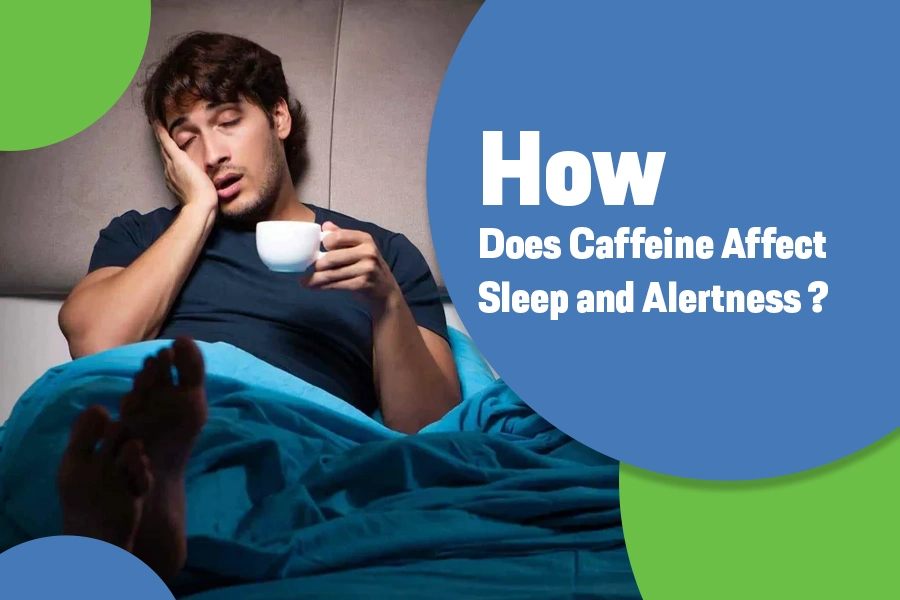
Okay so I’ve been chewing on this for a few weeks now, mostly because I drink way too much coffee and then lie there at midnight wondering why my brain won’t switch off. Sleep and alertness are supposed to be opposite states, right, but caffeine tangles them together in a way that’s honestly more complicated than I expected going in.
I thought I understood it. I did not.
The adenosine thing nobody explains well
So there’s this chemical called adenosine that builds up in your brain the longer you’re awake. It’s basically your body’s countdown clock; more adenosine, more sleepy. Caffeine doesn’t remove it or burn it off or anything dramatic like that. It just sits in the same receptor spot and blocks the signal. The adenosine is still there, piling up behind a dam, but your brain isn’t getting the memo.
This is kind of the whole story of sleep and alertness when caffeine’s involved. You’re not actually less tired. You just don’t feel it yet.
And then the dam breaks eventually, and you crash, and you make more coffee. I’ve done this loop probably five times today already, not even joking.
Half-life is longer than people think
Caffeine sticks around for a while. Like 5 to 6 hours as a rough average, though it swings a lot from person to person. Genetics, liver stuff, whether you’re pregnant, whether you smoke, and a bunch of factors I didn’t expect to matter this much.
So that 3 pm coffee? Still partly hanging around your system at 9 or 10 pm. Which is wild when you think about it. You feel “normal” by dinner, not wired at all, but there’s still caffeine doing its adenosine-blocking thing quietly in the background.
This is where caffeine effects on sleep quality get sneaky. It’s not always about feeling buzzed. Sometimes it’s just that the sleep you eventually get is thinner. Lighter. You wake up more; you just don’t remember waking up.
I used to think if I could fall asleep fine, I was in the clear. Nope. Wrong. Falling asleep isn’t the whole picture.
Deep sleep takes the hit, not the falling-asleep part
There’s research (I’m not going to pretend I read all of it in detail, but the gist is consistent) showing caffeine cuts into slow-wave sleep, the deep, restorative stage even when people don’t consciously notice a difference. You fall asleep at your normal time, you stay asleep-ish, but you don’t sink as deep.
Which honestly explains a lot about mornings where I “slept eight hours” and still felt like garbage.
Your internal clock doesn’t care what time your phone says it is
Here’s a thing I hadn’t thought about before: caffeine can actually shift your internal clock a little, delaying the release of melatonin in the evening. So your circadian rhythm and sleep get nudged later without you doing anything else different. Same bedtime, same room, same everything, but your body’s internal sense of “it’s nighttime now” arrives later than it used to.
It’s a small shift on any given day, barely noticeable, but sleep and alertness the next morning both end up a little off because of it. You wake up and something feels slightly wrong even though you can’t point to what.
Small shift, but it adds up over weeks. Especially if you’re one of those people (me) who has a coffee after dinner because “it’s just one cup.”
Okay, but why do I feel so sleepy in the afternoon anyway
Not everything is caffeine’s fault, to be fair. There are a bunch of causes of daytime sleepiness that have nothing to do with coffee at all: poor sleep the night before, obviously, but also just… low blood sugar, dehydration, sitting still for six hours, screens right up until bed, and stress that keeps your brain half-alert even when you’re trying to rest.
Caffeine is just one variable in a messier system. It gets blamed a lot because it’s the most visible lever, the thing you can point to and go, “Ah, that’s why.” But sometimes it’s genuinely just Tuesday.
It’s a loop, not a single night
Your body runs on a loop, the sleep wake cycle that’s supposed to be fairly consistent if you leave it alone. Caffeine, screens, irregular bedtimes, and inconsistent wake times, all of it chips away at that consistency bit by bit. It’s less about any single cup of coffee ruining one night and more about the pattern over weeks. I keep forgetting this and then acting surprised.
Which, honestly, is probably the actual answer to most of my sleep and alertness complaints it was never one bad night. It was three weeks of slightly too-late coffee stacking up quietly.
What actually helps, from what I’ve gathered
I’m not going to pretend I have this fully figured out because I very clearly don’t (see: coffee at 4 pm today). But there are some ways to improve sleep quality that keep coming up everywhere I look, and most of them are annoyingly simple.
Cutting caffeine off by early-to-mid afternoon is the obvious one. Somewhere around 2 pm seems to be the number people land on, give or take, based on that 5-6 hour half-life thing.
Consistent wake time matters more than I gave it credit for more than bedtime, weirdly. Light in the morning, real daylight if you can get it, helps reset things.
And just… not drinking coffee as a substitute for actual rest. Which sounds obvious but is basically what I do every single day.
The flip side of caffeine isn’t just the villain here
I don’t want this to read like caffeine is purely bad, because it’s not, and also I’m clearly not going to stop drinking it. Caffeine and daytime energy have a real, useful relationship when the timing’s right. Morning caffeine, used deliberately, genuinely supports daily alertness and focus without wrecking the night ahead; it’s really the late-day stuff that causes problems.
There’s also decent evidence around caffeine and concentration in short-term reaction time and attention span; that kind of thing gets a real, if temporary, boost. Caffeine consumption in moderate amounts, earlier in the day, seems to be where most of the benefit lives without much of the downside.
The same goes for sleep and concentration the next day: if you slept badly because of late caffeine, the concentration hit the following afternoon is basically caffeine’s problem circling back around, which is a bit funny in a tired, ironic way.
So where does that leave sleep and alertness, honestly
Somewhere messy, I think. Sleep and alertness aren’t two separate things you manage independently; caffeine sits right in the middle, pulling on both at once, and the timing matters way more than the amount, at least from everything I’ve read and half-lived through myself.
I’m probably still going to have that 3 pm coffee tomorrow. But at least now I sort of understand why I’ll be staring at the ceiling for it later.
A few more things I keep coming back to
One thing that surprised me: decaf isn’t actually zero caffeine. It’s low, not none. If you’re really sensitive to this stuff, even a couple of decaf cups in the evening might be doing a tiny bit of the same thing regular coffee does, just quieter. I didn’t know that until fairly recently, and it kind of annoyed me.
Also, tolerance is a weird factor nobody mentions enough. If you drink coffee every single day, your body adapts a bit; you don’t feel as jittery, and the alertness bump feels smaller. But the sleep interference doesn’t necessarily shrink at the same rate. So you can end up in this spot where caffeine barely feels like it’s doing anything for your energy anymore, but it’s still quietly wrecking your nights. Worst of both worlds, really.
And genetics play a bigger role than I expected. Some people metabolize caffeine fast; it’s basically gone in a couple hours. Others are slow metabolizers, and for them a single afternoon coffee can behave more like two or three for someone else. There’s no universal safe cutoff time that works for everyone, which is annoying if you were hoping for a clean rule.
I think the honest takeaway, at least for me, is that sleep and alertness aren’t something caffeine ruins outright; it’s more that caffeine quietly shifts the odds if you’re not paying attention to timing. Small nudges, repeated daily, add up to something bigger than any single cup ever would on its own.
FAQs
1. Does caffeine really affect sleep even if I fall asleep fine?
Yes, it can reduce deep sleep quality without you noticing you woke up more.
2. How long before bed should I stop drinking caffeine?
Generally around 6 hours before, so early-to-mid afternoon for most bedtimes.
3. Why do I feel tired even after 8 hours of sleep?
Could be caffeine timing, poor sleep quality or other factors like stress or screens before bed.
4. Does caffeine actually improve focus or just make you feel awake?
Both, to some extent, genuinely help attention and reaction time short-term.
5. Can caffeine shift my body clock?
Yes, evening caffeine can delay melatonin release and nudge your internal clock later.


Leave a Reply