
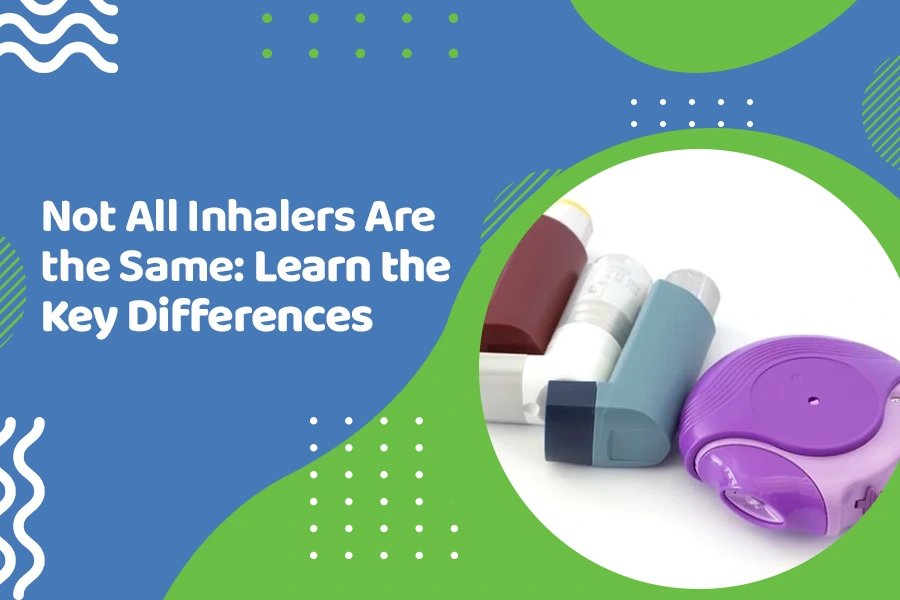
If you have ever looked at a row of inhalers in a pharmacy or seen a few different ones in someone’s medicine cabinet, the obvious question is: Are All Inhalers the Same?
They really are not. They may look similar at a glance small, portable and often blue, red, brown, white or grey but what they contain and how they are used can be very different.
Some are for sudden breathlessness. Some are taken every morning even when breathing feels fine. Some deliver a mist, while others need a sharp, deep breath to pull the medicine in. It can get confusing quickly, especially when people casually call every inhaler a puffer.
An inhaler is simply a device that gets medicine into the lungs. That is the short version of what an inhaler is. The longer version is that each device is designed around a certain medicine, a certain dose and a certain way of breathing it in.
So, no, inhalers are not interchangeable little cans of the same stuff.
Are All Inhalers the Same? Understanding the Different Types and Uses
Are All Inhalers the Same? Not even close, although many people understandably assume they are.
The biggest difference usually comes down to the purpose of the medicine. A person with asthma may have a reliever inhaler for flare-ups and a preventer inhaler for long-term control. Someone with chronic obstructive pulmonary disease or COPD, may use a long-acting bronchodilator, sometimes alongside an inhaled steroid.
Reliever inhalers work fast. It relaxes the muscles around the airways, to help the air flow more freely in and out of the lungs. These are often used when there is wheezing, chest tightness, coughing or sudden shortness of breath.
Preventer inhalers are different. They are not meant to give instant relief during an attack. Instead, they reduce inflammation in the airways over time. That means they often need to be used regularly, even on good days. This is the bit people sometimes find frustrating: feeling okay does not always mean the lungs no longer need treatment.
There are also combination inhalers. These contain more than one medicine, which can make a routine simpler but does not make the inhaler suitable for everyone.
In other words, an inhaler is not just an inhaler. The label, medication, dose and device all matter.
Common Types of Inhalers
When people talk about different types of inhalers, they are usually referring to both the medicine inside and the delivery device itself. Those two things overlap, but they are not the same.
A metered-dose inhaler, often called an MDI or puffer, releases a measured spray when you press it. It may be familiar because it is one of the most common styles. The user presses down and breathes in slowly at the same time.
That timing can be tricky. Plenty of people press too early, breathe too late or breathe in too fast. It happens.
Dry-powder inhalers do not use a spray propellant. Instead, the medicine is inhaled as a dry powder. These devices usually need a quick, strong breath in to pull the dose into the lungs. That can make them less suitable for some young children or people who are very breathless.
Soft-mist inhalers create a slow-moving mist. Some people find the slower spray easier to coordinate than a standard puffer. Nebulisers are another option, though they are usually larger machines rather than pocket-sized inhalers. They turn liquid medicine into a mist that can be breathed through a mouthpiece or mask.
Then there are breath-actuated inhalers. These release medicine automatically when the person inhales. That can take away the press-and-breathe coordination issue, which is useful for some people, though not everyone likes or needs this style.
What Makes One Inhaler Different from Another?
It is tempting to compare inhalers only by colour or shape. But that is not a safe way to judge them. Colours can vary by brand, country, manufacturer and prescription.
The real inhaler device differences include how the dose is released, how forcefully someone must breathe in whether the device needs shaking and whether it needs priming before use.
A standard pressurised inhaler may need shaking every puff before use. A dry-powder device usually should not be shaken. One needs a slow, steady inhalation. Another needs a fast, deep inhalation. Mixing up the technique can mean less medicine reaches the lungs.
The medicine itself also varies. Inhalers may contain:
- Short-acting bronchodilators for quick symptom relief
- Long-acting bronchodilators for ongoing airway support
- Inhaled corticosteroids to reduce inflammation
- Combination medicines containing two or sometimes three treatments
Some inhalers are used once daily. Some are used twice daily. Some are carried for emergencies and used only when symptoms appear. A few are prescribed as both regular maintenance treatment and symptom relief but this should only be done exactly as a clinician has advised.
It sounds obvious, but the name on the inhaler is important. So is the strength.
The Main Categories of Inhalers
Are All Inhalers the Same? The answer becomes even clearer when you separate them into relievers, preventers, long-acting treatments and combination options.
Reliever inhalers are usually used when symptoms suddenly show up. They open the airways quickly. People with asthma often keep one nearby for this reason, although needing it very often can be a sign that asthma control needs reviewing.
Preventer inhalers contain anti-inflammatory medicine, commonly an inhaled corticosteroid. They help make the airways less sensitive and less swollen over time. They do not usually make a person feel dramatically better five minutes after taking them. Their benefit builds gradually.
Long-acting bronchodilator inhalers are often prescribed for COPD and, in some cases, asthma. They help keep airways open for longer periods. But they are not automatically a replacement for a quick-relief medicine during sudden breathing trouble.
Combination inhalers bring more than one medication into one device. They can be very useful, especially when someone has a stable daily routine. Still, a combination inhaler is not “stronger” in a simple sense. It is just formulated for a different treatment plan.
That distinction matters more than most people realise.
How Inhaler Devices Have Evolved Over Time
Older inhalers could feel fairly basic: press the canister, inhale and hope the timing was right.
Modern Inhaler designs have tried to make that easier. Some devices count doses. Some lock when empty. Some have windows that show the remaining medication. Others make clicks or use colour indicators. There are even connected inhaler systems that can track when doses are taken.
But newer does not always mean better for every person.
Someone who has used a familiar inhaler correctly for years may do better with it than with a newer device that feels fiddly. On the other hand, a person who struggles with hand strength, coordination or fast inhalation may benefit from changing device type.
This is partly why inhaler reviews are useful. The best choice is not always about the newest product or the most popular brand. It is about whether the person can use it correctly, consistently and without guessing.
Disposable vs. Reusable Inhaler Devices
Some inhalers come as a complete unit and are thrown away when empty. Others have a reusable outer device with replaceable cartridges or capsules.
Disposable inhalers are straightforward. Once the dose counter reaches zero or the product has reached its stated expiry date, the whole device is replaced. There is less assembly involved which some people prefer.
Reusable systems may create less waste because only the medicine cartridge needs replacing. But they can involve a few more steps. If a cartridge is not fitted correctly or if the device is not cleaned as instructed, it may not work as expected.
It is also worth checking how to know if an inhaler is empty. A dose counter is usually the most reliable answer. Do not rely on shaking the inhaler or guessing based on how light it feels. Many pressurised inhalers can still make a spray-like sound after the medicine has run out.
That sound is not proof that a full dose is coming out.
Why Proper Inhaler Selection Matters
Are All Inhalers the Same? If they were, choosing one would be simple. It is not always simple, because the “right” device depends on the person as well as the condition.
A child may need a pressurised inhaler with a spacer. A spacer is a chamber that attaches to certain puffers and makes it easier to breathe the medicine in properly. It can also reduce the amount of steroid medicine left in the mouth and throat.
An older adult with arthritis may find a small twisting device hard to handle. Someone with reduced lung strength may not generate enough airflow for a dry-powder inhaler. A person who travels a lot might care most about a compact device with clear dose tracking.
This is why the question of which inhaler is right for me is best answered by a prescriber, respiratory nurse, pharmacist or asthma/COPD clinician who can see the full picture.
The medicine has to suit the diagnosis. The device has to suit the hands, breathing pattern, routine and confidence of the person using it.
A good inhaler used badly can be less effective than a less glamorous one used well.
Can You Use Someone Else’s Inhaler?
No. You should not use another person’s inhaler, even if it looks like the same one you use.
First, it may not contain the same medicine. Two inhalers can look broadly alike but treat very different things. One may be a reliever, another may contain a steroid and another may have a long-acting medicine that is not appropriate for sudden symptoms.
There is also the hygiene issue. Sharing a mouthpiece can pass germs between people.
More importantly, using someone else’s prescription can delay proper treatment. If you are having trouble breathing and you don’t have your own medication, you should seek urgent medical advice rather than borrow an inhaler and hope it will work.
For severe breathlessness, blue lips, confusion, difficulty speaking in full sentences or symptoms that are rapidly worsening, emergency care is needed.
Can You Switch Between Different Inhalers?
People often ask, can you switch inhalers, especially when a pharmacy offers a different brand or a prescription changes?
Sometimes, yes. But it should not be treated like swapping one brand of painkiller for another.
A switch may happen because a medicine has been changed, a particular device is unavailable, a lower-cost alternative is offered, or the current inhaler is difficult to use. In the UK, a pharmacy or prescriber may suggest an equivalent product, but the technique still needs checking. In the US, insurance formularies can also influence which brand is covered.
A similar-looking device may require a completely different inhalation technique. That is where problems start.
Are All Inhalers the Same? No, and switching without a demonstration can lead to missed doses or poor control. Ask a pharmacist, nurse or doctor to show you how the new one works. It only takes a few minutes and it can prevent weeks of uncertainty.
Do not stop a prescribed inhaler abruptly just because the replacement looks unfamiliar. Get advice first.
Which Inhaler Device Is Easier to Use?
There is no universal winner here. One person may find a traditional puffer easy, while another cannot coordinate the press and inhale movement at all.
A puffer with a spacer is often a practical choice for children, people with coordination difficulties or anyone who has trouble timing their breath. Breath-actuated devices can work well for people who prefer not to press a canister. Dry-powder devices may feel simple because there is no propellant spray but they do need a quick, forceful inhalation.
Soft-mist inhalers can be easier for some people because the mist moves more slowly. They may still involve preparation and loading steps, though.
If you are unsure, bring your inhaler to a pharmacy appointment. Show how you use it. Most people have at least one small technique issue and that is normal. Even people who have used inhalers for years sometimes discover they have been missing a step.
The easiest inhaler is usually the one that matches the prescribed medicine and that you can use correctly without overthinking it every day.
It Is More Individual Than It Looks
Are All Inhalers the Same? They may share the same basic job of delivering medicine into the lungs, but the details are very different.
Some work fast. Others work quietly in the background. Some need a slow breath, some need a strong one and some work best with a spacer. The little details can change how much medicine actually reaches the lungs.
If your inhaler is not helping, feels difficult, or leaves you unsure whether you are taking it properly, do not just put up with it. A quick technique review with a healthcare professional can make a genuine difference.
And if you are using a reliever inhaler more often than usual, waking at night with symptoms, or noticing that breathing is getting harder, arrange a medical review. Inhaler treatment sometimes needs adjusting. That is common, not a failure.
FAQs
- Are All Inhalers the Same?
No. They can contain different medicines and require different breathing techniques.
- Can I use a reliever inhaler every day?
You may need it at times, but frequent use should be discussed with a clinician.
- Can I use an inhaler after its dose counter reaches zero?
No. Replace it when the counter reaches zero, even if it still seems to spray.
- Do I need to rinse my mouth after every inhaler?
Rinse after steroid-containing inhalers to reduce the risk of oral thrush.
- Can a pharmacist check my inhaler technique?
Yes. Pharmacists can usually demonstrate correct use and answer practical questions.





Leave a Reply